Airframe Components is a good company. Have you seen their videos explaining the spars? We have links on our video page: https://www.piperflyer.org/knowledge-base/latest-member-videos.html – just scroll down a bit to see them.
Jen



Posted In: PA-28

Airframe Components is a good company. Have you seen their videos explaining the spars? We have links on our video page: https://www.piperflyer.org/knowledge-base/latest-member-videos.html – just scroll down a bit to see them.
Jen

That’s great info, makes me feel much better, as I bought a Dakota in the last month! Thanks for sharing.
-Brian

The Dakota tapered wing was, unlike all other PA28’s, was built to carry the heavier engine. The same issue troubled me when the original proposed AD came out. Fortunately I found Roy Williams at Airframe Components https://www.airframecomponents.com/ Not all pics are attached.
Michael Farah
N3372M
Roy Williams
Mon, Apr 8, 2019, 11:40 AM
Michael-
Good talking to you on the phone this morning regarding wing spars for Piper PA28-236 Dakotas.
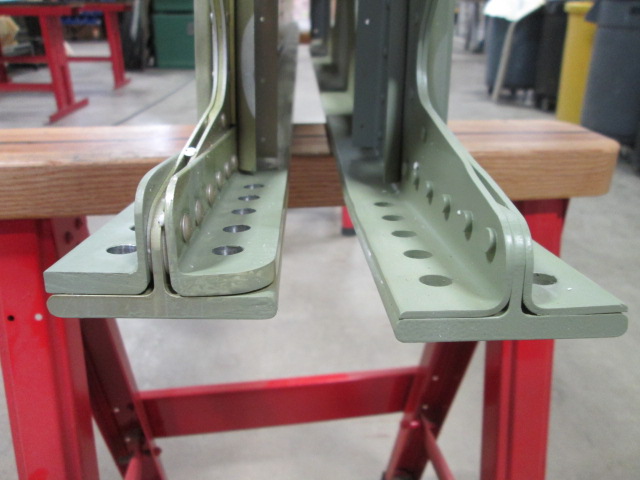
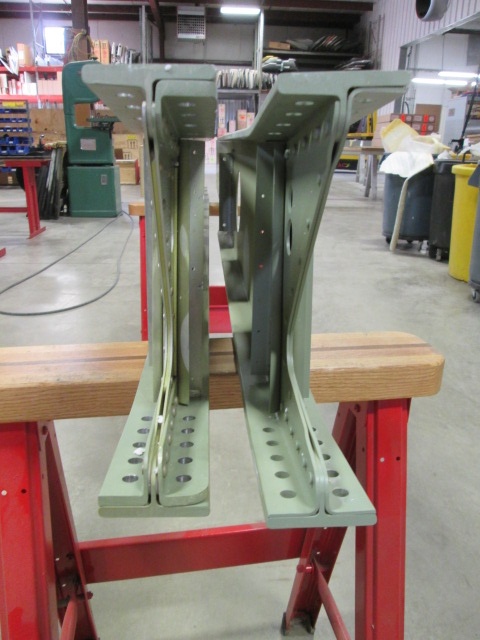
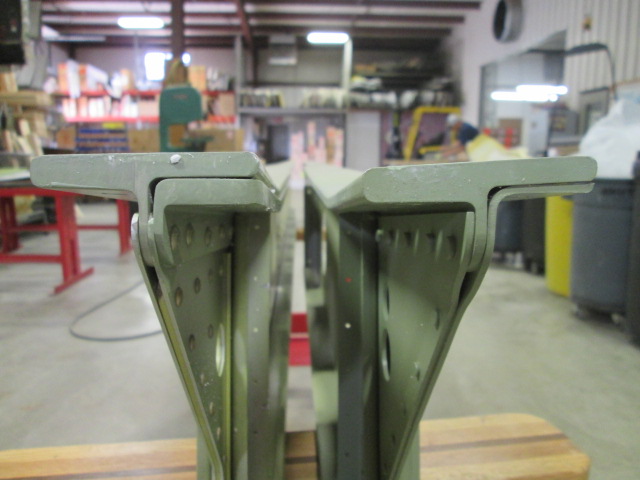
Pictures attached of a Piper PA28-236 LH wing spar next to a Piper PA28-181 LH wing spar. The Dakota spar is shown on the left and the Archer spar is on the right. Both spars start with the same basic I-beam construction.
As you can see, the forward side of the Dakota spar has heavy angles installed in the upper and lower positions. A heavy angle is installed in the lower position only on the aft side of the Dakota spar.
You can see that the web plate is larger on the 236 wing spar as well.
These extra pieces of structure help to carry the loads in flight associated with the higher gross weight of the Dakota.
Also, picture of our current inventory of 30 Piper wing spars in stock. I wonder how many Piper has in stock….?
Hope this helps.
Email or call if any further questions or thoughts on the topic.
Thx-
Roy S. Williams
Airframe Components by Williams, Inc.
Kendallville IN USA
PH: 001-260-347-0807
http://www.airframecomponents.com
Have you read Piper’s comments on the SNPRM? It reads in part:
[b]Issue #2: The SNPRM Still Contains an Overly Broad Cross-Section of Aircraft Models
Even assuming an SNPRM is warranted in the continuing effort to further improve safety, Piper disagrees with the inclusion of the PA-28-151, PA-28-181, PA-32R-300 and PA-32RT-300/T series aircraft for the following reasons:
• Based upon instrumented flight testing performed during type-certification of the PA-28- 151 and PA-32R-300 series aircraft, these models each have a measured ‘Stress per g’ of 95% or less when compared to the instrumented and recorded flight strains performed during certification of the PA-28R-201 series aircraft.
• Based upon instrumented flight testing and additional analysis performed during type certification of the PA-28-181 series aircraft, the PA-28-181 has a ‘Stress per g’ of 95% or less when compared to the instrumented and recorded flight strains performed during certification of the PA-28R-201 series aircraft.
• Inclusion of these models contradicts the stated ‘greater than or equal to 95 percent of baseline’ per Section C. ‘Comments Regarding Applicability’ of the Supplemental NPRM (page 34124) when the certification wing loads, spar section inertia, and instrumented flight test data are taken into consideration and compared to the ‘baseline’ PA-28R-201.
• PA-32R-300 series aircraft, as well as Model Year 1979 PA-32-300 aircraft (SN’s 32- 7940001 to 32-7940290) do not share the same wing construction and installation details as the PA-28R-201 aircraft. The wing assemblies on these aircraft are structurally reinforced as a part of the design to offset the increase in wing loading, which is reflected in the reduced wing stresses measured by the certification flight test data.
• Any such inclusion of the PA-32R and 1979 Model Year PA-32-300 series airplanes into a final rule should be accompanied by an additional service bulletin or revised Service Bulletin 1345 instructions to differentiate the wing construction details of these aircraft from the ‘baseline’ PA-28R-201 aircraft.
• Despite the support provided by the NTSB Chairman in the above-mentioned July 9, 2020 letter to the U.S. Department of Transportation, the NTSB has been consistently opposed, throughout this process, to the breadth of the models contained in the FAA’s
proposed Investigative Airworthiness Directive and has urged the FAA to limit the models to the “PA-28-235 (versus all PA-28 series airplanes), PA-28R series airplanes, and PA-32-260 and PA-32-300 model airplanes that are or have been used in flight training, commercial, or other high-time or high-cycle operations.” (NTSB-Weener February 15, 2019 Letter, page 3).[/b]
Complete PDF attached.
Jen

I’m not buying the tapered v Hershey bar wing theory. If that were the case, none of the Piper Warriors and Archers made since 1976 would be part of the proposed AD (air frame hours and planes used for training notwithstanding). In addition, the outermost edge of the fuel tanks on both models don’t account for more than 35-40% of the length of each wing.
I got an answer from the guys at Savvy Aviation, different wing (tapered design) vs Hershey and fuel tank location not at tips, so less loading on spar.
Anyone know why the 236 is not on the potential wing spar AD list? Is it a different design from the 235?

By using our website, you agree to our use of cookies. Learn more
Login below or Register Now.
Already registered? Login.