



Plotting a course through the potential squalls and rough seas of buying a complex, vintage Piper.
By Kristin Winter
The need for speed can be your creed. But a 50-year old steed to ruin may lead. Rare is the pilot who hasn’t cast a longing at a vintage, high-performance, complex aircraft from the early days of General Aviation. They are fast. They are sexy. And they appear very affordable compared to later-model aircraft. For those who have a need for really cool, there are the twin-engine offerings, which sometimes even appear cheaper to buy.
Like the charts of the ancient mariners warned: Here Be Dragons! As we know from history, wonderful new lands were discovered past the places on the maps where the dragons lurked. The same can be true of the vintage aircraft as well, but like the mariners of yore, you need a navigator.
Long out of production, 50-plus year-old complex aircraft have some personality built in, and the years may have left their mark. This is particularly true for airplanes designed before the push toward standardization that began in the very late 1960s. For all their idiosyncrasies, there are some truly enduring designs. Just think about the Douglas DC-3, which is going to be 90 years old this year and is still found useful.
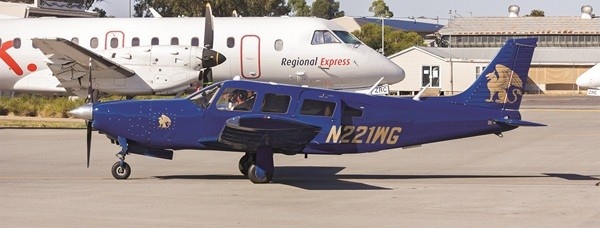
Doing your homework
When contemplating one of these wonderful old birds for the first time, recognize that you have a lot to learn. Even if you are looking at a newer model, there may be fewer and more obvious dragons, but some of what we discuss here may well be of help.
One needs to know the performance limitations and characteristics to determine if the sexy old bird will fit your mission. The availability of support needs to be assessed. Are parts available? Are mechanics available that really understand the airframe? Check insurance, as these vintage birds are likely to be significantly more expensive to insure than your fixed-gear Airknocker.
A baseline of information is needed to determine if the cool vintage aircraft that has caught your eye is suitable. Fortunately, almost any niche aircraft has a group of supporters somewhere on the internet. Perhaps there is even a formal type club. The wise buyer avails themselves of tribal knowledge. With luck, you will also find a guru or three who can help with the acquisition and transition. (The Piper Flyer Association website and forums may be helpful here, too! —Ed.)

Having decided that the cool vintage aircraft of your dreams is suitable and support available, then the hunt can begin in earnest. When checking out potential aircraft, focus not on what fancy electronics reside in the panel, but how it has been cared for and flown. Too many aircraft have had long periods of inactivity, yet the price doesn’t reflect the very real threat of internal engine corrosion which could lead to premature overhaul and the resulting damage history to your wallet.
The initial questions to the seller should focus on recent flying history, and damage history, in addition to the usual items of total time, times since overhaul, and avionics. If reasonably feasible, you may want to visit the aircraft yourself for a preliminary look.
Enlisting qualified help
Unless you have the skill set to research and assess the condition of the aircraft and are an experienced buyer of aircraft, you should consider retaining the services of someone who is an expert in the specific make and model. This would ideally be someone who is very knowledgeable about both the maintenance and the operation of the aircraft type. Older aircraft often have lots of STCs and ADs. Someone who can guide you through the good, the bad, and the ugly of them can save a lot of money going forward.

In the old days, one would have to travel to the aircraft, sit down and plow through the logbooks, and then inspect the aircraft. Sometimes these trips involved two days of travel, just to find out in the first hour of looking at the logbooks that the aircraft was not a good candidate. Much wasted time and money.
Modern technology offers the solution. Digitizing the logbooks is no longer a laborious process of standing at a machine and scanning each page. (See “Digitizing Aircraft Records” sidebar below. —Ed.) Photographing a complete set of maintenance logs and relevant records takes only one to one-and-a-half hours to accomplish. You can do it easily with most smartphones. All sellers should have the logs already digitized, but they don’t always, so sometimes the potential buyer has to press a bit.
With the photos in hand, you or your hired navigator can review the records at home, without incurring travel costs. A thorough review and resulting report should take 5-7 hours and is the most important part of the exercise. In my 40 years of experience doing pre-purchase work, I find that the vast majority of dealbreakers show up on the logbook review. Better to find those without spending significant amounts on travel costs.

The logbook review also serves as the basis for the physical inspection. If the plane passes the logbook review by a suitably expert examiner, it is likely that the deal can be done after the physical inspection, perhaps with a further adjustment to the price. In my experience, the physical inspection generally takes less time than the logbook review. This assumes that the physical inspection is focused on the costly items existing (or likely to be incurred in the future).
The internet likes to say that an annual inspection is the best for a prebuy, but this is fallacious. An annual looks at the condition of the aircraft as it sits there, to determine if it is at least minimally airworthy. Mechanics sometimes favor it for a pre-buy, as it is what they know how to do.
A pre-purchase inspection should be forward-looking. The buyer needs to know what expensive repairs are needed now and those likely to be needed in the near future. The buyer does not need to pay to discover the handful of minor items that might be discovered if all access panels are opened up, seats taken out, etc.
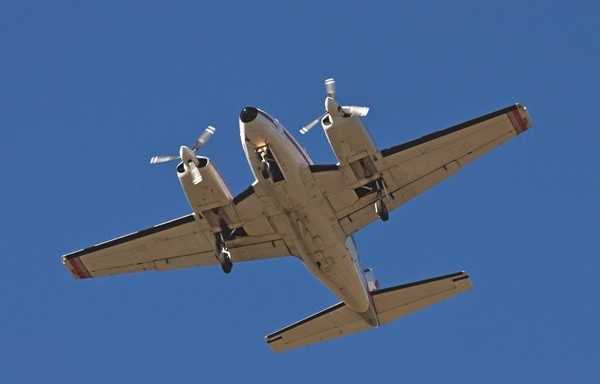
An expert in the type can target for the known, common issues that cost significant money to correct—take leaking fuel tanks for example. Inoperative avionics is another item that is not a required part of an annual inspection, but usually is for a pre-purchase. It goes without saying that forecasting what will likely need a significant expenditure of monies now or in the future requires a knowledge of the service history of the type of aircraft.
The successful acquisition of a cool, complex, vintage aircraft takes a buyer who is ready to roll up their sleeves and study, ask questions, and get help. But getting the plane is only the end of the beginning. Finding competent instruction for a checkout is often the next step, which the pre-purchase guru may be able to help with.
Further along, participating in the community to learn about any issues that arise in the fleet and to obtain answers to the inevitable questions that come up is highly recommended. It is also fun if the community is particularly active socially.
There are a lot of pluses to cool old airplanes if being a hands-on owner suits you. Superior performance can be had at an attractive acquisition price, but at the cost of effort and involvement. Involvement in aircraft acquisition and maintenance is not for everyone. For others, that is more than half the fun!
Kristin Winter has been an airport rat for over four decades. She holds an ATP-SE/ME rating and is a CFIAIM, AGI, IGI. In addition, Winter is an A&P/IA and reformed aviation defense attorney. She has over 9,000 hours in various GA aircraft. She owns and flies her Twin Comanche, “Maggie.” She flies professionally, instructs, and provides purchasing and operations consulting. She is currently based in Minnesota, which is where it all started. Send questions or comments to editor@piperflyer.com.
Digitizing Aircraft Records
There are six items that make up the universe of significant aircraft maintenance documents that an owner might want to digitize to preserve the record, or a buyer might want to obtain for a pre-purchase review:
1. Airframe logs from Day One.
2. Engine logs, at least from the last overhaul, but preferably from Day One.
3. Prop logs since the last overhaul or new, whichever is more recent.
4. FAA Form 337 – all Major Repair and Alteration forms.
5. Latest complete AD Compliance sheet.
6. Work orders, invoices, or other documents related to the last engine overhaul.
The records are likely either in the traditional booklet form or on 8 ½ x 11 sheets. Items No. 4 and 5 above are almost always in full-sheet format. The other items usually start out in booklet form and sometimes transition into folder format; something like AD Log or a homemade format.
Before starting to digitize your records, set the camera/phone to the highest resolution and to save to a JPEG or other widely compatible format. You might find that in the future you can’t access a custom proprietary format. On an Apple phone, for example, go to SETTINGS, CAMERA, FORMATS, and choose MOST COMPATIBLE. On most Android devices, JPEG is the default setting already; confirm by looking in the Settings menu of your camera app.
When photographing the booklet form, shoot a picture of the cover, so you know where that logbook starts, and then open to the first page with handwriting and take a picture of both open pages. Turn page and repeat, until you get to the end. Then start the next logbook. If there is a tag or document stapled to the page, also take a picture of what is underneath.
When photographing full pages, take just one page per picture, but otherwise follow the same strategy. For the 337 forms, there are two sides to each form. Sometimes they are copied to two separate pieces of paper, and sometimes copied back-to-back on one sheet. Make sure to get the second page, as that is where it describes what was actually done.

