


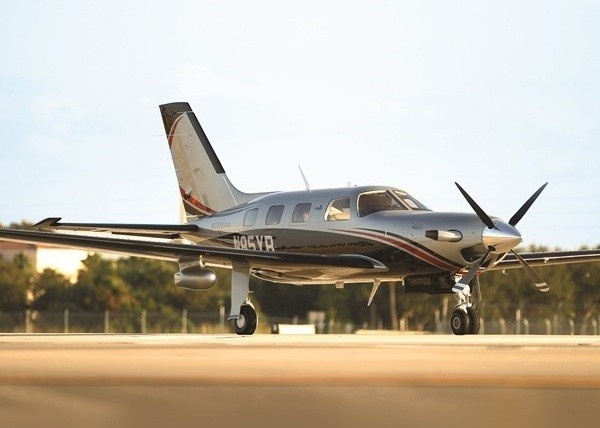
What began as a six-seat, high-altitude piston single grew into a versatile lineup of pressurized and unpressurized pistons and turboprops that now anchors Piper’s business-class offerings.
By Scott Kinney
Photos courtesy Piper Aircraft
The Piper Aircraft Co. of the mid-1970s was a busy operation. With dozens of successful models in its portfolio, Piper was producing several thousand airplanes a year. However, Piper trailed Cessna in overall market share, and its lack of business-class offerings limited potential avenues for growth. Specifically, Piper had nothing to offer buyers who wanted a high-performance, high-altitude-capable single capable of carrying an owner-pilot and several passengers.
Piper had dabbled with the idea of a pressurized single once already, back in 1966 with the PA-33 Pressurized Comanche, a sleek aircraft designed by Ed Swearingen. A single prototype was built, but it crashed in 1967, and the project was canceled.
Piper wasn’t the only company exploring the idea of pressurized singles. Mooney’s M22 Mustang was first sold in 1965. It was commercially unsuccessful, hindered by a small cabin and poor visibility, and it was canceled after only a few years.
Cessna, on the other hand, was well on their way to a turbocharged, pressurized, six-seat single-engine aircraft by the mid-1970s. The non-pressurized T210 Turbo Centurion had been around since 1965, and the next logical step was a pressurized version. The P210N Pressurized Centurion was certified in August 1977, powered by a 310 hp Continental TSIO-520.
The “urgent” writing was on the wall; Piper needed to act quickly to compete with the new Cessna model. Supported by a market study, Piper management decided to target the six-place high-performance single market with a new product.

In 1978, Piper hired Cessna’s Jim Griswold to serve as Piper’s Director of Engineering. Two competing new product designs were developed—one in Vero Beach by Griswold and his team, and the other in Lakeland by Grahame Gates. The Vero Beach design won out in early 1979, and Piper’s new clean-sheet model was given the designation PA-46-300T.
The prototype was powered by a 300-hp Lycoming IO-540-K1G5 and built using basic materials (including poplar wood for the fuselage and an oil drum for the fuel tank, according to Piper historian Roger Peperell). It was unpressurized and first flew on November 30, 1979. This prototype received further modifications over the next two years; including changes to the tail and installation of a Continental TSIO-520 engine.
A pre-production prototype bearing the model designator PA-46-310P and named the Malibu first flew on August 21, 1982. This aircraft was pressurized and had the finalized form of the high-aspect ratio wing (with a 43-foot span) that would help make the PA-46 an iconic aircraft.
PA-46-310P Malibu
Piper’s public announcement of the new model in November 1982 trumpeted the new aircraft’s ability to carry six people (pilot plus five passengers) in a pressurized cabin (5.5 psi differential) well into the Flight Levels.
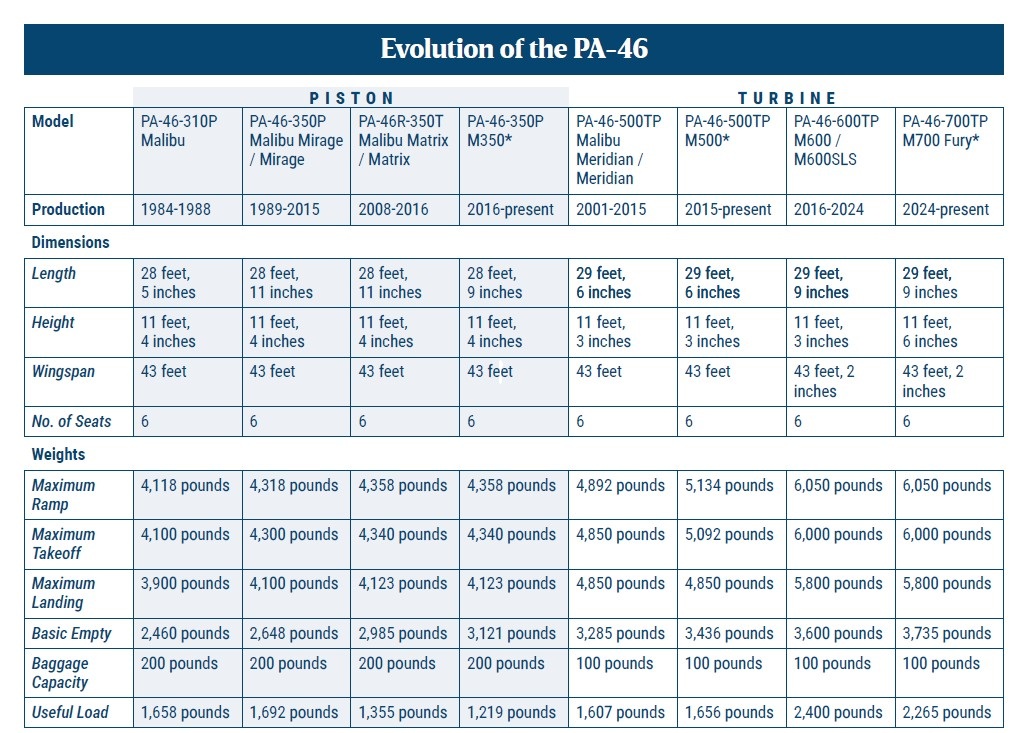
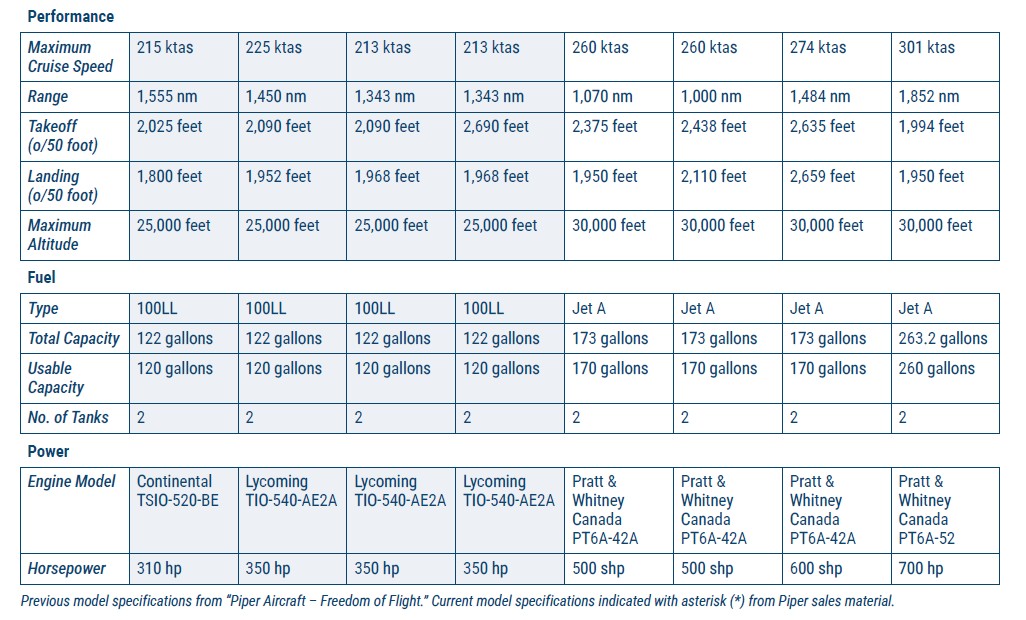
Certification of the PA-46-310P followed on September 27, 1983, under Type Certificate A25SO. The production PA-46-310P was powered by a Teledyne Continental TSIO-520-BE, developing 310 hp at 2,600 rpm (with 38 inches map) from sea level to 24,000 feet (FL240). The aircraft had a service ceiling of 25,000 feet (FL250), a MTOW of 4,100 pounds, a cruise speed of 215 ktas on 15 gph, and a range of 1,555 nm. Initial base price was $275,000.
The first production PA-46-310P Malibu shipped in March 1984. Piper now had a piston single that could outcompete cabin-class twins on economy, and edge toward entry-level turboprops for performance.
As with most new models, the Malibu wasn’t without issues. The turbocharged Continental had a propensity toward trouble with piston pins and crankshaft bearings, as well as pilot-induced issues with incorrect procedures for lean-of-peak operations. (Read more about this and other PA-46 maintenance issues in Kristin Winter’s article “M-Series Maintenance Matters,” which appeared in the September 2020 issue of Piper Flyer. See the sidebar below for more information.)
The Malibu was discontinued after the 1988 model year and was supplemented by the PA-46-350P Malibu Mirage, which had a Lycoming powerplant. Nevertheless, the first four years of the Malibu showed that the concept was a winner; Piper shipped nearly 400 Malibus between 1984 and the end of production in 1988.
PA-46-350P Malibu Mirage
Ongoing challenges with the Continental engine led Piper to seek a replacement for the next-generation Malibu. The Lycoming TIO-540-AE2A offered additional power and improved reliability, becoming the core of the new PA-46-350P Malibu Mirage.
The turbocharged Lycoming made 350 hp (at 42 inches map) up to 20,600 feet msl; and the available MAP decreased by 1.6 inches per 1,000 feet thereafter up to the maximum operating altitude of 25,000 feet (FL250).
Lycoming (and Piper) took the position that the TIO-540 should not be operated lean of peak. As a result, fuel flows in the Lycoming-powered Malibu Mirage were significantly higher than those in the original Malibu with its Continental powerplant. Since the two models had the same 120 gallons of usable fuel, the higher fuel burn on the Malibu Mirage meant a decrease in range.
Luckily, the Malibu Mirage’s takeoff, climb, and cruise performance were better with the larger engine. Piper’s official figures show an increase of around 10 knots in cruise (up to 225 ktas) and around 10% better takeoff and climb performance.
The model was certified on August 30, 1988, and debuted for the 1989 model year.
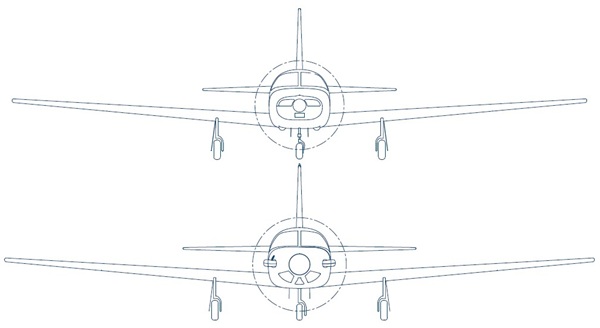
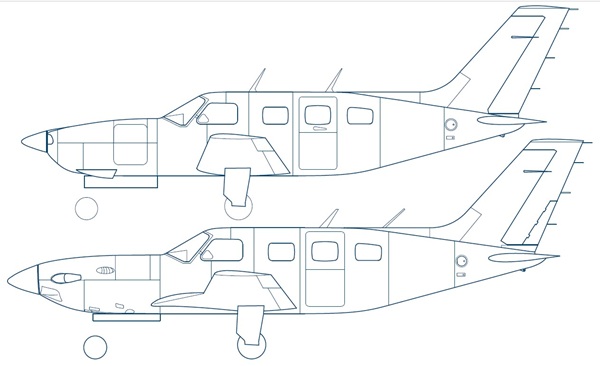
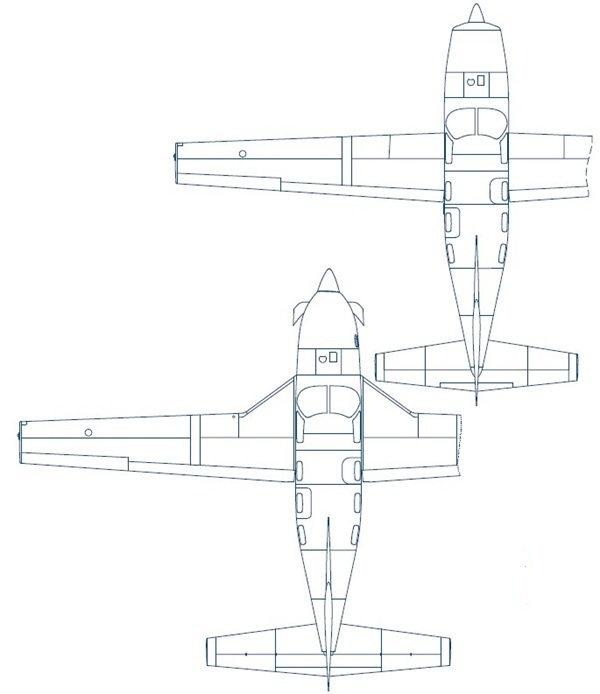
In addition to the engine change, the Malibu Mirage introduced a new wing and a panel with modern King avionics. Gross weight increased by 200 pounds to a MTOW of 4,300 pounds, but there wasn’t an increase in useful load, as the MTOW increase was offset by the increased weight of the engine and interior appointments.
Throughout the 1990s, the Malibu Mirage continued to evolve, with upgrades to the interior, improved ice-protection equipment, and avionics upgrades.
Later Malibu Mirage models (Serial Nos. 4636196 and up) have a MTOW of 4,340 pounds, as these aircraft, produced in 1999 and later, use the main wing spar originally designed for the Meridian. In 2004, the model’s marketing name shifted to just “Mirage,” and production continued until 2015, when it was supplanted by the M350.
PA-46R-350T Malibu Matrix
For the 2008 model year, Piper introduced a Malibu Mirage-based design, the PA-46R-350T, which was marketed as the Malibu Matrix, or often simply “Matrix.” The unpressurized Matrix design was meant to be a step up from high-performance four-place singles, such as the Cessna 400 series and Cirrus SR22. The Matrix was certified October 22, 2007.
The Matrix had an Avidyne Entegra glass cockpit, built-in oxygen system, S-Tec 55X autopilot, and air conditioning as standard equipment. Options included de-icing equipment, speed brakes, and avionics upgrades. Starting in 2010, Piper offered a Garmin G1000 avionics option.
Other than the lack of a cabin pressurization system, there was little difference between the Matrix and the Malibu Mirage. The Matrix used the same Lycoming TIO-540-AE2A making 350 hp. Performance numbers were similar as well: at the aircraft’s maximum certificated altitude of 25,000 feet (FL250), the Matrix was good for around 215 ktas.
The Matrix has better useful loads than other piston-driven PA-46 models. Its maximum takeoff weight is 4,340 pounds, the same as the PA-46-350P Malibu Mirage and the M350, but the Matrix has a lower standard empty weight due to the lack of pressurization equipment.
The Matrix model was discontinued in 2016.
M350
In 2015, the Malibu Mirage was rebranded as the M350 to fit into Piper’s new M-class marketing nomenclature. The M350 was targeted at owner-pilots who want piston fuel economy with next-generation safety features. The M350’s biggest selling point over the previous iterations of the Malibu was the Garmin G1000 NXi flight system.
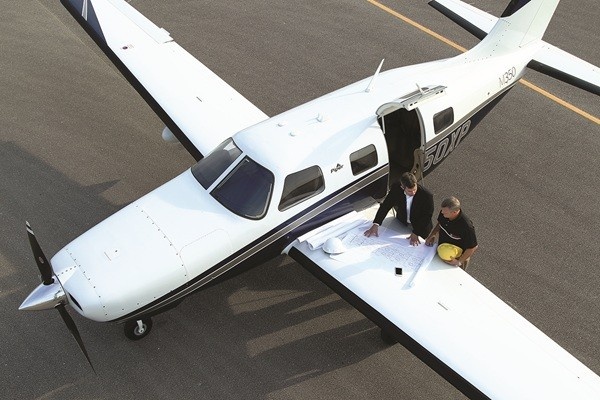
According to an April 2015 press release from Piper’s CEO and President Simon Caldecott, “The addition of proven avionics technology with Electronic Stability Protection, Underspeed Protection, and automatic Level Mode were among other improvements . What’s more, a Piper M350 can now safely fly itself unassisted to lower altitudes in the rare case that the pilot is non-responsive at altitudes where oxygen is required.”
The M350 is a current production model. Piper’s website claims that the M350 has a cruise speed of 213 ktas, a maximum range of 1,343 nm, and a maximum approved altitude of 25,000 feet (FL250).
PA-46-500TP Malibu Meridian
Though Piper’s designers had considered marrying a turboprop powerplant to the PA-46 airframe as early as the mid-1980s, the realities of the company’s financial situation at the time (ultimately leading to bankruptcy) meant that the upgrade had to wait. Piper’s 1991 bankruptcy declaration wouldn’t be resolved until the emergence of New Piper Aircraft in 1995.
Garrett (maker of the TPE-331-9 turbine) approached Piper in April 1985, and again in 1986 about using their engine on the Malibu, but Piper felt that Pratt & Whitney Canada’s PT6 turbine would be more broadly accepted by the market.
In 1988, Piper began to explore the PA-46 with a PT6 concept, including a fuselage stretch, but ultimately canceled the project, only to follow it up with another attempt in 1989 (the second project was aptly named “Phoenix”). Several designs were considered under Phoenix, including dual PT6B-35F turbines driving a single propeller through a gearbox. The project was announced to the public in May 1990, but Piper’s financial situation precluded any substantial further development.
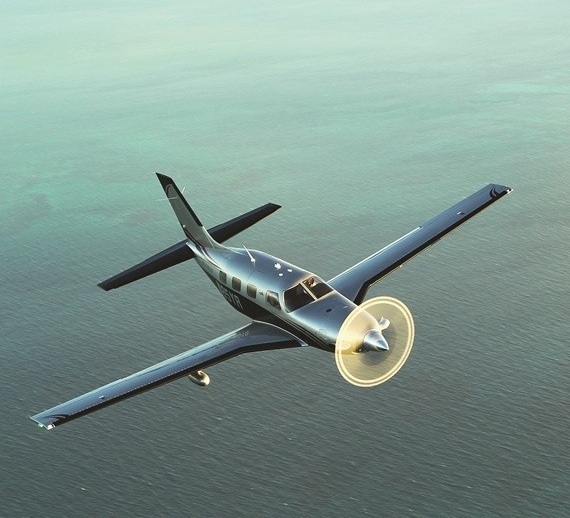
Since cash-strapped Piper couldn’t produce a turboprop-powered PA-46, another company, Rocket Engineering, sought and secured an STC to retrofit Pratt & Whitney PT6A engines to Malibu and Malibu Mirage airframes. It was (and continues to be) marketed under the name JetPROP. Rocket Engineering found many Malibu and Malibu Mirage owners were willing to pay a bit more in operating costs for a greatly expanded flight envelope, including a nearly 60-knot increase in cruise speed and significant improvements to takeoff and climb performance.
The success of the JetPROP STC, as well as other single-engine turboprops certificated in the early 1990s like the Socata TBM 700 and Pilatus PC-12, demonstrated that the market was there for a turbine-powered PA-46.
Piper was finally able to pursue the turbine PA-46 project in the late 1990s, and certification of the PA-46-500TP Malibu Meridian was approved on September 27, 2000. Deliveries started with the 2001 model year.
A March 2001 article in Flying led with the bold statement “From every angle, the new Piper Meridian is the most exciting personal airplane available. I was expecting to find a Malibu with a turboprop glommed onto the nose. To my delight, the Meridian is actually one of the most thoughtfully engineered airplanes yet. It certainly is a derivative of the Malibu, and shares the same basic overall appearance, but Piper’s detailed engineering makes it ideal for the mission of personal single-pilot flying.”
The Malibu Meridian featured a Pratt & Whitney PT6A-42A turbine, capable of 850 hp; flat-rated for 500 hp at takeoff and 400 hp for cruise. The aircraft had a modified wing as well as other structural changes to support the more powerful engine.
Initial MTOW was 4,850 pounds. Aircraft after Serial No. 156 (and earlier aircraft that had been upgraded with a service kit) were allowed a MTOW of 5,092 pounds. The latter aircraft received vortex generators on the wings and horizontal stabilizers, as well as a handful of structural upgrades.
Maximum operating altitude of the Malibu Meridian is listed as 30,000 feet (FL300). Despite the higher certificated altitude, the Malibu Meridian has the same 5.5 psi pressurization system as earlier PA-46 models.
The first Malibu Meridians had a Meggitt Magic EFIS, with Garmin GNS430 nav/com/gps units, and a S-TEC 55X autopilot. In 2005, Piper switched to the Avidyne Entegra package, and later, in 2009, to a Garmin G1000 suite with the GFC 700 autopilot.
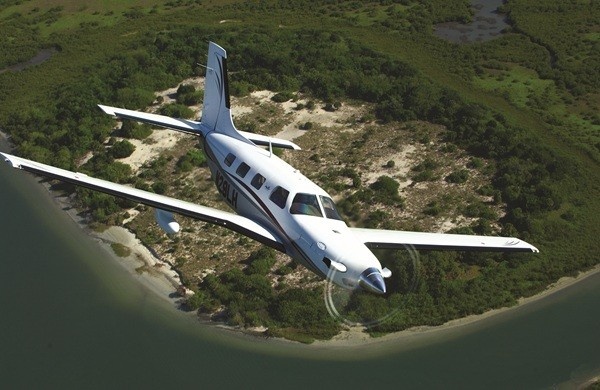
M500
As with its piston-powered sibling, in 2015, the Malibu Meridian was rebranded as the M500 to fit into Piper’s new M-class nomenclature (with M500 corresponding to the model’s 500 horsepower).
With the name change, the M500 also received the Garmin G1000 NXi avionics suite and its associated safety features.
The M500 is a current production model. Piper’s website claims that the M500 has a cruise speed of 260 ktas, a maximum range of 1,000 nm, and a maximum approved altitude of 30,000 feet (FL300).
M600
The M600 (model PA-46-600TP on the Type Certificate) was certified June 16, 2016. The M600 was powered by a Pratt & Whitney PT6A-42A producing 600 hp, and also had a new wing.
In a January 2017 interview with Piper Flyer shortly after the M600’s release, Piper CEO and President Simon Caldecott explained the reason for the changes (versus just refurbishing the Meridian design): “In conducting a thorough market analysis as well as a survey of both our dealers and customers, it was clear to us that the market needed an aircraft that could carry more and fly further.
With this in mind, we knew that the wing on the M500 would need to be redesigned in order to carry the additional load as well as accommodate more fuel.”
The M600’s MTOW of 6,000 pounds (nearly 1,000 pounds more than the M500) allowed for greater fuel capacity and greater range; up to 1,484 nm. The aircraft was faster than the M500 as well, with a maximum cruise speed of 274 ktas.
Piper also upgraded the avionics to help differentiate the top-of-the-line M600 from the M500 and M350 offerings. The M600 was outfitted with Garmin G3000 avionics when it was first released in 2016. Later M600/SLS models featured Piper’s HALO safety system, which includes Garmin Autoland, Automatic Level Mode, Autothrottle, Automatic Descent Mode, SafeTaxi, TerminalTraffic, SurfaceWatch, and Flight Stream 510.
In a 2016 review of the M600 for Business and Commercial Aviation, editor Fred George commented that “This is an aircraft that targets operators who want 1,200-nm to 1,400-nm range, rock-bottom operating costs and top-notch avionics at a 30% savings.”
The M600 was produced through 2024, when it was replaced by the M700 Fury.
M700 Fury
The M700 Fury (model PA-46-701TP) is Piper’s current flagship turboprop and is in production as of March 2026. It was certified on February 29, 2024. The first production example, Serial No. 003, was the 1,000th PA-46 produced.
Piper’s website touts the M700 Fury’s impressive features. Powered by a 700 hp Pratt & Whitney PT6A-52 turbine, the model offers 301 ktas cruise, 2,048 fpm climb, 1,852 nm range, 30,000-foot maximum altitude, and Piper’s HALO safety system with Garmin Autoland.
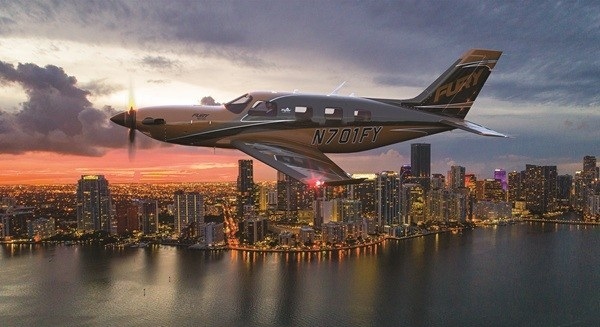
The base price isn’t listed on the website or in the 2026 model brochure, but other sources suggest that the aircraft starts at just over $4 million. Piper does say that the M700 Fury is “over $1 million less than its closest competitor.”
Piper’s marketing material pitches the M700 Fury’s operational efficiency, estimating hourly operating costs (fixed and variable) at $650/hour, and providing an annual ownership cost estimate (assuming 200 flight hours a year) of $260,000. While this may seem like a lot to some readers, Piper claims that this represents a savings of up to 60% when compared to competing aircraft.
What’s next for the M-series?
A June 2024 press release from Piper explained how the new M700 Fury and other PA-46-based models will be cornerstones of the company’s strategy moving forward. “As Piper celebrates the production of the 1,000th PA-46 turboprop, the future looks promising for both the company and its aircraft lineup. With a legacy of excellence behind it, the PA-46 turboprop is poised to continue its success story, meeting the evolving needs of the aviation community with innovative solutions and unparalleled performance.”
Scott Kinney is a self-described aviation geek (#avgeek), commercial pilot, and flight instructor. He is a writer and editor for Piper Flyer. Scott and his partner Julia are based in Eugene, Oregon. They are often found buzzing around the West in vintage airplanes. Send questions or comments to editor@piperflyer.com.
The PA-46 in Piper Flyer
“Piper PA-46 Series: The Recips” by Kristin Winter, May 2020: Kristin Winter discusses the evolution of the reciprocating-engine PA-46 series from the Malibu through the M350 with a look at features and potential issues.
“M-Series Maintenance Matters” by Kristin Winter, September 2020: The Piper PA-46 series of aircraft, which would later become the M350, M500, and M600, were a clean-sheet, high performance design. These aircraft will get you up to the Flight Levels and to your destination quickly, but they can be challenging to maintain.
“Piper PA-46 Turboprops” by Kristin Winter, October 2020: The marriage of a Pratt & Whitney Canada PT6 turbine with the Piper PA-46 airframe produced an easy-to-operate aircraft capable of high-altitude flight.
“Lofty Ambitions: Flying the Piper Malibu Mirage” by Troy Whistman, May 2023: From need-to-fly to love-to-fly, Dr. Frederick D. Poage shares his aviation journey that led to ownership of the versatile Piper PA-46-350P Malibu Mirage.
“Piper CEO Talks M600: A Closer Look at Piper’s Newest Model” by PFA Staff: Piper Flyer interviewed Piper Aircraft president and CEO Simon Caldecott about its latest offering in the M-series, the M600. Available at tinyurl.com/M600Interview
Resources
Piper Aircraft Inc. (M350, M500, M700 Fury)
Piper M-Class Owners & Pilots Association (PMOPA)
Rocket Engineering (JetPROP STC)
Sources
2026 Piper M350. Piper Aircraft. 2026.
2026 Piper M500. Piper Aircraft. 2026.
2026 Piper M700 Fury. Piper Aircraft. 2026.
“Aircraft Overview: Piper M-Class.” Aviation Week.
Flying. March 2001. (Note: many back issues of Flying, including those cited here, are available free on Google Books: Flying, March 2001.) The Flying website also contains copies of these articles.)
Peperell, Roger W., Piper Aircraft – Freedom of Flight. Air-Britain Publishing. 2020.
“Piper M600 Receives Type Certification” Piper Aircraft. 2016.

