


The author tracks down a unique bird tucked away on a Minnesota grass strip—a completely original and actively flying 1953 Piper PA-22-135 Tri-Pacer.
Most pilots, and certainly all airplane restoration buffs, have heard stories of the ultimate find—an airplane discovered in like-new condition tucked in a hangar somewhere. Finding such a gem is rare enough, but to locate one that is still in flyable condition is even more unusual. Finding what may be the oldest known airworthy unrestored tube-and-fabric airplane is nothing short of amazing.
Early last winter, I saw a few posts on social media about a Piper Tri-Pacer that had been stored away in a climate-controlled hangar for years. Apparently this 1953 PA-22-135 had never been restored.
The poster claimed it was virtually all original and the airframe and engine had just 836 hours total time. I was skeptical, but then I noticed that the posts were from Vaughn Lovley, the owner of the Vagabond I wrote about in the November 2014 issue of Piper Flyer. (Mibus’ article, “Airshow Entertainer: Lowell White’s Vagabond,” is available online at www.piperflyer.com. —Ed.)
My interest was piqued as I knew Vaughn to be a reliable source. I got ahold of him to find out more.
Believe it or not, Vaughn told me that the Tri-Pacer was based at my neighbor Toby Hanson’s hangar, just down the runway from my home at Sky Harbor Residential Airpark (1MN8). He had delivered the plane to Toby only a few days before.
The collector
It was a pleasant evening when I made my way over to Toby’s to see the Tri-Pacer. “Hello!” I called as I walked inside the hangar to find Toby and Vaughn standing at ease, talking airplanes.
A Luscombe project was tucked in one corner, still in the wings-and-gear-off stage of restoration. The workbench was full of projects in progress.
Standing in the middle of the hangar was the airplane I’d heard so much about; the Tri-Pacer—a genuine, never-been-restored 1953 PA-22-135.
“There’s kind of a neat backstory to the airplane,” said Vaughn as he walked over to greet me. About 25 years ago, a pilot and antique airplane aficionado based at Anoka County-Blaine Airport (Janes Field/KANE) north of Minneapolis started buying up airplanes. He flew the planes some, maintained them, and kept them from the harsh Minnesota weather in a climate-controlled hangar.
As he got older, Vaughn explained, this collector flew his planes less and less often. Instead of just locking the door and hiding the planes away, his generous nature prompted him to open his hangar to people who were interested in getting a glimpse at his historic collection.
When he reached his 90s, the collector decided it was time to liquidate his airplane collection. His son tried selling off the collection but didn’t make any progress. Time was running out as the collection needed to be sold by the end of the year. The family sought help from someone with experience in flying and restoring antique airplanes: Vaughn’s dad, Forrest Lovley.
Forrest took stock of the collection. There was a 1930s-era Rearwin Sportster, a Waco 10, a Stinson SR-10 and other highly sought-after planes; 14 in all. There were hard-to-find engines, projects in process and antique airplane parts. And there was what appeared to be an ordinary little green-and-gray Piper Tri-Pacer.
Forrest figured he could find buyers for the rare airplanes, engines and parts among his friends and connections in the Antique Airplane Association. He wasn’t sure, however, who would want the ordinary Tri-Pacer.

The find
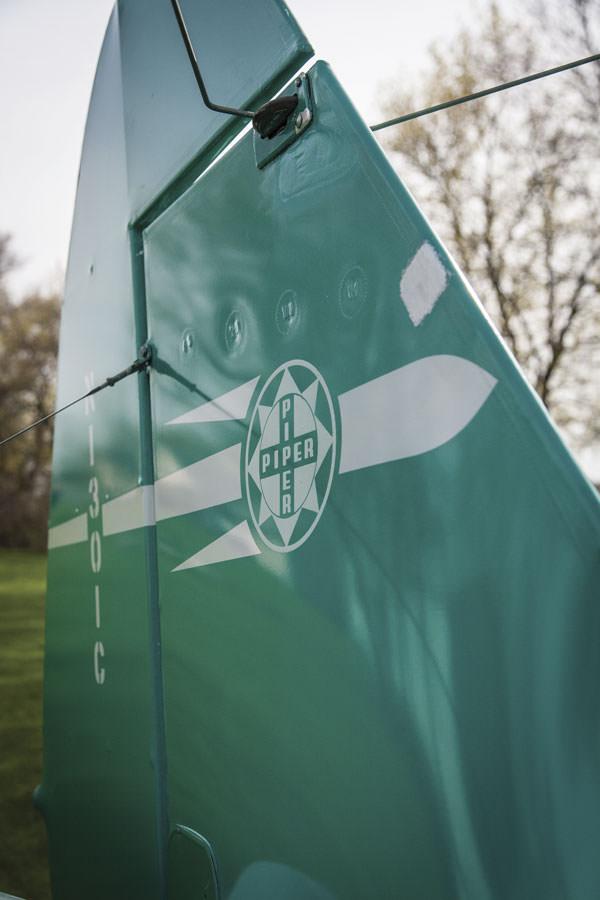
The Tri-Pacer is a stout, tricycle gear airplane in the predominantly taildragger world of antiques. With its comical “flying milk stool” appearance, the Tri-Pacer is sometimes not taken all that seriously, especially when compared to sleek antiques like those that filled the hangar.
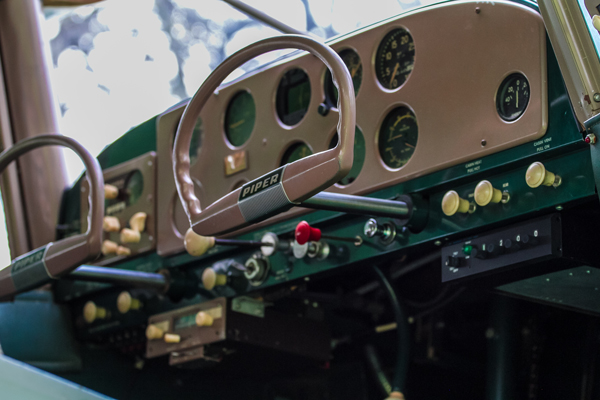
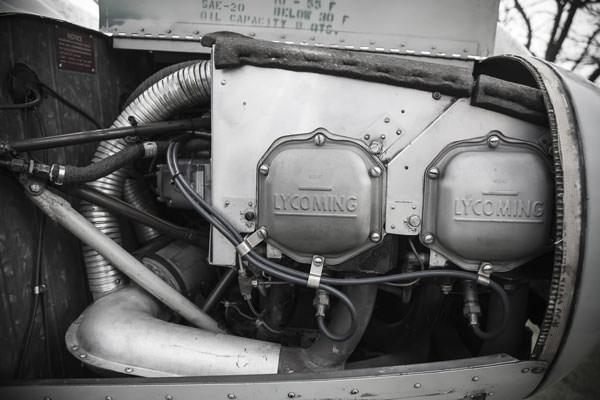
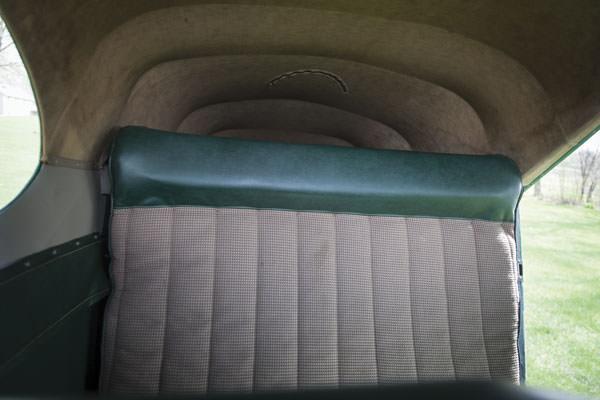
Yet Forrest took a closer look. He quickly assessed that the Tri-Pacer’s interior, panel, fabric and engine had not been modified or restored. The Tri-Pacer, like the other planes in the collection, was still in flyable condition.
He realized that the airplane might well be one of the oldest, if not the oldest, unrestored yet still flyable airplanes in the country. Sitting before him was a virtual flying time machine—looking almost exactly like it did the day it rolled off Piper’s assembly line.
Forrest knew he had a diamond in the rough on his hands. Tri-Pacers from the early 1950s are fairly common, but nearly all have undergone some modification or restoration. This aircraft was different; in its current state, it was a valuable all-original reference for the Piper restoration community. Forrest was determined to find a buyer for the plane who would appreciate what it was.
Vaughn certainly appreciated the plane and was really taken with it, but he wasn’t in the market for a Tri-Pacer. Vaughn already had his Vagabond and other planes to fly. Additionally, out of respect for his dad who was handling the sales, he didn’t want to chance taking the Tri-Pacer away from other prospective buyers.
One by one, the airplanes in the collection sold. The engines and parts were crated up and shipped away, and the projects found their way to new owners. Several people checked the Tri-Pacer out, Vaughn said, but no one snatched it up.
Here’s where my neighbor Toby comes into the story.
The buyer
“I’ve known Toby since the day he was born,” said Vaughn. Both men grew up around airplanes and connections between their two families go back three generations. Their mothers even got their licenses in the same plane: a Piper PA-11 owned by Forrest.
“Toby needed something to fly while he was working on his Luscombe project, which was still a couple of years away from flying,” Vaughn explained. “So, I called Toby and said, ‘Hey, this should be in your hangar.’”
Toby wasn’t really looking for a plane, but there was a trust between the two men which had been built through the years—one strong enough so that when Vaughn told Toby there was an airplane he had to buy, it didn’t take much convincing for Toby to agree. It took one phone call and one hangar meeting, Vaughn said, to sell Toby on the idea.
“Well, I needed something to fly so I could stay current,” Toby explained. “And then Vaughn calls up and says, ‘I found a pretty good deal on an airplane,’ and I thought, shoot, might as well.”
Once Toby had decided to buy the Tri-Pacer, Toby and Vaughn got to work.
Vaughn recounted their next steps: “Toby and I did some brake work. I had to do some patch work to the fabric, areas of wear from where people had pushed the plane by the tail section and from prop blast wear.” The patch work was minimal and they finished it in a day.
They replaced a hose, cleaned up a few things, got an annual inspection done and flew it to its new home in Toby’s hangar.
Clear prop!
“How does it fly?” I ask as Toby opens the hangar door.
Toby, usually soft-spoken, is quick to answer. “Pretty darn good!” he exclaims, smiling.
“Best Tri-Pacer I’ve ever flown,” Vaughn chimes in. Then, with a mischievous grin he adds under his breath, “It’s the only Tri-Pacer I’ve ever flown.” The friends laugh as they push the little plane out of the hangar.
“I don’t know of an older, never-restored, tube-and-fabric airplane. Almost nothing has been done, added, changed to this airplane over the course of its 63 years,” Vaughn says as he looks the plane over. “It’s like flying a time machine.”
But is this really the oldest airworthy unrestored tube-and-fabric airplane? Well, it’s hard to know for sure, Vaughn admits, as Toby climbs in the plane and he gets ready to follow suit.
Vaughn has done extensive online research to see if he can find another one like it, but hasn’t. He and his father are well connected in the antique airplane circles and thus far no one has come forward with information about an older unrestored airplane.
“I really think it could go to Oshkosh tomorrow and win something,” Vaughn says of the well-preserved airplane as he climbs in, settles into the right seat and shuts the door.
At the time of this writing, they don’t have set plans to fly the Tri-Pacer to AirVenture. That said, all it takes is a bit of hangar conversation for a couple of good friends to come up with new plans—so you might just find the Tri-Pacer Time Machine at Oshkosh with a crowd gathered around.
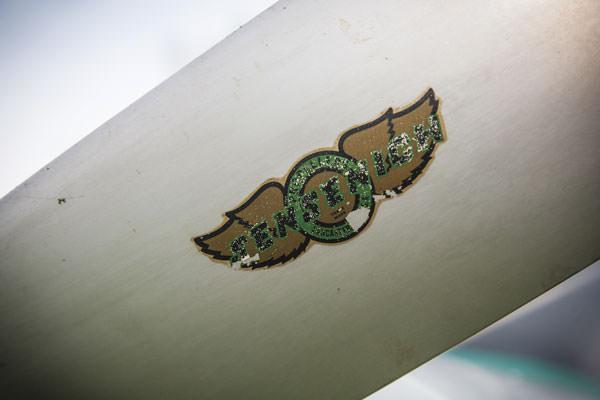
For the moment, though, their attention is on getting up in the sky and having some fun. Toby scans the area around the plane. “Clear prop!” he yells and, moments later, the Tri-Pacer’s engine roars to life.
He adds a little power and as he starts his taxi to the runway. The men give a nod and a quick wave to say goodbye. Toby does a runup. The engine sounds as smooth as it did 64 years ago.
Toby taxis onto the grass runway, adds power, starts his takeoff roll and the Tri-Pacer lifts off into the sky.
Myrna CG Mibus is a freelance writer as well as a pilot, artist, gardener and bicyclist. She specializes in writing about aviation, and her articles and essays have appeared in General Aviation News, Minnesota Flyer, Sport Aerobatics, and several other regional and national publications. She and her pilot husband, Owen, live on a residential airport near Webster, Minn. and fly a 1955 Piper Pacer. Send questions or comments to editor@www.piperflyer.com.

