


November 2014-
If you hit rain or turbulence, you can deviate; if it’s hot, you can just keep climbing until
you find cool air. But when it’s cold, it’s cold everywhere. Here are some simple steps to
keep your combustion cabin heater providing maximum performance.
For those pilots who operate in colder climates, cabin combustion heaters have an excellent history for safety, performance and reliability. That’s why it always surprises me when I hear an aircraft owner or technician say that cabin heaters are dangerous.
Yes, there’s a unit burning fuel in the aircraft, but when properly maintained, they are one of the safest and most reliable systems in the plane. Of course, some owners just don’t give these units the respect they deserve.
In fact, the heater’s excellent safety and overall performance record is precisely the reason most pilots and many technicians are caught by surprise when the heater doesn’t heat.
But even saying that the heater “doesn’t heat” is often technically incorrect. “Most of the time it’s the combustion air blower motor that quits and not the heater,” explained Harold (Hal) Haskins, Jr., owner of Harold Haskins, Inc.
“The heater chamber has a combustion air pressure switch and when it doesn’t sense the air pressure coming from the blower motor it will go open. It’s a safety device.
“The switch actually closes when it senses the air pressure. That means it’s okay to run, so the switch allows the fuel and ignition to function,” Haskins said. “If the blower motor fails, then the switch will open and cut off the fuel and ignition on the heater.”
The sensing switch is just one of many safety sensors and valves in a combustion heater system. If any of these devices fail and/or sense a malfunction within the area they protect, the heater will not function.
Aside from the sensors, units and motor, Haskins said another point of failure could be the unit’s igniter. “If that fails, there is no spark to ignite the fuel. The clue that there is an ignition problem is a little bit of raw fuel will run out of the drain or exhaust stack of the heater within two or three minutes of turning the system on,” he said. “That, and there’s no heat.”
Signs of fuel stains around these areas are one of the first things you need to look for during aircraft inspections and when troubleshooting a heater problem.
Keeping a heater healthy
and improving heater life
While it may not seem like there’s much you as the pilot/owner can do to increase an aircraft heater’s life span, there are some pretty effective proactive steps you can take.
During your routine checks, inspect the ventilating and combustion air inlets, the exhaust outlet and fuel drain for obstructions. Also, inspect the exhaust area for signs of soot buildup, which could indicate improper fuel mixture to the burner.
You should periodically inspect all the electrical connections and wiring. The unit’s spark plug should be removed for servicing and inspection of the electrode. The heater’s fuel system should be pressure checked and any filters should be cleaned.
A pressure decay test of the combustion tube is also recommended every 500 hours. The purpose of the combustion tube is to contain the primary heat source (flame) and protect the rest of the chamber from flame erosion. Along with insulating the flame, it also protects critical weld seams from the direct flame and high thermal cycling. (That’s another one of those built-in safety features.)
One thing to note about the combustion tube is once it has reached 50 percent of its original thickness, the heater’s life span becomes unpredictable and the tube’s strength and ability to contain the primary flame degrades rapidly.
Lastly, a full operational check in accordance with the aircraft AFM or POH should be completed.
While that pretty much takes care of preventive maintenance, Haskins shared two more insider’s tips on improving heater life.
“Pilots should also cool the heater down prior to landing,” he said. “Turn off the unit when you enter the pattern. This minimizes thermal stress on the heater and will help keep the overheat switch from tripping due to residual heat.”
And, while it may seem unusual, Haskins also suggests turning the heater on during the summer months. “This will ensure fresh fuel is running through the heater system and minimize the chance of clogged lines or residual moisture freezing in there when winter comes,” he said.
The heat is… off
Okay, so let’s say a long-trusted heater has gone cold as ice. The first step is to troubleshoot the entire system, but where do you start? Hartzell Engine Technologies (HET) offers lots of helpful information and tips for troubleshooting a combustion heater. (See Resources for details. —Ed.)
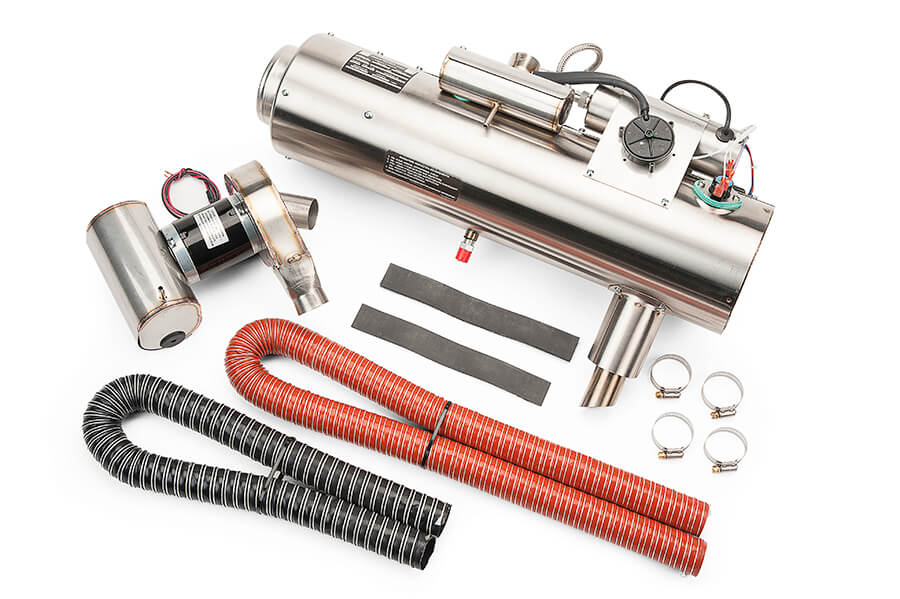
If all else fails, it’s time to repair or replace the unit. Replacing does offer the option of using a new-generation unit like the Hartzell I-Series unit.
If you have a Janitrol B-Series unit you can opt to have a heater shop like Haskins install Hartzell’s I-Series upgrade kit. The new combustion tube is a direct-replacement for the B-Series ceramic coated stainless tube, except the new I-Series tube is made of Inconel, the same material turbine (engine) blades are made from.
As an added benefit, upgrading a B-series Janitrol to HET’s I-Series is a way to eliminate AD 2004-21-05 that pertains to that series of units. Hartzell’s new line of I-Series heaters is not affected by the AD.
Owners can also exchange a B-Series heater assembly for a new or rebuilt I-Series through any HET distributor.
All about Inconel
Inconel alloys are wrought nickel-iron-chromium-aluminum super alloys developed by Special Metals Corp. The unique formulation enables the Inconel materials to retain their mechanical properties in high temperature oxidizing environments like those found in turbine engine combustors, turbines and exhaust systems.
In a cabin heater, Inconel performs better and is much less susceptible to heat erosion (that typically leads to burn-through) than the prior-generation method of applying a ceramic coating to the stainless steel. Because Inconel requires no additional surface treatments, you also eliminate any application inconsistencies that could impact longevity.
This winter, don’t just expect your cabin combustion heater to work. You can—and should—give your heater some close attention before it goes cold on you. When properly maintained, a combustion cabin heater is one of the safest, most reliable systems in your airplane.
Tim Gauntt is the Director of Product Support for Hartzell Engine Technologies LLC. He has been active in the aviation industry for more than 30 years as a General Aviation mechanic, IA, AMT, Part 147 instructor and various other technical support-related positions. Send questions or comments to editor@www.piperflyer.com.
Resources
Harold Haskins, Inc.
haroldhaskinsinc.com
HET’s “Cabin Heater FAQ
& Troubleshooting”
www.piperflyer.com/cabinheatfaq
I-Series Cabin Heaters
hartzellenginetech.com

