


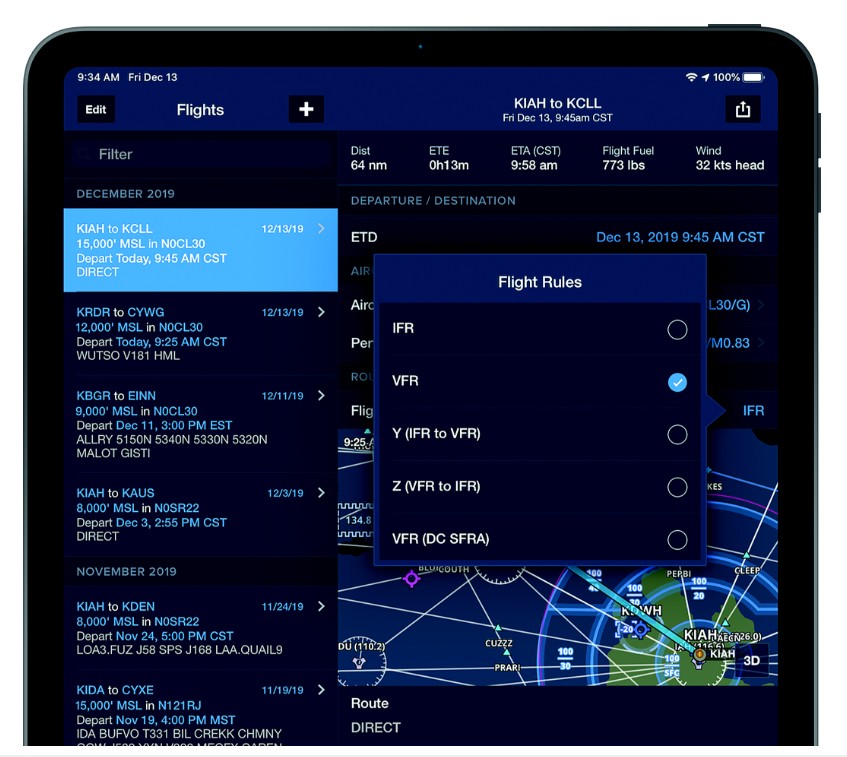
As VFR flight plan usage declines, here’s how today’s pilots are doubling down on flight following and modern technology so they can be found quickly if something goes wrong.
By Kevin Garrison
Make sure somebody misses you when you’re gone…
In today’s world, it seems like everyone is looking over your shoulder. Your phone and other computers on the internet track your purchases, personal interests, and your location almost constantly. It seems impossible to become missed or get lost.
Yet, while flying, it is easier than you think to become unfindable and out of communication just when it matters most and when time is critical.
There are more than a few horror stories in which pilots head out on a flight and are never found or are found too late for their survival. While “freedom of flight” is a wonderful thing, it is important to make sure that someone is watching over you, even if it is only in the background.
Every search for a downed aircraft begins at the last instance of electronic contact (if any), or by following the route and timing of a flight plan (if one was filed and opened).
The least successful searches are for flights with no known route, and that leave no electronic traces or tracks to follow.
The VFR flight plan
If you have filed and are flying under instrument flight rules (IFR), you are, by definition, following a flight plan. Not only that, but your flight is likely in a radar environment (in the United States, that is almost everywhere); your position and track are constantly followed and recorded.
VFR flight plans are another matter. Even though they are one of the most time-tested methods for triggering a search if you are missing and one of the best factors for being found if you are lost, many pilots have moved away from filing and opening them.
Fewer traditional VFR flight plans are being filed. Data shows a significant, long-term decline in VFR flight plans filed via telephone or radio with Flight Service stations, down from 30,000 per month in 2013 to less than 5,000 monthly in 2020.
Filing a VFR flight plan could not be easier. You can file using any flight planning app. If you’re shy about talking to a specialist on the phone, opening and closing your flight plan can be done easily on your tablet or smartphone.

Many pilots who do file a flight plan now do so using computer apps, but the FAA’s data shows a downward trend in filed VFR flight plans (by all methods), dropping from over 2.2 million in 2018 to under 700,000 in 2023. This waning interest in this basic search-and-rescue resource is regrettable, because this simple, easy-to-use tool offers much more than a simple overdue notice.
First, it keeps another set of eyes on you. When you are on an active plan, the FAA takes on the responsibility of verifying you’ve reached your destination safely.
Next, it keeps the pilot honest and aware of the need to report routing and other changes while en route. Finally, there are only two steps added to your checklist: one to open the plan, and another to close it at the end of your flight.
Here is the best reason to file a VFR flight plan: you will be missed sooner, and your rescue will be launched more quickly, if you have filed one and then go missing. How much sooner? According to the FAA, their Search and Rescue (SAR) operations for overdue flights on a VFR flight plan begin 30 minutes after the ETA listed at filing.
Once an aircraft is declared missing, the average time from the VFR pilot’s last known position, or “LNP,” to being rescued averages 37 hours. If the pilot has not filed, that time increases by six hours, to an average of 43 hours.
Six hours may not sound like much time—unless you are injured or trapped in wreckage. Your chances improve dramatically if your last known position is very close to where your aircraft and you end up.
The most common way to decrease the time frame and ensure your position is known is to use a service offered by Air Traffic Control for VFR pilots called VFR flight following.
VFR flight following
Using ATC to help watch over you has additional benefits: it’s one of the best ways to get traffic advisories, weather updates, and help navigate around flight restrictions like Restricted Areas, Temporary Flight Restrictions (TFRs), and Military Operations Areas (MOAs). The most popular benefit of flight following, officially known by the FAA and ATC as “VFR traffic advisories,” is traffic information and avoidance, but by far the most important purpose for the service is flight tracking and monitoring.
The advantages of VFR flight following are enormous for a cross-country pilot. The possibility of you getting lost is greatly reduced, and while en route, ATC can often give you hints about dangerous weather—where it is, how severe it is, and where it is heading.
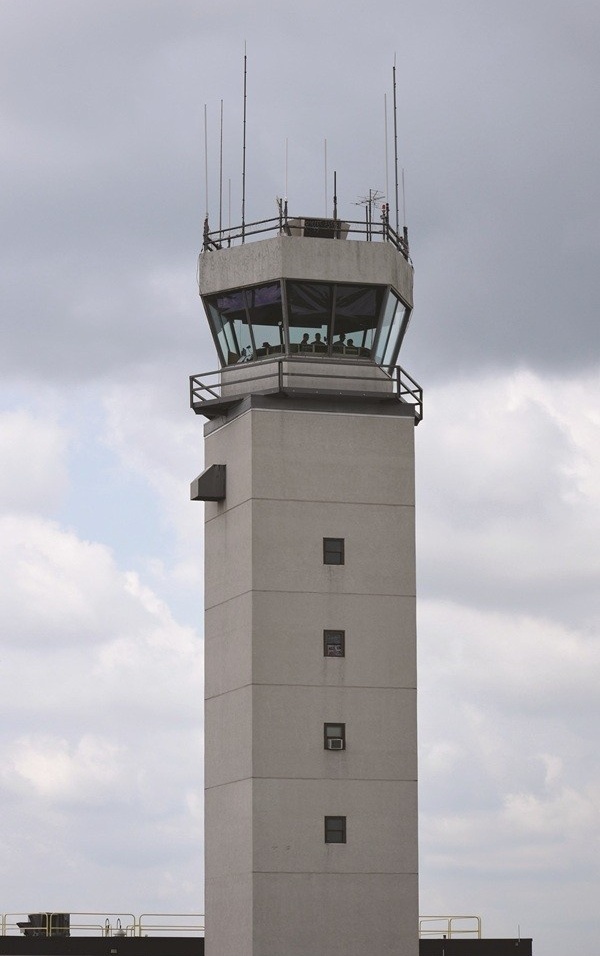
In an emergency, VFR flight following can really shine. You are already in contact with a person who can immediately launch SAR assets if you need them—no waiting for your flight plan to expire or for your family to miss you before the search begins. Your controller also knows your exact position and can help you find a nearby airport if you need their help. If you are going to have to land off airport, they can direct SAR immediately to where your aircraft disappeared from their scope.
The most common reasons pilots give for not requesting flight following are bashfulness about talking with a controller on the radio and the fact that, sometimes, they are told the controller’s workload is too high to offer the service.
Controllers are aware that some pilots who ask for the service are new to talking with them, and they make allowances for any nervousness you may feel. Practice is the only way to get comfortable. Talking with a controller while enjoying their flight following service is a great way to become an experienced communicator.
It is true that ATC’s primary responsibility is for controlling and separating IFR traffic, and you might occasionally get a turn-down for your request, but by calling the controller and asking for the service, you have entered their mental picture of the airspace. If they can’t handle you due to workload and have turned you down, they still know your destination and position.

Monitor the ATC frequency even if you are refused VFR flight following; you may hear the controller directing conflicting traffic away from you and others. This gives you a mental picture of where traffic in your area is flying. Since you are already on the frequency, you have roughly the same mental picture as your busy controller. Pilot reports (like those for turbulence) and other chatter you hear on the frequency can do nothing but help you.
Most of the time, you will be accepted by ATC for flight following. You will be given a discrete transponder code and the nearest altimeter setting. After you hear “radar contact,” you are in business. Your job is then to pass along any altitude, destination, or route changes you may make. Remember, as a VFR pilot, you choose the route and how high you fly. (You also have the responsibility to pay attention and listen for your callsign—the controller may try to reach you to give you information or instructions to keep you safe.—Ed.)
VFR flight following is a different service from the controller responsibilities in Class A, Class B, Class C., and Class D airspace, but most likely the controllers from whom you request flight following will hand you off to the proper en route frequency when you leave their sector.
The good ol’ ELT
Emergency locator transmitters are installed on most General Aviation aircraft in the United States and have been mandatory equipment since 1973. After being triggered by the impact of g-forces from an aircraft accident (or by the pilot manually activating the ELT with the now-required button in the cockpit), ELTs are designed to transmit a distress signal on 121.5 MHz (and some also broadcast on the military frequency of 243.0 MHz), and, for newer ELTs, on 406 MHz.
“State of the art” battery-powered ELT units for aircraft in the wild and woolly 1970s transmitted on the 121.5 MHz frequency, the designated international distress channel, also known as “Guard.”
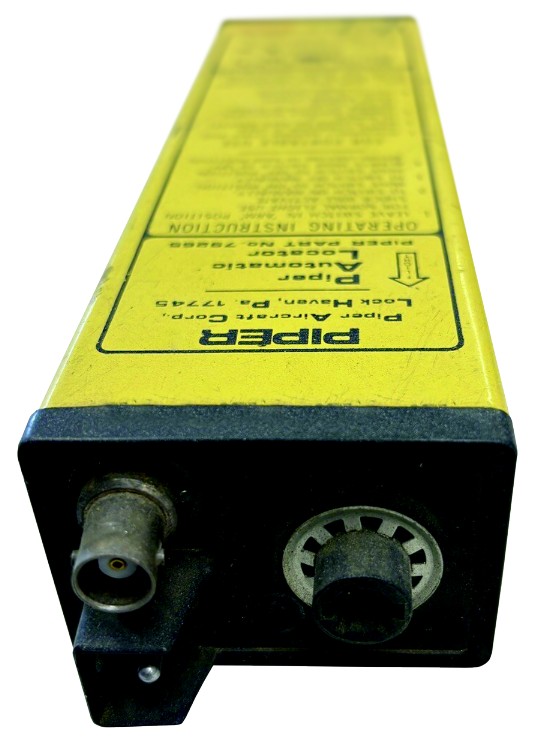
Those original ELTs were triggered automatically by impact forces in only 25% of actual crashes, and they suffered from an enormous 97% false-alarm rate. In 1985, a new TSO-C91a ELT was developed, which significantly reduced many problems with the earlier models. In 1992, TSO-C126 created specifications for 406MHz ELTs. However, it wasn’t until 2012 that new TSO-approved ELTs were required to have 406 MHz functionality, when TSO- 91a was canceled and superseded by TSO-C126a.
Today’s digital 406 MHz ELTs allow search and rescue personnel to have vital information specific to you and your aircraft, such as your aircraft’s last GPS position, if so configured and wired. These new 406 MHz ELTs do still broadcast a signal on 121.5 MHz for use as a homing beacon.
ADS-B
Automatic Dependent Surveillance- Broadcast systems are currently onboard more than 169,200 aircraft in the United States. By regulation, when installed and functional, they must be turned on. This is good news for you, because if you have ADS-B Out capability, it becomes a sort of “silent partner” in tracking your position, ready to help if needed. Many pilots and their families use apps that can track their flights in real time. If a pilot goes missing, it is easy for their rescuers to pull up the app and track the aircraft to where its ADS-B signal was lost.

Help from handhelds
Battery-powered handheld personal locator beacons (PLBs), like those offered by Garmin, are a great addition to your flight bag for use as a backup distress signal and a land navigator.
These units come with an SOS button and, because they communicate via satellite, do not have the line-of-sight restrictions of VHF radios. For a small subscription fee, the units include a text feature that lets you communicate your condition to rescuers.
A fully charged personal cellphone might be all the capability you need to call for help and allow responders to find your location.
The PLB and a cellphone are best kept on your person while flying, perhaps in a zippered shirt or vest pocket. That way, if you are separated from your aircraft after landing or are injured, you will have a rescue resource at your fingertips.

Finally, keep it simple
If you do not want to spend the money or are tech-averse, there are still two other ways to ensure someone is watching over you.
The first is simply to tell someone about your flight plans for that day. A simple, “Hey, I’m going flying in the North practice area,” might be “the phrase that saves.”
Or you could leave a short note. A hangar whiteboard or a pad of paper left next to your chocks with your plan written on it could be a last-ditch way to tell the world where to look for you.
If you are committed to the “freedom of flight” and want to be independent of FAA scrutiny, having passive electronic help such as ELTs, PLBs, and the like will help you in a pinch.
But, if you are like most pilots, you will welcome a little safety oversight in exchange for having more than one active way of communicating when you need the assistance of others.
Kevin Garrison’s aviation career began at age 15 as a lineboy in Lakeland, Florida. He came up through General Aviation, retired as a Boeing 767 captain in 2006, and retired from instructing airline pilots in 2017. Garrison’s professional writing career has spanned three decades. Send questions or comments to editor@piperflyer.com.

