


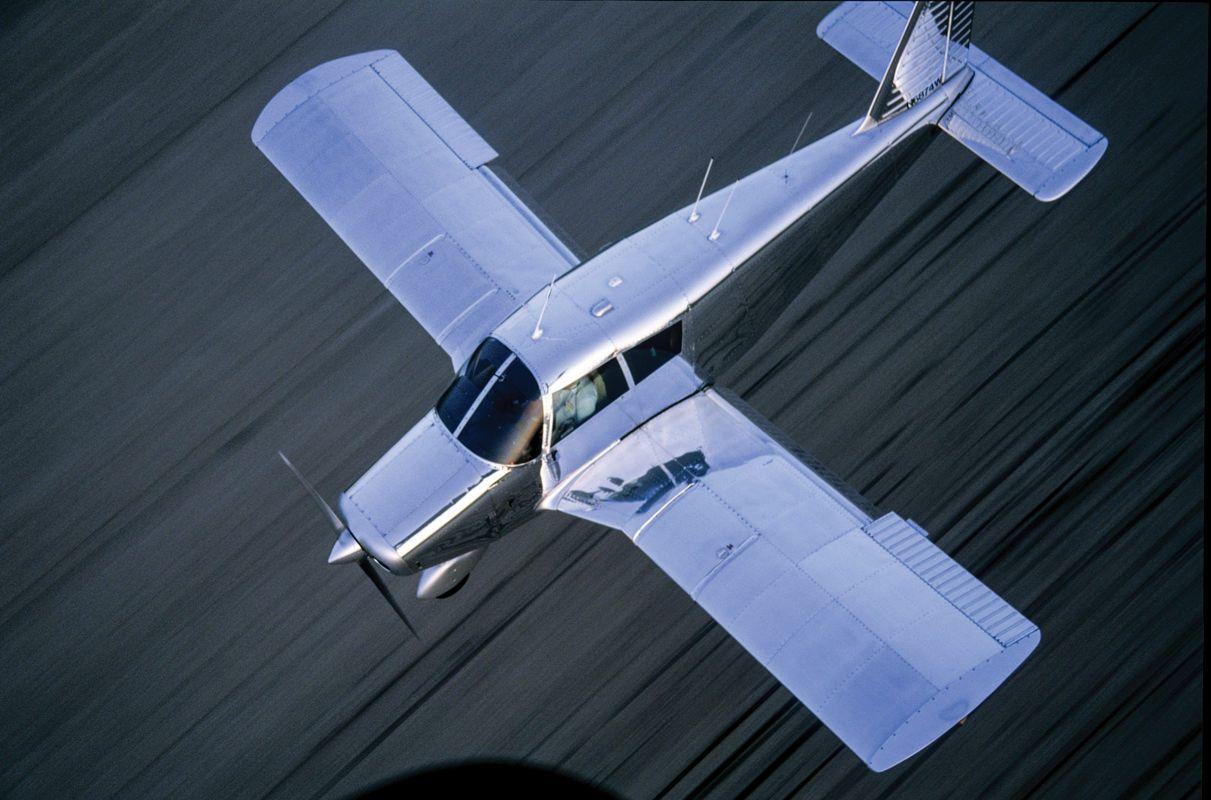
Piper Aircraft Corporation’s expansion in the mid-1950s led to the opening of a second facility at Vero Beach, Florida. The differences between Piper aircraft designed and built in Lock Haven, Pennsylvania, and those born in Vero Beach, Florida, are numerous and important for owners, operators, and mechanics to understand.
By Kristin Winter
While many Piper pilots are aware on some level that Piper used to make aircraft in Lock Haven, Pennsylvania, and now makes them in Vero Beach, Florida, fewer understand the significance of that bit of Piper design history.
It is not too much to say that Piper Aircraft in Lock Haven is almost a different aircraft manufacturer than Piper Aircraft in Vero Beach. The change of location led to significant design differences that need to be understood.

A Piper history lesson
To appreciate the differences between the two Pipers and their respective product lines, a bit of history is in order.
Most know that Piper got its start in Pennsylvania when William Piper, Sr. bought into Taylor Aircraft. Piper then bought Taylor out, and moved the company to Lock Haven, Pennsylvania, renaming it Piper Aircraft Corporation. This was back in the day of the Piper J-3 Cub, prior to World War II. (In “Piper Aircraft,” historian Roger Peperell notes that W.T. Piper bought out Gilbert Taylor in 1935, moved to Lock Haven and officially changed the company’s name in 1937. —Ed.)
From the beginning, W.T. Piper sought to be the Henry Ford of aviation, attempting to make aviation affordable to the masses. With the Piper Cubs and their derivatives, Piper arguably achieved that goal.
After World War II, airplane development turned from tube and fabric truss construction to aluminum, semi-monocoque designs.
Piper’s first two all-metal aircraft were the Piper PA-23 Apache and the Piper PA-24 Comanche. These were both fine airplanes, but Piper’s lower-end line was still represented by the tube-and-fabric PA-20 Pacer and PA-22 Tri-Pacer. These models were competing against Cessna’s 170 and 172 series, which were more modern, all-metal aircraft. Piper needed a competitor to Cessna’s offerings, and they wanted to be able to produce it more cheaply.
Piper faced a couple of limitations with building a less-expensive, all-metal competitor in Lock Haven. One limitation was that the Lock Haven plant had little room to expand. This made it difficult to add the facilities necessary to launch another line of aircraft.

Additionally, the Lock Haven facility was largely unionized, which meant that labor costs were high, making the goal of a relatively inexpensive competitor to the Cessna 172 more difficult to realize.
Vero Beach expansion
In the mid-1950s, Piper opened a second engineering, and then manufacturing, facility in Vero Beach, Florida.
Piper hired outside engineers, Fred Weick, Karl Bergey, John Thorp, and others to design a new aircraft that would be a modern replacement for the PA-22 Tri-Pacer. There was little cross-pollination with the engineering department in Lock Haven.
The result was the Piper PA-28 Cherokee, which was certified in 1960. One goal was for the Cherokee to be relatively cheap to manufacture. The Cherokee had fewer than half the number of parts of a PA-24 Comanche and fewer than half the rivets. The Cherokee was a design that had little in common with those coming out of Lock Haven.
Evolutionary Piper design and the Cherokee
Once a manufacturer has made a clean-sheet design, it is natural to extend the basics of the design to make new products or to improve existing ones. Evolutionary design is standard in the industry. It is much cheaper to scale up or down an existing design rather than start from scratch. It saves engineering time and it makes an aircraft easier to certify.
The Cherokee series and its many derivatives are a classic example.
The original fixed-gear, four-place PA-28 Cherokee design begat models ranging in horsepower from 140 to 235. The PA-28 got a new wing in the 1970s, which was itself only a modification of the existing wing.
The new “Warrior” wing was a longer, tapered version of the original “Hershey Bar” wing, so called because of its rectangular shape and resemblance to the candy bar.
The new wing was of the same airfoil and had the same wing area. The change took the outer portion of the wing and tapered and lengthened it.
The fuselage was stretched, and a bigger engine installed to make the PA-32 Cherokee Six, but the general structure and the design details remained essentially the same.
Retractable landing gear was added to the PA-28-180 Cherokee 180 to make the PA-28R Cherokee Arrow. The same retractable landing gear system was added to the Cherokee Six to make the PA-32R Lance/Saratoga line.
The PA-32 Cherokee Six was modified to make the PA-34 Seneca by using two smaller engines on the wings in place of a single big one in the nose. A similar modification to the PA-28R-201 Arrow IV design resulted in the PA-44 Seminole.
Throughout all these changes, the structure remained fundamentally the same; the landing gear—fixed or retractable—remained the same; the control system remained essentially the same, and so on.
Lock Haven Piper design characteristics
The same sort of design extension is true for Piper in Lock Haven and other manufacturers. However, Lock Haven did not stretch any of its designs as far as Vero Beach did with the original Cherokee.

There are certain hallmarks of a Lock Haven design. They always used the same basic design for how the wings and the fuselage met. They used the same hydraulic landing gear system in the Apaches, Aztecs, Navajos and Cheyenne series. They used bladder fuel tanks in most models, whereas Vero Beach did not.
Manufacturers’ similarities
Anyone familiar with the single-engine Cessnas will see the design similarities throughout. The same can be said of the twin-engine Cessnas (until you get into the Citation line of jets). Beechcraft got a lot of mileage out of the basic Bonanza design, which stretches back to the 1940s. And a Mooney is a Mooney is a Mooney.
When comparing different lines of aircraft from the same manufacturer, many of the design details and the way of doing things show their common origins (assuming they’re from the same engineering center).
The departures between the Lock Haven Pipers and the Vero Beach Pipers are fairly dramatic and it is worth keeping that distinction in mind. A Piper is not always the same animal, just because it is a Piper.
An instructor experienced in a PA-28R Arrow will know nothing about a PA-24 Comanche by dint of his/her Arrow experience alone. A mechanic that has worked on PA-28 Cherokees most of his career will be lost at sea when presented with his first PA-23 Aztec.
When dealing with Pipers, keep in mind that there were essentially two different Piper Aircraft companies.
Piper wing attachment designs
In the wake of the in-flight breakup of the Piper Arrow, operated by Embry-Riddle Aeronautical University, some Piper owners or prospective owners/pilots have expressed concern about the structural integrity of all Piper aircraft. In that accident, the left wing separated at the root.
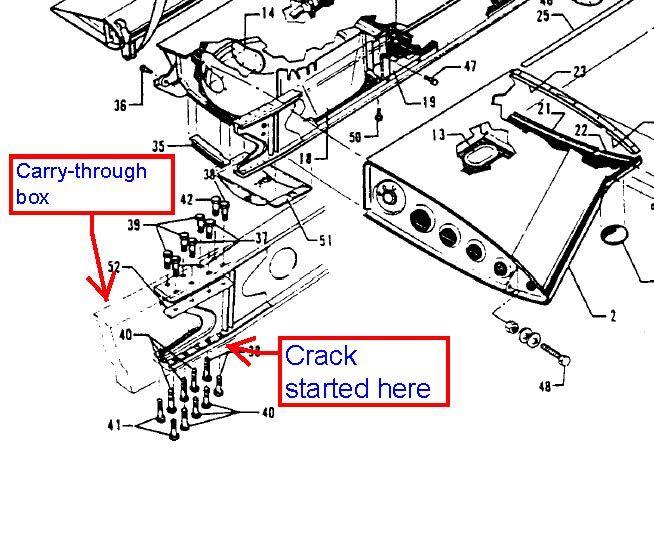
The NTSB has just made a final determination as to the cause. It confirms that fatigue cracks propagated from the outboard bolt holes in the lower spar cap. Additional inspections of Embry-Riddle’s fleet of Arrows found another to be cracked in the same location. The FAA has proposed an Airworthiness Directive requiring eddy current NDT testing of the bolt holes looking for fatigue cracks.
The NTSB final report focuses on the numerous landing cycles that these aircraft experienced, which, in the case of the Embry-Riddle aircraft, was in excess of 30,000 landings, and the fact that these aircraft spent their operational life bouncing around at low altitudes. The NTSB report goes on to state that private-use aircraft are not subject to the same magnitude of repetitive stresses. (The final report was published by the NTSB on Sept. 3, 2019. For a link to this 30-page document, visit the PA-28 board under “Piper Models” at www.piperflyer.com/forum. —Ed.)
The Vero Beach Piper PA-28 Cherokee series and its derivatives, including the Arrow, all use the same structural design to attach the wings to the fuselage. The Cherokee uses a carry-through box structure that is built into the fuselage. The main spar of each wing has a stub portion that slides into the carry-through box, and then eight bolts go through the box and upper spar cap and 10 bolts go through the box and lower spar cap.

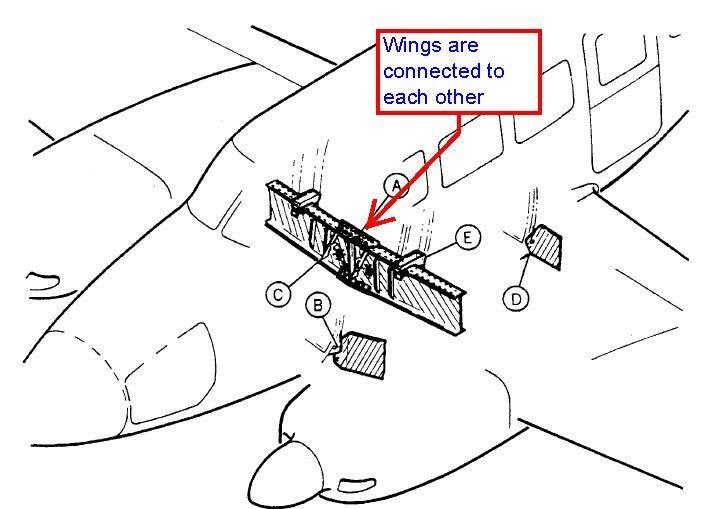
In contrast, the Lock Haven Piper design attaches the wings together in the center and then attaches the fuselage to the wings. The Lock Haven design has no carry-through structure built into the fuselage. Instead, the main spar of each wing extends out beyond the wing surface a distance approximately equal to half of the width of the fuselage. The main spar of each wing is attached to the other wing main spar with substantial splice plates on both the top and bottom, plus two channels on the front and back of the spar webs. The fuselage is then attached to the wing structure.
The engineering merits of the two types of structures can be debated. However, what is clear is that the failure mode that happened to the PA-28R-201 Arrow (and back in the 1980s to a PA-28-181 Archer) will not happen to the Lock Haven-designed aircraft such as the PA-23 Apache, PA-24 Comanche, PA-23-250 Aztec, PA-30 Twin Comanche, PA-31 Navajo, and the PA-42 Cheyennes.
From the PA-24 Comanche in-flight breakups which I have studied, it appears that the center sections on these aircraft do not fail and do not develop the same type of fatigue cracks as have occurred in the PA-28 series.
The in-flight breakups of which I am aware in the Lock Haven birds involved massive overloading usually caused by flying into a thunderstorm. Even then, it has not generally been the center section of the wings that broke, but rather an outboard section of the wing broke.
It should also be noted that the structure attaching the two halves of the wing together on the Lock Haven aircraft is easy to visually inspect. The Vero Beach Cherokee attachment system requires either sophisticated testing or removal of the wings.
We are all waiting for the other shoe to drop with the Cherokee wings in the form of an expected AD. It should be kept in mind that the aircraft which suffered the wing failures were all high-cycle aircraft. The first in the 1980s had thousands of hours of pipeline patrol flying; bumping along in summer turbulence day in and day out. The Embry-Riddle Arrow had over 6,000 hours of flight training use.
Keep in mind that the proposed AD does not require an inspection on an aircraft which has not had 100-hour inspections until something like 85,000 hours. The fact that the AD applies primarily to aircraft that have a long commercial use history suggests that it is not a factor for the average owner.
Kristin Winter has been an airport rat for almost four decades. She holds an ATP-SE/ME rating and is a CFIAIM, AGI, IGI. In addition, Winter is an A&P/IA. She has over 8,000 hours, of which about 1,000 are in the Twin Comanche and another 1,000 in the Navajo series. She owns and operates a 1969 C model Twinkie affectionately known as Maggie. She is a recognized authority on Piper Comanche aircraft. Currently she is serving as Director of Operations for a commuter airline in Southeastern Alaska. Send questions or comments to editor@piperflyer.com.

