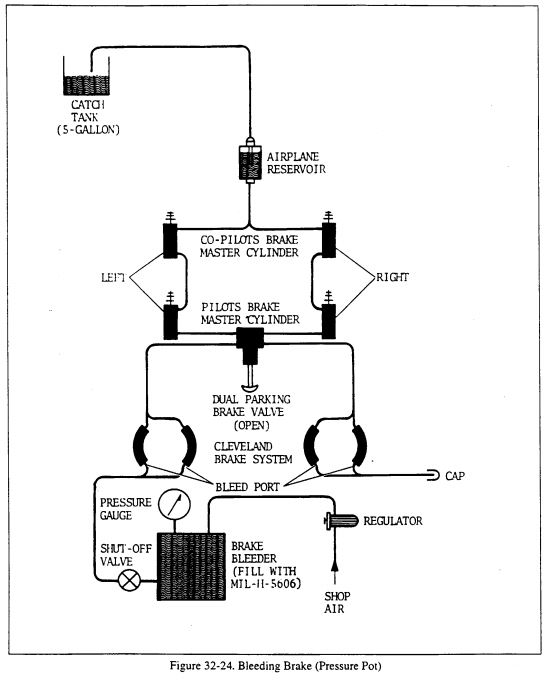
[attachment=883]Bleed Diagram.JPG[/attachment]
Attachments:
Bleed Diagram.JPG
Bleed air from break system



-
ParticipantParticipant
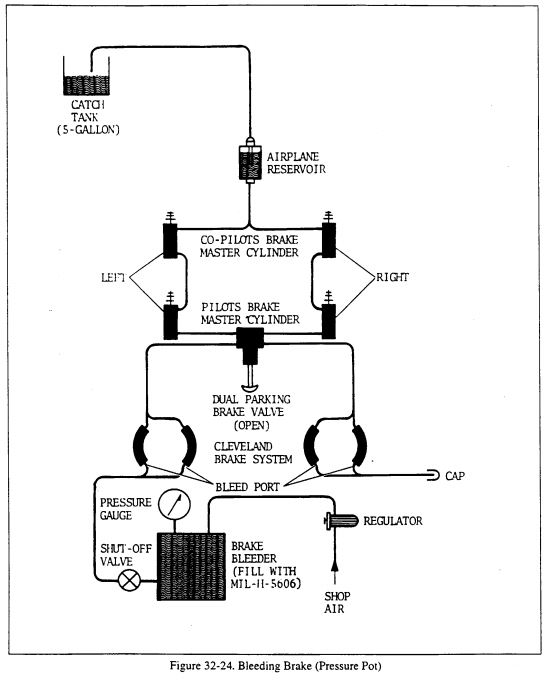 Attachments:Participant
Steve,
From the PA-31, PA-31-300 and PA-31-325
7-65. BLEEDING PROCEDURE. If the brake line has been disconnected for any reason, it will be
necessary to bleed the brake system as described below:
a. Place a suitable container at the brake reservoir to collect fluid overflow.
b. Remove the rubber bleeder fitting cap located on the bottom of the brake unit housing on the
landing gear.
c. Slide a hose over the bleeder fitting, loosen the fitting one turn and pressure fill the brake system
with MIL-H-5606 fluid. (Refer to Figure 7-19.)
NOTE
By watching the fluid pass through the plastic hose at the top of
the brake reservoir, it can be determined whether any air remains
in the system. If air bubbles are evident, filling of the system shall
be continued until all of the air is out of the system and a steady
flow of fluid is obtained.
d. Tighten bleeder fitting and remove the hose. Check brakes for proper pedal pressure.
e. Repeat this procedure on the other gear.
f. Drain excess fluid from reservoir to fluid level line with a syringe.
Reissued: 10/12/79 LANDING GEAR AND BRAKE SYSTEMFrom PA-350
7-68. BLEEDING PROCEDURE. If the brake line has been disconnected for any reason, it will be
necessary to bleed the brake system as described below:
a. Place a suitable container at the brake reservoir to collect fluid overflow.
b. Remove the rubber bleeder fitting cap located on the bottom of the brake unit housing on the
landing gear.
c. Slide a hose over the bleeder fitting, loosen the fitting one turn and pressure fill the brake system
with MIL-H-5606 fluid. (Refer to Figure 7-25.)
NOTE
By watching the fluid pass through the plastic hose at the top of
the brake reservoir, it can be determined whether any air remains
in the system. If air bubbles are evident, filling of the system shall
be continued until all of the air is out of the system and a steady
flow of fluid is obtained.
d. Tighten bleeder fitting and remove the hose. Check brakes for proper pedal pressure.
e. Repeat this procedure on the other gear.
f. Drain excess fluid from reservoir to fluid level line with a syringe.From PA-31T2 Cheyenne II XL
8.11 BRAKE SERVICE
The brake system is filled with MlL-H-5606 (petroleum base, red)
hydraulic fluid. This should be checked at every 50 hour inspection and
replenished when necessary.
Do not use vegetable base brake fluids (blue) when refilling the system.
The brake fluid reservoir is filled by opening the access door on the upper
right portion of the nose section, exposing the brake reservoir, and removing
the filler cap. Then add fluid to the reservoir to the required level.
lf it is necessary to bleed the brake system to get air out of the lines, fluid
should be added under pressure at the bleeder on the brake unit.
No adjustment of brake clearances is necessary. lf, after extended
service, braking action requires too much movement of the toe pedal or the
brakes are spongy, check the Service Manual for corrective action.From PA-31T3 T1040
BLEEDING PROCEDURE.
If the brake line has been disconnected for any reason, it will be necessary to bleed the brake system as
described below:
1. Place a suitable container at the brake reservoir to collect fluid overflow.
2. Remove the rubber bleeder fitting cap located on the bottom of the brake unit housing on the landing
gear.
3. Slide a hose over the bleeder fitting, loosen the fitting one turn and pressure fill the brake system with
MIL-H-5606 fluid. (Refer to Figure 32-24.)
-NOTE By watching the fluid pass through the plastic hose at the top of the brake
reservoir, it can be determined whether any air remains in the system. If air
bubbles are evident, filling of the system shall be continued until all of the
air is out of the system and a steady flow of fluid is obtained.
4. Tighten bleeder fitting and remove the hose. Check brakes for proper pedal pressure.
5. Repeat this procedure on the other gear.
6. Drain excess fluid from reservoir to fluid level line with a syringe.That’s all I got,
Hope it helps. Looks like I misspoke on the sections in my previous post. Above is a copy paste from the manuals.
Let me know if you need anything else.
MarcParticipantParticipantI am having the exact same issue in my PA-42. Did you ever figure out the issue?
ParticipantThe procedure that you have described I believe is incorrect.
I have the Maintenance manuals for the PA-31T2 and the PA-31 and both brake bleeding descriptions are the same (not what you described)
Please refer to your maintenance manual section 8 try 8.9
This is handy…I mean a must
https://aircraft-tool.com/shop/detail.aspx?id=225DX
This in gallon jugs, need 2 probably…
https://www.aviall.com/aviallstorefront/p/1045377=CP
Then try the described technique in the manual and see if it works.ParticipantHello all, I am new on this forum and seek for help.
I own a PA31T (8020017) and since a few months I experience problems with the LH wheel break. The part 145 facility which cares for the aircraft has run out of ideas to solve the problem.
After every 2nd flight with pressurized cabin the left break pedal (on both sides) falls through. By pumping simultaneously on both left pedals I can get sometimes the pedal harder again.
I can conduct 5 VFR flight at low levels – say FL60 – and have no problem. Although I havenˋt got an explanation I feel it has something to do with the cabin pressurization.
So far the break cylinders have been overhauled/replaced, the park break assy has been replaced and the break has been bled numerous times. There are new hoses.
The bleed procedure which is used is as follows:
They fill the reservoir. A 20 inch long clear tube is put on the bleed port of the break assy and the other side goes into a pot, which stands beside the wheel. Someone sits in the aircraft (between both front seats) and pumps simultaneously on both LH pedals until both pedals are really hard. Both pedals are kept under pressure. This person then calls the other person at the break assy who then opens the bleed port for a short time until both pedals are completey pressed down so that fluid is pressed out. This procedure is repeated 5 to 10 times. During this time the reservoir is always kept full.
Does anyone have an idea/suggestion what the root cause could be?


Viewing 7 posts - 1 through 7 (of 7 total)
- You must be logged in to reply to this topic.