Today, July 22, 2025, at EAA AirVenture Oshkosh, Secretary of Transportation Sean Duffy, FAA Acting Administrator Chris Rocheleau, and EAA CEO Jack Pelton held a press conference / media event, where they announced the publication of the FAA Modernization of Special Airworthiness Certification (MOSAIC) final rule package.
The rule package, available on the FAA website (https://www.faa.gov/newsroom/MOSAIC_Final_Rule_Issuance.pdf) and soon to be published on the Federal Register, will be enacted in phases over the next year. The rule package covers some 717 pages and contains significant changes to certification of Light Sport Aircraft (LSA), privileges for Sport Pilots, among numerous other regulatory updates.
We covered the Notice of Proposed Rulemaking (NPRM) in a September 2023 article in Piper Flyer magazine. We plan on a similar comprehensive article regarding the final rule package in an upcoming issue of Piper Flyer, but as this is breaking news of interest to many of our members, we’ve created a brief summary of the changes.
[list=1]
[*] Is my Piper now considered a Light Sport Aircraft (LSA)?
If your aircraft was certificated as a standard category type-certificated aircraft, nothing has changed about its certification basis. It is still subject to the same airworthiness and maintenance requirements as before.
However, if your aircraft fits into the performance-based specification outlined in the MOSAIC final rule, it may now be operated by sport pilots, or by holders of other certificates who are operating under sport pilot privileges.
Recall that private and higher certificate holders can choose to operate under sport pilot privileges, while accepting associated limitations. For brevity, “sport pilots,” as used in this article, refers to both sport pilots and higher certificate holders operating under sport privileges.
[*] Where is the “aircraft that sport pilots can fly” line being drawn?
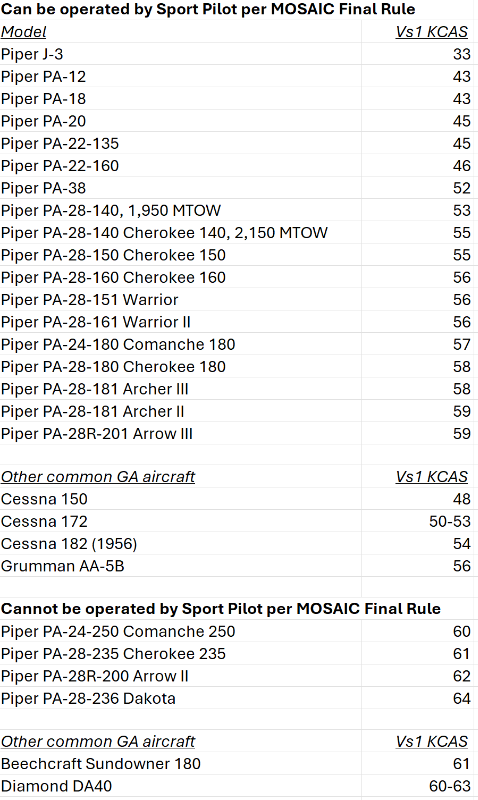
The FAA’s new performance-based specifications state that aircraft with a clean stalling speed (VS1) of 59 knots calibrated airspeed or less, a maximum speed of 250 kcas or less, and four or fewer seats, are now eligible for operation by sport pilots. This will be codified in a new 14 CFR 61.316.Note that this does not exclude aircraft based on presence of retractable gear or constant-speed propellers, weight, or powerplant type.
Please see the list at the end of this post for a list of common Piper models.
[*]I’m a private pilot and I own a Piper PA-28-180 Cherokee 180. Could I choose not to renew my medical and continue to fly my Cherokee as a sport pilot?
Yes. You’re one of the people who stand to benefit from the MOSAIC rules.
The Cherokee 180 has a VS1 of 58 kcas, so the airplane is eligible to be operated by sport pilots starting 90 days from the publication of the final rule.
Regarding you as the pilot, you would be able to transition to a “driver’s license” medical; flying as a sport pilot without an FAA medical, assuming you meet the requirements of 61.23(d).
Additionally, if you have a family member who is looking to learn to fly your Cherokee 180 for recreational purposes, they could also benefit. Rather than having to seek out an FAA medical, they could train as a sport pilot in your Cherokee. They would be able to earn a sport pilot certificate (per Part 61 Subpart J) in your airplane.
[*]What additional privileges are granted to sport pilots with these new rules? Are there any notable limitations?
As noted above, sport pilots will now be able to fly many legacy General Aviation aircraft. However, they are still subject to the limitations of the sport certificate level.
The MOSAIC rule package states that even though an aircraft may have four seats, only two may be filled (pilot plus one passenger). Other limitations itemized in 61.315 apply. These include prohibitions against flight for compensation/hire and flight in furtherance of a business. Sport pilots are also not allowed to fly under IFR.
[*]I’m reading here that the stall speed limit is 59 knots, but I heard 61 knots in another article. What’s going on?
In addition to revising sport pilot operating privileges, the MOSAIC rules also create a new route to LSA certification. The FAA has created 14 CFR Part 22, entitled “Design, Production, and Airworthiness Requirements for Non-Type Certificated Aircraft.” This allows manufacturers an alternate, more expedient pathway to certify light aircraft designs that would have previously only been possible under Part 21.
A 61-knot landing configuration stall speed (VS0) limitation applies to newly certificated LSA developed under Part 22 regulations.
Some of these Part 22 LSAs will not be eligible to be operated by sport pilots. For example, an aircraft with a VS0 (landing configuration) stall speed of 60 kcas could have a VS1 (clean) stall speed of 65 kcas. The latter speed is well above the 59 kcas VS1 limit imposed upon sport pilots by 61.316.
[*]When do these rules go into effect?
Rules regarding airplanes eligible for operation by sport pilots go into effect 90 days from the publication of the final rule in the Federal Register. This is expected in the next few days. Rules regarding certification of LSAs go into effect 365 days from the date of the rule’s publication.
[*]Can MY Piper be flown by a Sport Pilot?
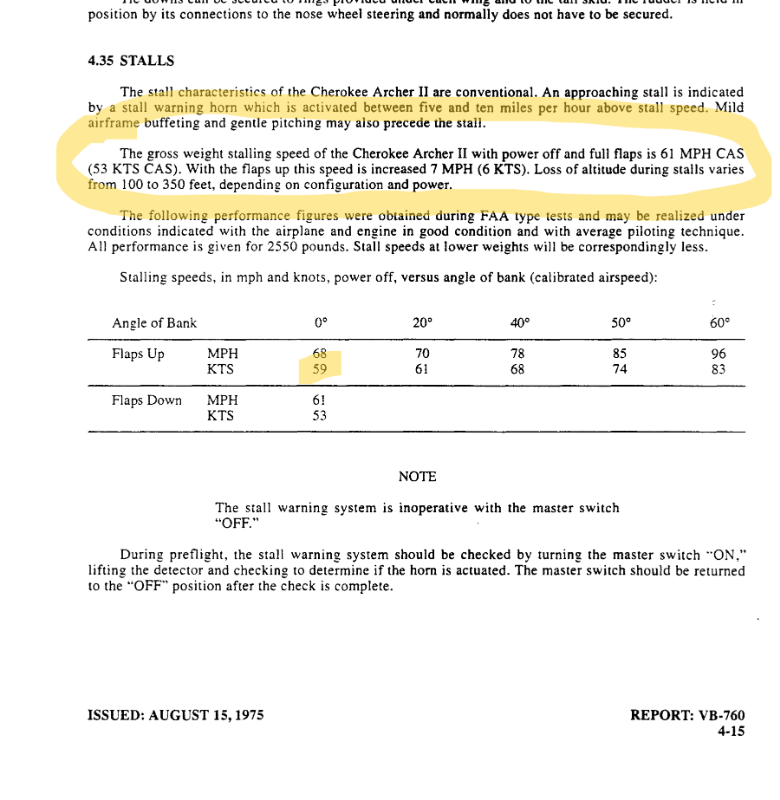
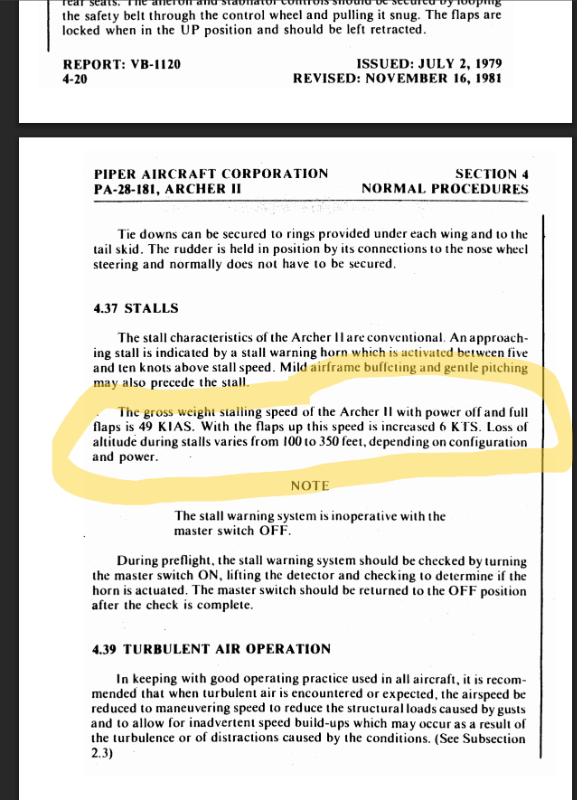
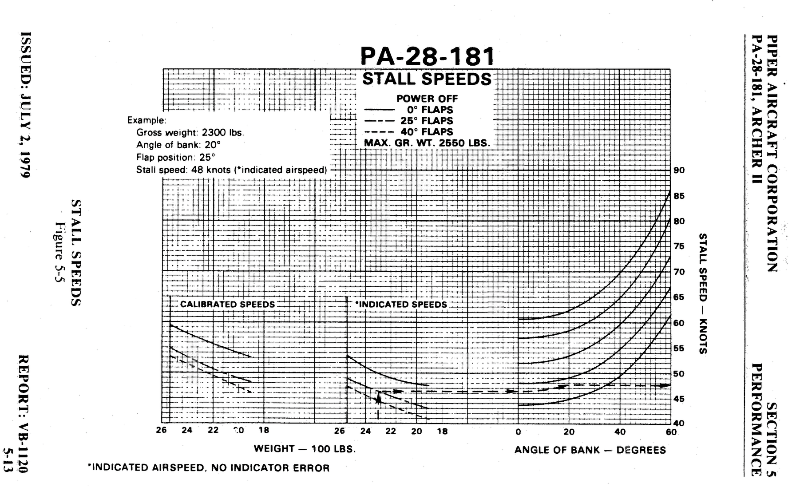
If you have a single-engine Piper with four or fewer seats, the answer is “probably.” Confirm your VS1 speed in your POH. We’ve compiled a list of common Piper models and their VS1 speeds for reference:
[/list]