

Identify and Treat Before Engine Failure
The problem
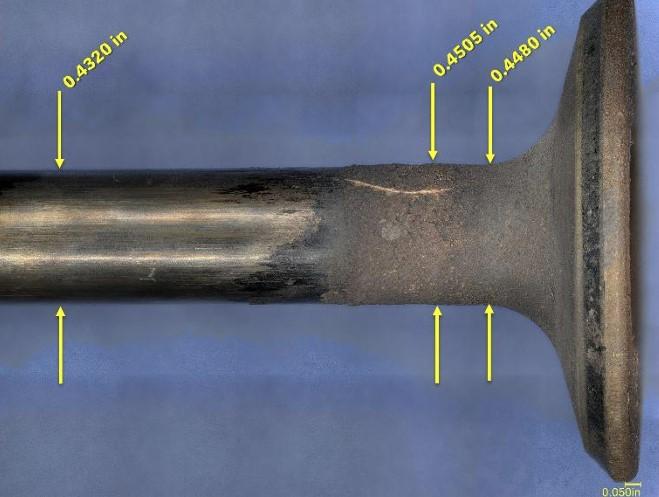
A sticking (or stuck) valve in reciprocating piston engines can interrupt the combustion cycle, causing severe vibration and a partial loss of engine power. Depending on where the valve sticks within the valve guide, pushrods can also bend. Valves stick due to the accumulation of deposits on the valve stem and/or valve guide. Factors that contribute to this accumulation include localized overheating within the engine cowling, infrequent flying, or sudden engine cooling.[1] Other contributing factors include incorrect air/fuel mixture, operation in high ambient temperatures, low airspeed flight with reduced cooling, and the use of fuel with high lead content. These conditions are frequently observed in piston-powered helicopters because of their higher operating temperatures and flight school aircraft because of rich mixture settings and constant flow flights and pattern work.
Pilots unfamiliar with the signs of a stuck valve can be faced with the unexpected scenario of a rough-running engine and noticeable loss of engine power that is rarely discussed during basic flight training. These symptoms are often misdiagnosed in flight and can be particularly alarming when they occur during takeoff and landing. However, in some cases, while alarming, the airplane may still be capable of sustaining flight. By far, the safest time to deal with sticking or stuck valves is before takeoff; therefore, recognizing and knowing how to respond to the signs is essential.
What can owners and operators do?
Ensure your airplane receives oil and air filter changes at the original equipment manufacturer-recommended intervals.
Recognize the symptoms of valve sticking, like a rough-running engine (particularly when the engine is cold), low exhaust gas temperatures (EGTs), and cylinder head temperatures (typically in one cylinder).
Use proper leaning techniques to adjust the fuel/air mixture, which can be found in the pilot operating handbook or engine operator’s manual.
What can mechanics do?
Educate pilots and owners about the importance of oil change intervals.
Use available data from engine-monitoring devices to diagnose and troubleshoot rough running engines.
Become familiar with types of aircraft and operational environments that are most susceptible to occurrences of stuck valves (for example, piston helicopters and flight schools).
Ensure that cooling air baffles and baffle strips are in good condition to prevent localized overheating of cylinders.
Follow engine manufacturer service instructions to diagnose, measure, or clear stuck valves.