


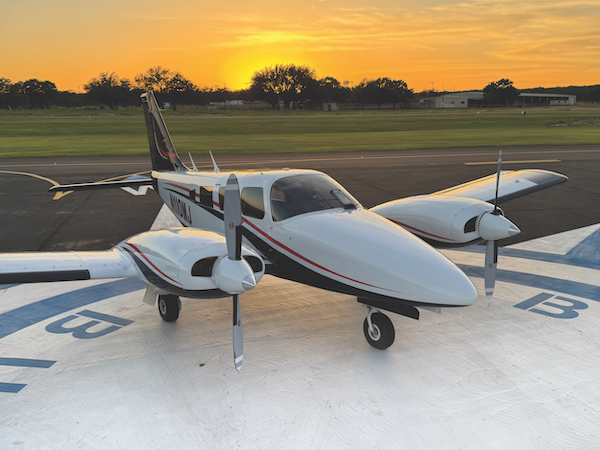
After more than 2,400 combined hours flying a Piper Cherokee Six and Seneca II, JASON TUGGLE reflects on how family, risk tolerance, weather capability, and real-world utility shaped his evolving definition of the “right” airplane.
By Jason Tuggle
When I first started flying, I (like many pilots) was captivated by capability. Back then, I was flying a Cessna 172 Skyhawk, building hours, learning the system, and figuring out what kind of flying I wanted to do long-term.
Truthfully, I didn’t take many trips in the 172, even though traveling was the entire reason I got my pilot certificate in the first place. I wanted the freedom to go places on my own schedule and make real trips, and it didn’t take long to realize the 172 simply didn’t fit that mission for me.
The airplane that really caught my attention first was the Piper PA-32-300 Cherokee Six 300.
I first learned about the PA-32-300 in 2006 through AOPA’s “Win a Six in ’06” article series and giveaway. I remember reading about the airplane and coming to the realization that while a Cessna 172 technically has four seats, in the real world, you usually can’t fill those seats, add bags, carry full fuel, and realistically travel very far.
The Airplane That Changed My Thinking
The Cherokee Six was different. Here was an airplane with a wide cabin, six real seats, a huge useful load, and the ability to actually carry people, bags, and enough fuel to go somewhere. To a young pilot, that was eye-opening. It wasn’t just a trainer or a time-builder—this was an airplane that felt practical for real-life missions.
And once I started learning more about the model, I was hooked.
Eventually, I bought a 1970 Cherokee Six 300 and owned it for nine years, logging a little over 1,100 hours in it. That airplane became part of my life.
What I loved most about the Six was how honest and practical it was. It had a nose baggage compartment, room behind the seats, both front and rear doors, and one of the widest cabins you could find in a piston single. You could load it with people, luggage, coolers, golf clubs, or whatever else life required, and it just handled it. It felt less like a sports car and more like a pickup truck with wings, and I mean that as a compliment.
I flew that airplane everywhere; on cross-country trips, night flights, and low IFR. At that stage of life, my personal risk tolerance was different from what it is today, and I felt comfortable flying a capable single-engine airplane in a wide range of conditions. The Cherokee Six gave me confidence as a pilot and taught me what real traveling capability looked like in general aviation.
Honestly, I absolutely loved that airplane.
Why Redundancy Started to Matter More
Then, in 2016, everything shifted. We found out my wife was pregnant.
We had already spent years traveling together in the Cherokee Six, and I was already responsible for someone else every time we flew. But knowing we were about to have a baby changed the way I viewed risk and safety margins in aviation. Things that had once felt perfectly acceptable suddenly deserved a second look.
And honestly, I had already thought many times about eventually upgrading airplanes anyway, so this became the perfect “excuse” to make the idea seem a lot more reasonable.
Before that, I had no issue flying my single-engine airplane at night or in low IFR conditions. I was comfortable with the risks and understood the airplane well. But once a child entered the picture, I found myself thinking more about redundancy, options, and having additional layers of protection if something didn’t go according to plan.
I still loved the Cherokee Six, but I wanted another layer of safety and capability. I began to think seriously about getting a twin… a Piper PA-34-200T Seneca II Turbo, to be specific.
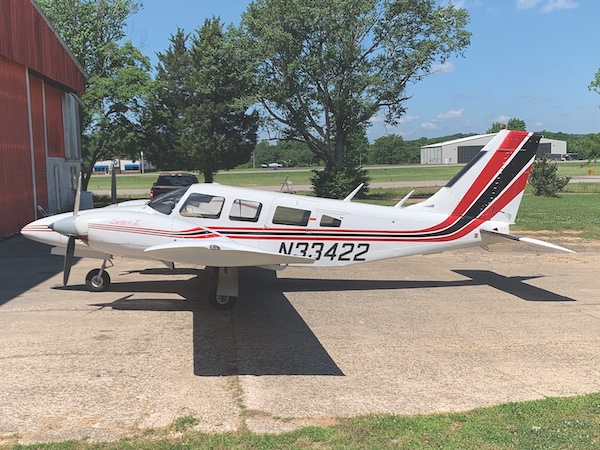
The move to a twin wasn’t about ego or speed. It was about options and redundancy—not just engine redundancy, but system redundancy too. Vacuum pumps, alternators, and other systems suddenly mattered more to me. The idea that you could lose something important and still comfortably and safely continue the flight carried real value.
I also wanted turbochargers, known-ice equipment, and better high-altitude performance. Living in Texas, we frequently traveled to places like Sierra Blanca Regional Airport (KSRR) in Ruidoso, New Mexico, and I later found that turbochargers changed the experience completely versus flying in and out of there in a normally-aspirated airplane.
In the summer, afternoon departures out of KSRR in the Cherokee Six could become a real density altitude problem. I remember mornings where we were waking everyone up at 5:00 a.m. for a 6:30 a.m. departure, because by afternoon the density altitude could easily exceed 9,000 feet, and the Six might only climb 200 to 300 feet per minute on takeoff. Flying around mountains, that kind of performance simply doesn’t leave much margin for downdrafts, rising terrain, or unexpected issues.
Keep Ruidoso in mind, we’ll circle back to it in a bit.
I did look seriously at Beechcraft Barons, too. Like many pilots, I admire them. They’re beautiful airplanes with incredible performance and a legendary reputation. But when I sat in one, it just felt too tight to me.
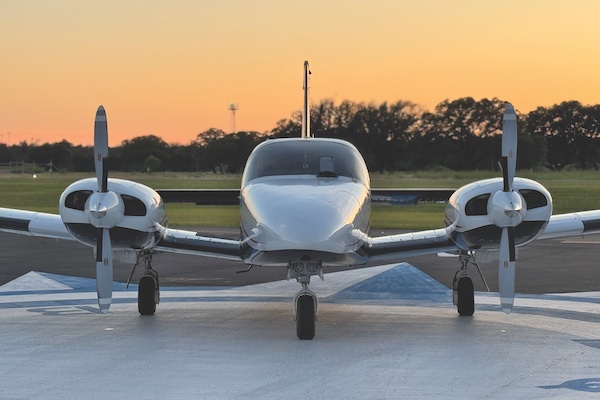
On paper, the difference doesn’t sound massive. The Baron’s cabin width is roughly 42 inches, while the Seneca’s cabin is around 49 inches. But sitting inside them, the difference felt much larger than the numbers suggest. The Seneca simply felt open, comfortable, and familiar in a way I immediately liked.
That wide cabin mattered more to me than losing a few extra knots of speed.
The Seneca Guru
Years before I bought my Seneca, I had been following one online.
Back in the old aviation chat room days, there was a pilot named Larry who owned a beautifully maintained Seneca II. Over the years, I watched him constantly improve the airplane, troubleshoot issues, and help other owners. I came to realize that Larry wasn’t just an owner—he was a Seneca guru.
I found a Seneca for sale and called Larry to ask him what I should be looking for during pre-buy. That conversation turned into several conversations. We talked through all the ins and outs of Seneca ownership, common problem areas, systems quirks, maintenance concerns, and what needed close attention during a pre-buy inspection. I leaned heavily on his expertise as I got further into the deal.
Eventually, that purchase fell apart.
About a week later, Larry texted me to say he had been thinking about selling his own airplane because he simply wasn’t flying it enough anymore, and he asked if I might be interested
Ironically, I didn’t originally try to buy Larry’s airplane because it wasn’t even for sale.
I texted him back immediately: “I’ll take it.”
Buying an Airplane Sight Unseen
Now, buying an airplane sight unseen without a pre-buy inspection is probably not something I would generally recommend. But in this case, I knew Larry, I knew the airplane, and I trusted both completely.
Larry cared deeply about systems, reliability, and mechanical condition far more than cosmetics. His Seneca had newer engines, with fewer than 200 hours on them, and every system on the airplane worked flawlessly. The seats, however, were awful, and the paint was probably a solid six out of 10 on a good day.
Honestly, that suited me perfectly.
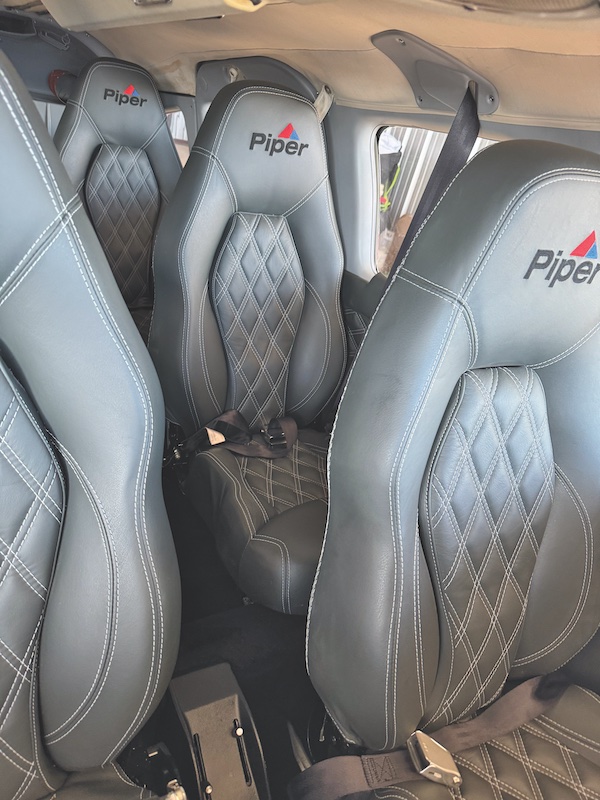
At that stage, I cared far more about mechanical condition than aesthetics. In fact, one of the very first upgrades I made was simply buying a used pair of seats to improve the interior a little.
So yes—I bought the airplane sight unseen, without a pre-buy.
And honestly, it turned out to be one of the best aviation decisions I’ve made.
Revisiting Ruidoso With the Seneca
Remember my earlier comments about flying into and out of Ruidoso in the Six? The Seneca changed that experience entirely.
Instead of planning the entire day around density altitude concerns, the turbocharged Seneca gave us flexibility. We could leave later, enjoy departure day on the ground a little longer, and operate with a level of performance margin that simply wasn’t there before.
Another important feature the Seneca added was having FIKI capability and de-ice equipment. For me, that capability was never about intentionally spending long periods of time flying around in icing conditions. I don’t enjoy ice, and I don’t linger in it. What mattered was having another layer of protection and another “out” if I unexpectedly encountered icing or needed to pass through a thin layer to get on top or descend through it… something that was a real possibility when flying into mountainous areas.
Compared to turbine aircraft or “big iron,” piston de-ice systems are obviously limited, but having boots, heated props, and the equipment necessary to buy yourself time to exit the conditions safely can make a huge difference. To me, that capability represented another form of margin and flexibility.
But what really stood out to me was that the Piper Seneca II still had the cabin feel I loved from the Cherokee Six lineage.
A Decade of Ownership
I’ve owned and flown the Seneca for nearly 10 years now and have logged around 1,300 hours in it.
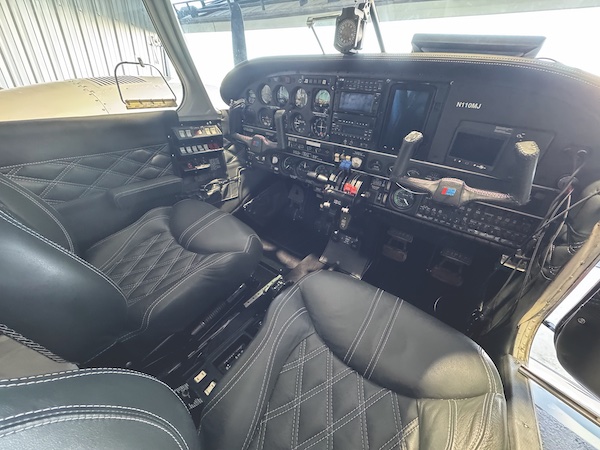
It has done exactly what I hoped it would do. The turbochargers gave me altitude flexibility. The de-ice equipment expanded weather capability. The second engine added another layer of confidence and redundancy. And the airplane still retained what I loved most about the Cherokee Six—comfort, useful load, and practicality.
It isn’t flashy, but it is incredibly effective. Over time, I’ve realized that effective matters more than flashy.
When we sold the Cherokee Six, it had a little over 1,200 hours on the engine—mid-time, with enough remaining TBO to be a good value for a buyer. Eventually, we reached the same decision point with the Seneca. Last year, the engines had reached mid-time, and financially, it was the point where selling made logical sense. If you’re going to exit an airplane before major expenses are incurred, mid-time engines are often the time to do it.
My wife and I sat down and talked seriously about selling, but the more we discussed it, the more obvious the answer became: the Seneca still checked every box for us.
So instead of selling the airplane, we decided to invest in it.
Reinvesting Instead of Replacing
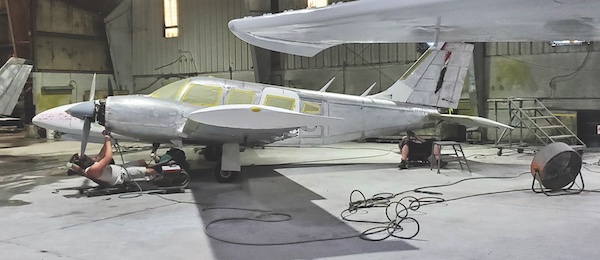
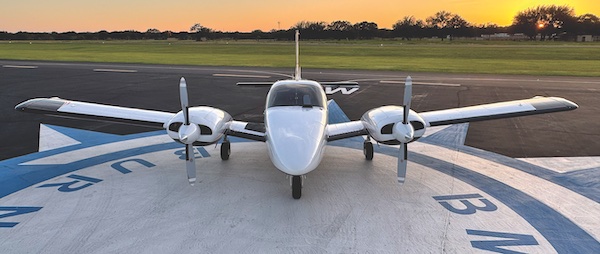
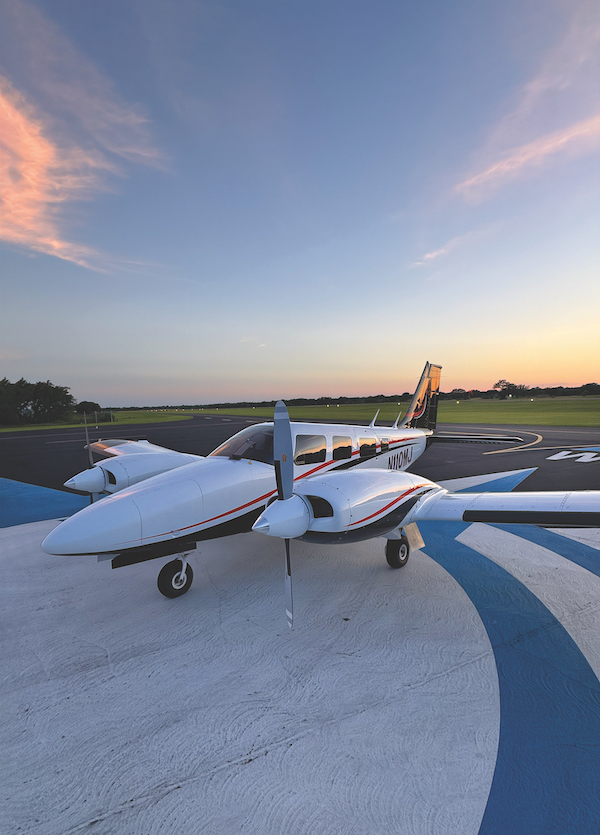
Rather than starting over with another airplane, we chose to freshen up the one we already knew and trusted. That process included a full paint job at Crider Aircraft Painting in Mena, Arkansas, a completely refurbished interior by Cooper Interiors in the U.K., new de-ice boots, and fixing every cosmetic issue we could find.
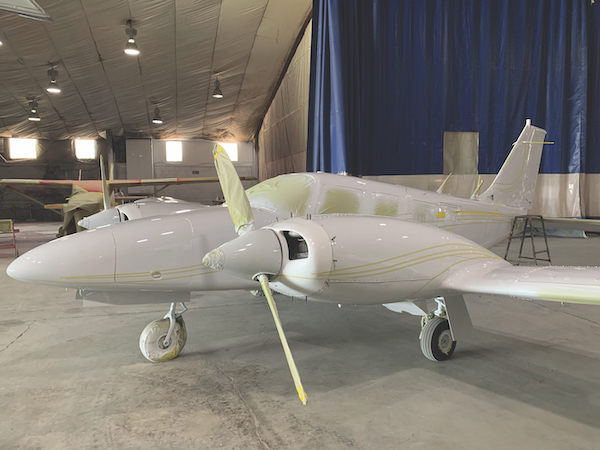
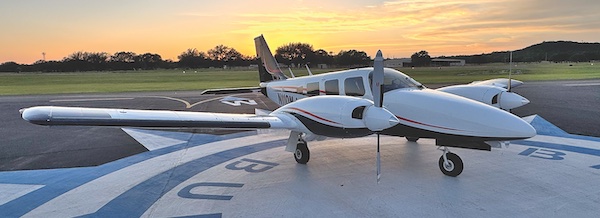
The goal wasn’t simply to make it prettier. The goal was to bring new life into an airplane we already believed in. And when the time is right, we’ll do the engines, too, because after nearly a decade of ownership, we know this airplane inside and out.
There are faster airplanes. More modern airplanes. More technologically advanced airplanes. But the Seneca II continues to make sense for our family because it fits our mission. It carries people comfortably, handles real travel very well, gives us redundancy and better weather capability, and does it all in an airplane that feels predictable and manageable.
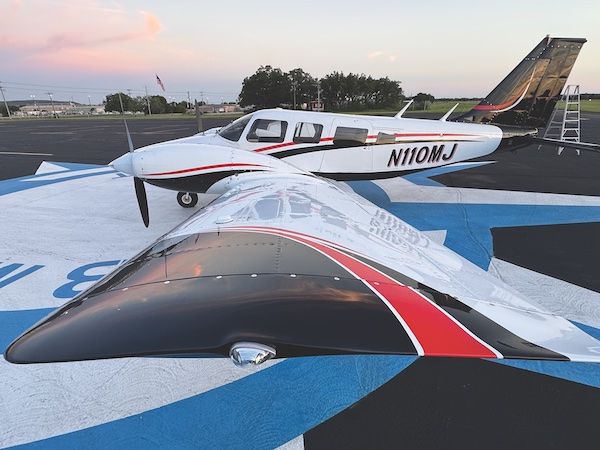
After more than 2,400 combined hours between the Cherokee Six and the Seneca, I’ve realized something important: The best airplane usually isn’t the most impressive one on paper. It’s the one that truly fits your life.
The Cherokee Six was the perfect airplane for the season of life I was in when I bought it. It taught me utility, capability, and confidence.
The Seneca II became the right airplane for the next chapter—not because it was faster or more complex, but because it gave me more margin where it mattered most.
The Cherokee Six gave me freedom and utility. The Seneca II gave me redundancy and flexibility.
And after nearly 10 years of flying it, I can confidently say this:
I didn’t just buy the Seneca II because it was a twin. I bought it because it was the airplane that best matched how I wanted to travel, how I wanted to fly, and eventually, how I wanted to protect the people sitting beside me.
Jason Tuggle has been flying since 2006 and has logged more than 2,500 hours across the U.S., Mexico, and the Bahamas. He currently owns and flies a Piper PA-34-200T Seneca II Turbo, with over 1,000 hours in type and 1,200 hours in multi-engine aircraft. Jason holds an instrument rating, multi-engine rating, and single-engine sea rating, and is based out of Burnet, Texas (KBMQ). Averaging 150 hours per year, he combines his love of flying with family travel and the occasional cross-border adventure, always looking for new ways to turn General Aviation into unforgettable experiences. Send questions or comments to editor@piperflyer.com.

