
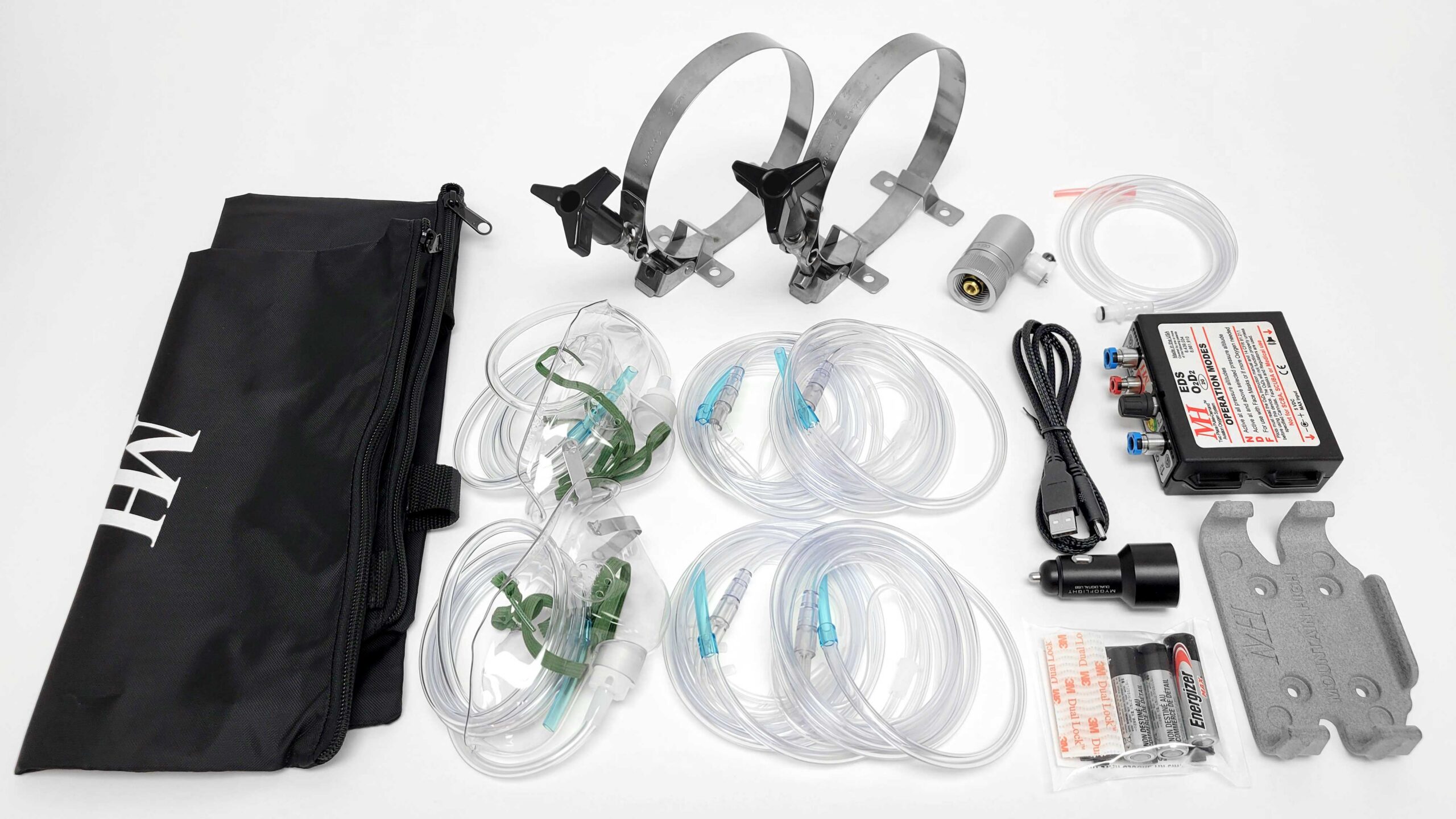
Mountain High Equipment & Supply, a manufacturer of aviation oxygen equipment, has received FAA NORSEE approval for specific configurations of its O2D2 supplemental breathing oxygen systems.
The EDS-305X Series brings Mountain High’s established EDS electronic oxygen-delivery technology into a mounted configuration for eligible certificated aircraft, expanding the installation options available to aircraft owners and pilots. The EDS-305X Series is available now at MHOxygen.com.
The FAA authorization was issued under 14 CFR 21.8(d) and FAA Policy PS-AIR-21.8-1602. As part of the authorization, the FAA accepted Mountain High’s certification that the approved EDS-305X Series systems meet the requirements of the NORSEE policy and are produced under a quality system satisfying the requirements of that policy.
NORSEE approval under 14 CFR 21.8(d) does not by itself constitute approval for installation on an aircraft. The Mountain High authorization provides that qualifying installations on aircraft certificated under 14 CFR Part 23 or predecessor regulations may be accomplished as minor alterations when the conditions stated in the FAA authorization are satisfied. Installations that constitute major alterations require FAA-approved data through an appropriate approval path.
For pilots and aircraft owners, the approval adds another level of confidence to technology designed around Mountain High’s approach to efficient, electronically controlled supplemental oxygen delivery. It also reflects the company’s continuing commitment to engineering, manufacturing quality, documentation, and aviation safety.
FAA NORSEE (Non-Required Safety Enhancing Equipment) policy is specifically intended to encourage voluntary safety enhancements in general aviation. The approval framework is based on the principle that the safety benefits of NORSEE equipment should outweigh the potential risks introduced by its installation and operation, and it addresses considerations including system operation, failure conditions, human factors, functionality, limitations, and interaction with the aircraft and pilot.
For more information, please visit us HERE