


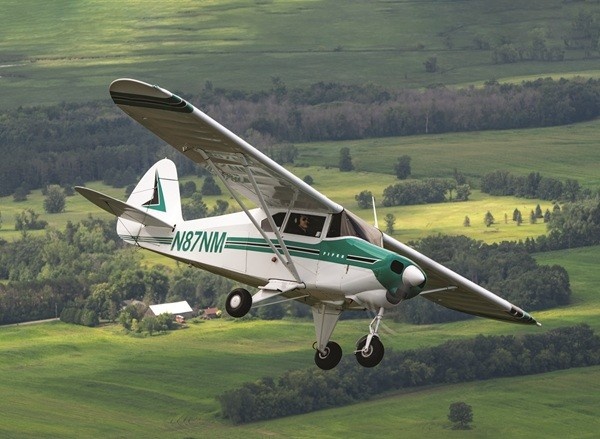
When the postwar General Aviation boom turned into a market collapse, Piper needed a practical airplane that could be built fast and sold cheaply. The result was the Short Wing Piper airplanes that helped rescue the company and went on to become classics in their own right.
By Kevin Garrison
The Piper Aircraft Corporation faced dire financial times in the late 1940s and solved its problems by literally clipping its own wings.
Aircraft manufacturers were flush with talent and optimism after World War II ended in 1945, and they anticipated a huge wave of demand for their products from thousands of returning veteran pilots eager to buy an airplane of their own to keep flying.
Piper was not wrong to think this, and in 1946, the company was turning out a mind-boggling number of aircraft. Piper’s 1945 sales of 1,802 units rose to over 7,700 units in 1946. Heady stuff, yet the company lost money because its Cub models were underpriced. With aircraft inventory high and competition driving prices down, Piper was facing financial disaster—metaphorically dying of thirst at a water park. Things needed to change.
Their bread-and-butter model, the Cub, was (and still is) an iconic aircraft, to the point that the media still often calls just about every small General Aviation aircraft “a Cub.” Still, as 1946 came to a close, Piper was selling the same aircraft they had in 1940 (one that had been designed in 1937).
Military surplus aircraft, especially surplus trainers like the Boeing-Stearman PT-17, Fairchild PT-19, and the Ryan PT-22, along with other manufacturers flooding the market with their airplanes, combined with a deep postwar economic recession, led to the market’s collapse and the near-death of Piper.
Piper’s Shortcut
The Short Wing Pipers were born out of scarcity and the need for inexpensive innovation.
Walter Jamouneau, the head of Piper’s engineering staff, was tasked with designing a commercially successful yet cheap airplane that could be made mostly using existing parts and materials.
Designers Tony Piper, Howard Piper, and Dave Long designed the company’s first model that fulfilled these needs: the PA-15 Vagabond. It was a fabric-covered two-place aircraft with side-by-side seating. Its wingspan was 6 feet shorter, and its fuselage was 5 feet shorter than that of Cub-type aircraft, which lowered Piper’s cost of parts and labor.
Shortening the wings not only reduced costs but also decreased drag without compromising stall speed, rate of climb, or takeoff and landing performance. Pilots from the first Vagabond to the last Tri-Pacer models enjoyed the compact design but noticed that Short Wing Pipers have a significant power-off sink rate compared to their longer-winged competitors.
Piper Aircraft was not only spared from imminent bankruptcy in the early 1950s by this short-wing design philosophy, but they also produced aircraft that are a favorite amount frugal fliers that still maintain and fly them to this day.
The PA-15 Vagabond and PA-17 Vagabond Trainer
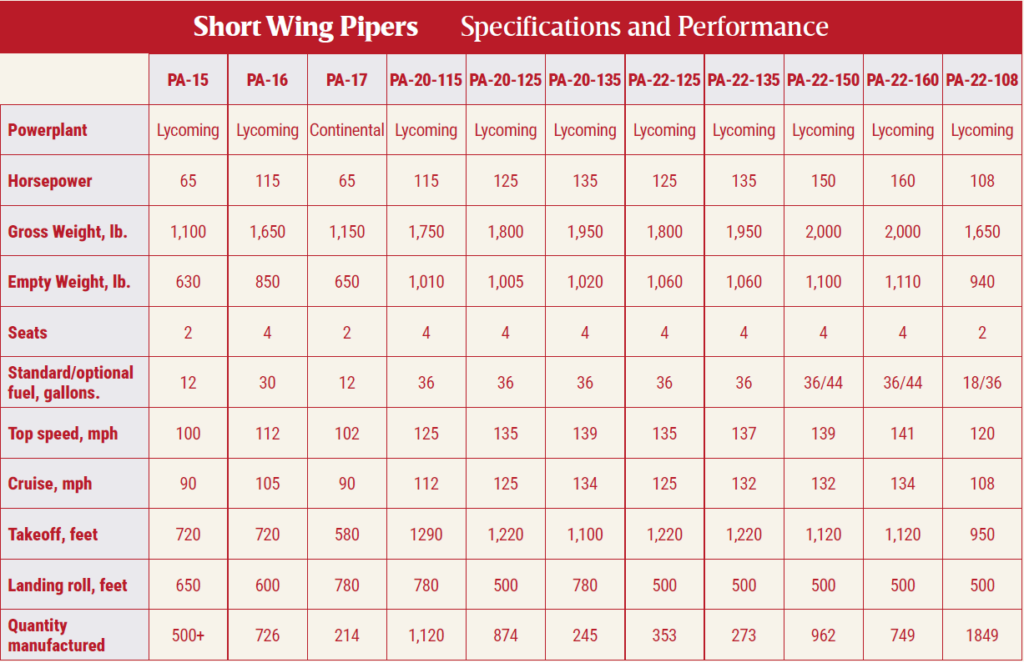
The first Short Wing Piper, the Piper PA-15 Vagabond, was certified in July 1948. It was a very simple yet reliable and nimble aircraft that sported a 65-hp Lycoming O-145-B2. Cruise speed was between 90 and 95 mph. (Please note that most General Aviation craft of that vintage published performance figures and published their handbooks using statute, not nautical numbers.)
With a gross weight of 1,100 pounds, the Vagabond had a single control stick, almost no exterior options, and was painted yellow with no stripe.
It came with stiff, conventional (tailwheel) landing gear that lacked the signature shock cords found in later models. Customer feedback on the lack of cushioning and dual controls led Piper to add these features to the Vagabond’s next iteration, the Vagabond Trainer PA-17.
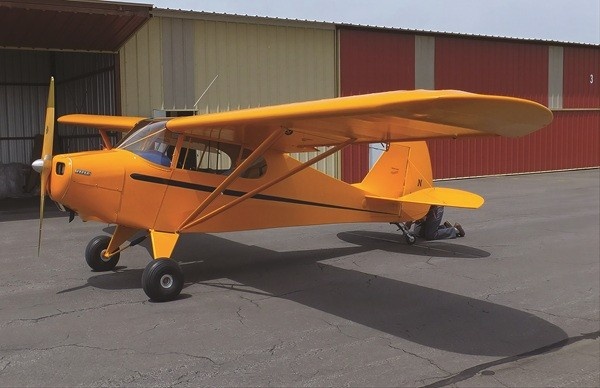
A simple yet effective design, the Vagabond is considered by many to be very agile and maneuverable. Its narrow landing gear, compared to that of other taildraggers, requires close attention to directional control during the landing roll. Side-by-side seating replaced the well-known tandem arrangement, making communications between flight instructors and students much easier.
Its performance with the 65-hp engine can seem paltry to pilots accustomed to more thrust, and its 12-gallon fuselage-stored fuel capacity makes it a short-range aircraft as well as a short-winged one, but there is no doubt that it is fun to fly and economical to a fault.
PA-16 Clipper
The Piper PA-16 Clipper hit the scene in October 1948, with a list price of $2,995 for the blue-and-yellow standard version. For an additional hundred bucks, you could purchase the deluxe version with a hand-rubbed ivory finish.
It was touted as a four-place, responsive airplane powered by a Lycoming O-235-C1 engine. With a cruise speed of 112 mph, it had a range of 600 statute miles, without reserves. Calling the Clipper a “four-place” is a stretch in today’s super-sized world, considering the gross weight of 21st-century pilots and passengers.
In the Clipper, with a useful load of 890 pounds minus 216 pounds for full fuel, each occupant must weigh at or below 168 pounds. This is before accounting for baggage, snacks, or other additives. Every four-place Short Wing Piper shares this problem. While officially considered four-place, a close look at weight and balance is necessary to remain safe.
Most owners and pilots of these and other short-wing models simply think of their birds as three-place aircraft, and that seems to work.
Pan American Airways objected to Piper’s use of the “Clipper” model name, saying it copied their use of Clipper for their well-known seaplanes. Pan Am insisted it had trademarked the name and that Piper should stop using it.
Piper’s position was that the Clipper designation had been applied to sailing ships long before there were airplanes, much less airlines. This may have been a solid argument, but to avoid a costly court battle, the 1950 model was renamed the Pacer. If this name kerfuffle had not happened, we might be discussing and flying Tri-Clippers today.
The PA-20 Pacer
In 1950, the Piper PA-20 Pacer appeared with a larger tail, larger fuel tanks, wheel controls instead of a stick, and balanced elevators. The PA-20 was then produced in several versions, each with slight differences in the engine. Between 1950 and 1951, it was manufactured with either the 115-hp Lycoming O-235-C1 or 125-hp Lycoming O-290-D engine. From 1952 until production finished in 1954, the 125-hp Lycoming O-290-D and 135-hp Lycoming O-290-D2 powerplants were used.
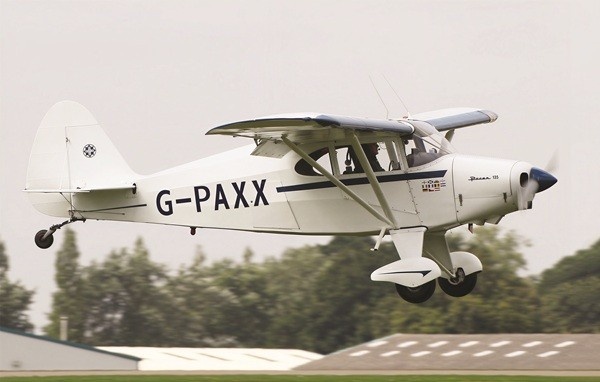
The Pacer’s landing gear provides a solid tailwheel experience that is neither too easy nor too difficult to manage, making it a respectable and reliable trainer for transitioning nosewheel fliers.
Pilot-owners of Pacers today swear by the airplane’s simplicity and the fun they have flying it. This model draws favorable attention on the ramp with its solid looks and performance. Ideally, if operated with only two people onboard, it is impressive and compares favorably with light aircraft produced today that cost in the hundreds of thousands of dollars more while giving the pilot less enjoyment.
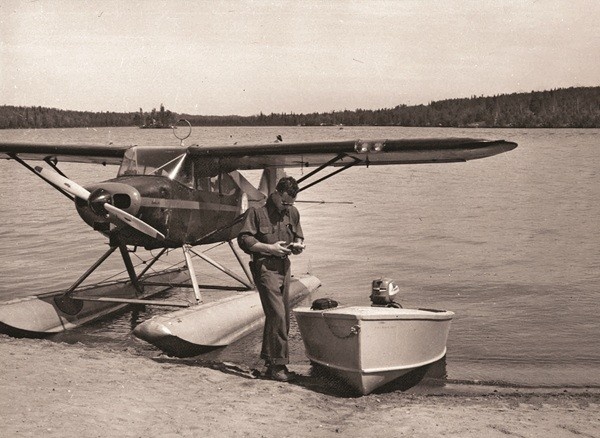
The PA-22 Tri-Pacer
Piper’s PA-22 Tri-Pacer appeared on the scene in 1951 as a restyled PA-20 Pacer. The conventional-gear (tailwheel) Pacer was a challenge for many pilots, especially in a crosswind, so Piper Aircraft went to the drawing boards and came up with a tricycle-gear version.
Lovingly called the “Flying Milk Stool,” based on its three-legged appearance, by its many owners and pilots, the Tri-Pacer brought the Short Wing Pipers into the world of the nosewheel. A total of 9,490 Piper PA-22 Tri-Pacers were built between 1950 and 1964. The Tri-Pacer is what most people think of today when they envision a Short Wing Piper.
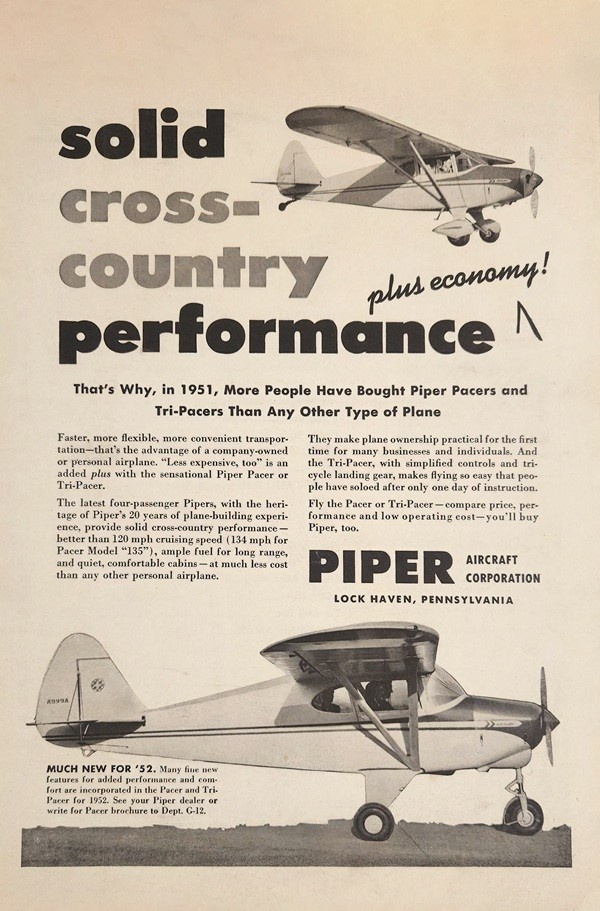
It was originally equipped with a 125-hp Lycoming O-290-D engine, and that power was upped roughly every two years on the following models: 135 hp, 150 hp, and 160 hp. When the 160-hp Lycoming O-320-B2A/B2B version was introduced in 1958, the 150-hp model also remained in production.
To individualize the two models, the 150-hp version was called the “Caribbean” during 1959 and 1960 with the 160-hp version retaining the Tri-Pacer name.
The ailerons were coupled to the rudder on the Piper Tri-Pacer (PA-22) starting with the 1951 model, and the system became a standard feature to allow “wheel only” flying and to improve spin recovery. This system used bungee-linked springs connecting the ailerons to the rudder to facilitate coordinated flight, though the pilot could override them. The coupling was designed to make the aircraft easier for pilots to fly, allowing for coordinated turns without using the rudder pedals.
Pilots have had a love-hate relationship with the interconnect—mostly hate. While making coordinated flight a little easier, most pilots disliked it for restricting their ability to land in a crosswind or perform a slip.
Removal of the interconnect is allowed on 150-hp and 160-hp models under specific STCs (such as SA45RM), but requires separate FAA approval for other models.
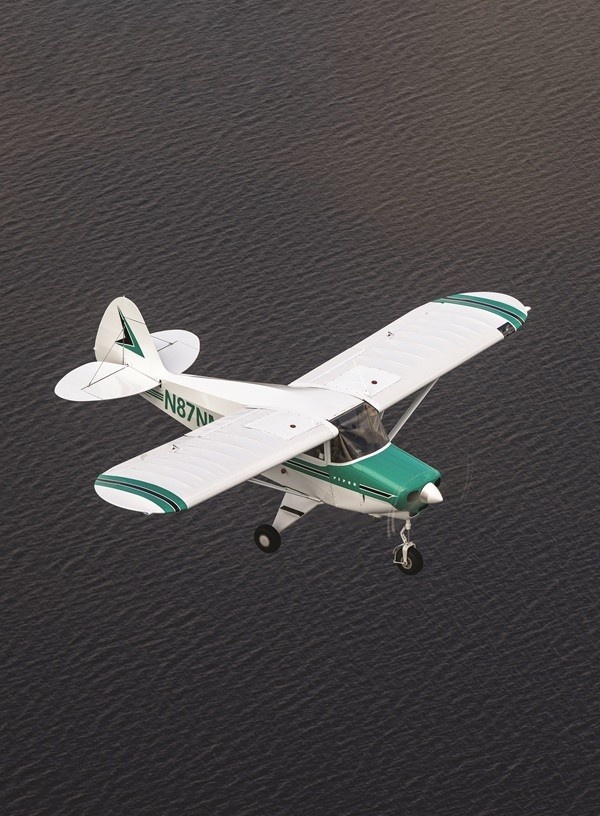
One of the most popular features of the aircraft was a rear door on the opposite side of the fuselage from the right seat entry that allowed passengers to get in and out of the airplane without having to climb over the front seats. The door also made emergency egress for those passengers easier and safer.
The “Flying Milk Stool” was never known for blazing speed or high-fashion beauty. Still, it performs surprisingly well against newer aircraft in its class. Compared with the Cessna 172, the Tri-Pacer takes off over a shorter distance and climbs faster. It also carries almost as much weight and cruises a little faster than the comparable 172s of the same year.
Along with other Short Wing Pipers, the Tri-Pacer’s rag-and-tube wing construction is popular today with owners who are interested in rehabbing a tired and worn-out barn find into the family airplane. Like other short-wing models, many Tri-Pacers have remained with their owners for a very long time, and some have been passed down from generation to generation.
PA-22-108 Colt
Oddly, the smaller and less complex Piper PA-22-108 Colt was designed and produced after the Tri-Pacer. Piper quickly realized they lacked a direct competitor to the Cessna 150 when it was introduced in 1958 and recognized that they could lose market share in an important niche. Prior to 1960, Piper did not have an inexpensive two-place trainer with side-by-side seating. With the Cherokee 140 still far in their future, Piper needed a temporary solution to fill this “trainer gap.”
Using the Tri-Pacer as a starting point, Piper simplified it to reduce costs and offer competitive pricing vis-à-vis Cessna. The design of the Colt retained the tricycle landing gear but removed the rear seat and rear entry door, while modifying the aft fuselage. The coupled aileron-rudder feature from the Tri-Pacer was not used on the Colt.
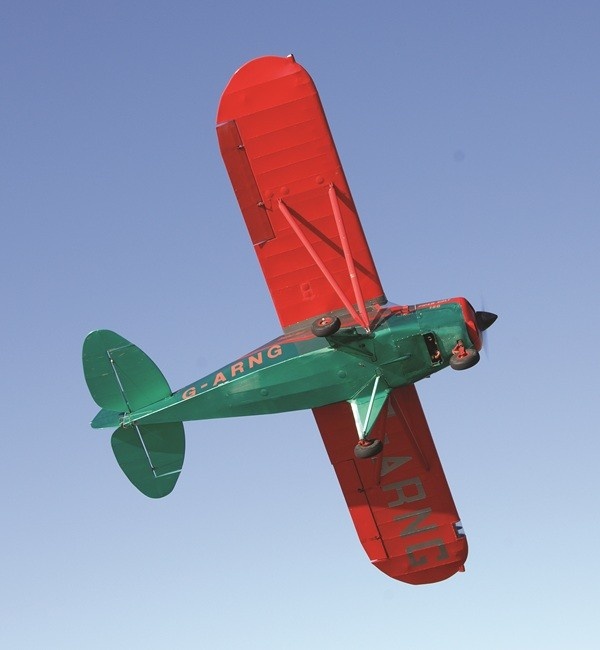
Continuing their quest to simplify and reduce costs, Piper removed the flaps, rear windows, and second fuel tank. To cut fuel costs, they opted for the 108-hp Lycoming O-235-C1 or -C1B instead of the Tri-Pacer’s 125 hp to 160 hp options.
The outcome was a cut-down, simpler, and lighter PA-22. At a list price of $4,995, it was nearly half the cost of a Tri-Pacer and was $2,000 less than the Cessna 150.
Piper constructed approximately 2,000 units between 1961 and 1963 before leaving the era of Short Wing Pipers and introducing the Cherokee 140 as its primary trainer.
Flying the Short Wings
I have had the pleasure of flying all the models of the Short Wing Pipers, except for the Vagabond. Beginning with my first Tri-Pacer flight back when I was a 15-year-old line boy at Roberts Flying Service in Lakeland, Florida, through my ownership of a Tri-Pacer in the wild and woolly 1980s, up to last week’s flight in a friend’s Pacer, I have flown and taught flying students in these aircraft for decades.
They perform well, are easy to fly, and are very economical to operate. I enjoy using their overhead cranks for elevator trim, as well as the single-gang bar used for braking after landing. Short Wings are very basic, and some may say plain, but others (like me) consider them to be efficient and attractive works of art.
The airplane does sink quite rapidly power-off due in part to its reduction in wing area from other like aircraft, but that potential headache is offset by the fact that the same higher wing loading makes it ride turbulence easier.
If you are shopping for an airplane, you might consider that while many Short Wings live outside on airport ramps, their fabric covering is best maintained and protected in a hangar or under a plane port roof.
Tri-Pacers and other Short Wing Pipers fill a niche that keeps flying interesting and, more importantly, affordable for pilots, whether they are just beginning to fly or are old, high-time flyers planning to take the grandkids out to a fly-in pancake breakfast.
In short (no pun intended, maybe), this class of aircraft is a ton of fun to fly.
Kevin Garrison’s aviation career began at age 15 as a lineboy in Lakeland, Florida. He came up through General Aviation, retired as a Boeing 767 captain in 2006, and retired from instructing airline pilots in 2017. Garrison’s professional writing career has spanned three decades. Send questions or comments to editor@piperflyer.com.

