


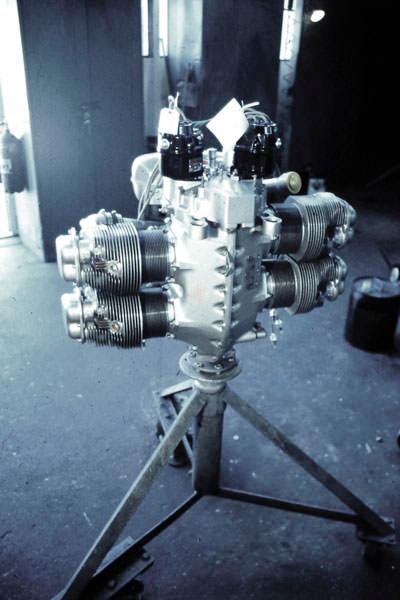
Once you’ve made the big decision to overhaul your engine, you’ll still need to figure out where and how the overhaul will happen. In order to make the best choices for your engine and budget, you’ll need to understand the overhaul process.
In the first of a four-part series, Dennis Wolter walks you through the basics of what happens in a typical overhaul.
My mentor flew Martin B-26 Marauders in World War II. He told me a story back in 1960 when I was just beginning to learn to fly that really resonated with me. When his bomber group first arrived in England, the base commander addressed the new flight crews at their first pre-mission briefing.
The commander began that briefing with a very good piece of advice, stating, “Remember the seven Ps: proper prior planning prevents p— poor performance.”
The key word in that statement is definitely planning! Planning starts with accessing information and choosing the best option. By now, most all of you folks can see that proper research and planning is a central theme of my articles.
Of the many stages involved in renovating an airplane, good research and planning is most important when you’re deciding how and where to have your engine overhauled.
Due to the complexity of engine overhauls, I will cover the total scope of the topic in four articles. In this first article, I will review the step-by-step procedure of overhauling an engine.
The second article will discuss overhaul options, including a local individual A&P overhaul; having a facility specializing in major field overhauls do the job; and having an overhaul or rebuild performed at the factory.
The third article will cover support and installation details that need to be considered to ensure that your fresh engine has a good home.
The fourth and final article will address upgrade options, such as converting to higher horsepower, turbocharging, propeller upgrades, etc.
Overhaul process: first steps
In order to help break down all this information, let’s take a tour through a major overhaul facility.
The first step of teardown and cleaning begins with an organized disassembly and layout of the components by type. The parts are then chemically degreased and cleaned in a hot solution of solvent. With the gross amount of oil, dirt and carbon removed, some of the parts are also detail cleaned with media blasting to get them thoroughly cleaned.

The technicians then put every component through an alignment and a precision dimensional check to ensure that no parts are bent, worn or damaged to a degree that they cannot be reconditioned and placed back in service.
Reusable components are then either turned over to highly-skilled in-house technicians or shipped to an off-site facility where each piece is reconditioned to meet minimum service limits or new limits depending on the quality standards the customer has chosen.
Inspecting the components
Crankshaft, connecting rods, bearings
The heart of a piston engine is the crankshaft, so let’s start there. The technician begins by placing the crankshaft in a fixture that supports the shaft at both ends. The probe of a precision dial indicator is positioned to press against various positions on the crankshaft.
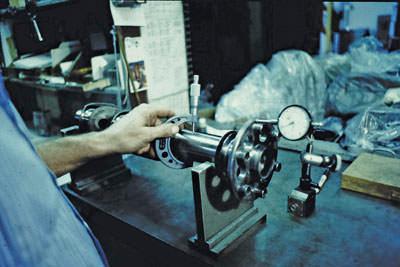
As the crank is rotated in this fixture, the dial indicator will show little to no movement if the crankshaft is straight. If too much movement is seen on the dial indicator, the crankshaft must be replaced.
If the crankshaft is not bent, it is put through a crack-finding process known as magnafluxing. It is mounted in a machine that runs a strong electric current through the full length of the steel crankshaft, causing the crank to become magnetized. A solution of solvent and iron filings is poured over the crankshaft.

If there is a crack in the metal, the disturbed magnetism at the point of the crack will cause the magnetically-sensitive iron filings to align themselves along the crack and clearly show a visible irregularity.
This magnaflux inspection process will be performed on all steel parts. A cracked component must not be put back in service.
If the crank passes these inspections, it is potentially eligible to be reconditioned and reused.
Next, the technician will inspect the round surfaces that support the crank and the four or six connecting rods and bearings that are attached to the crankshaft. These journals, as they are called, must be perfectly round, smooth and machined to a very precise dimension. If any scoring or excessive wear is identified, these conditions must be corrected by re-machining and polishing.
The connecting rods that attach the piston to the crankshaft are precisely measured for length and straightness. After passing that test, they are magnaflux tested for cracks.
Finally, the bushing that serves as the bearing where the piston is attached to the connecting rod is inspected for condition and wear. If the bushing is out of tolerance, a new one will be required.
Camshaft, valve lifters, cam lobes, gears and bearings
Another high-wear area in the valve drive mechanism is where the camshaft and lifters open and close the valves. The camshaft and valve lifters are inspected using the same magnafluxing methods as used on the crankshaft.

Both the cam lobes and lifter faces where the cam rubs the lifter are heat-treated and polished to a very smooth and hard finish when manufactured. These hard surfaces are very thin.
Camshafts can be reconditioned. However, if a significant amount of this thin surface material is removed during the re-grinding process, the life expectancy of the reconditioned part is limited.
I believe that re-grinding a camshaft lobe or mating surfaces of the valve lifters may not always be the best choice. Think seriously about installing new cams and lifters.
In the back of the engine are several steel gears and bronze bearings that need to be magnafluxed and inspected for cracks, condition and wear.
Oil pump
Certainly, let’s not forget the oil pump. All three basic parts of this important component must be assessed. Personally, I would not reinstall used oil pump gears in an engine that’s being overhauled. New gears come with new bushings, so the only “old” part remaining would be the oil pump housing. The oil pump housing can be measured to confirm that it is within limits and if it is, the pump is good to go until the next overhaul.
Crankcase
The next big component to be inspected (and possibly repaired) is the crankcase. This is the big aluminum casting that holds together the lower end rotating crankshaft timing gears, camshaft, magnetos and cylinders.
This complex and massive aluminum casting must first be checked for cracks by using a non-destructive fluorescent dye penetrant process, often known as Zyglo testing.
With the case thoroughly cleaned and dry, the dye (a penetrating fluorescent oil solution) is applied to all the surfaces of the case and allowed to soak into any potential cracks. The surfaces of the case are then thoroughly cleaned. Existing cracks will retain some of the fluorescent material.
When the case is inspected with a black light, the fluorescent material remaining in a crack will glow in a yellow-green color revealing cracks or porosity in the metal. If problems are found, the case can be sent to a company that specializes in welding and machining engine cases to new limits.

If there is no evidence of cracks, the case is checked to ensure that all mating surfaces and areas that support rotating parts, such as crankshafts, camshafts, etc., are straight and not distorted.
Cylinders, valves, valve guides and other mechanisms
Next, it’s on to the cylinders, the most heat-stressed components in an internal combustion engine. Once thoroughly cleaned, all areas of the aluminum cylinder heads are checked with the Zyglo test I mentioned earlier.
If no cracks are detected, the valves and valve guides are inspected and machined. Excessive wear in valves or valve guides will require replacement. The steel valve seats must meet minimum dimensional standards. If not too worn, valve seats and valves can be precisely re-ground to recreate factory specifications.
Next, the valve drive mechanisms and their supporting components, rocker arms, bushings and supporting bosses are inspected using the previous techniques.
Within limits, steel cylinder barrels can be re-machined back to serviceable or new limits. The area where the aluminum head and the steel cylinder barrel are connected is closely checked for leakage. A leak at this juncture means the cylinder is not repairable.
The next step is to measure the bore of the cylinder for wear and condition and, for some cylinders, choke. Choke is a difference in diameter between the hot top end of the cylinder barrel and the cooler lower base of the cylinder. Cylinders can be re-bored to a permissible oversize limit or chrome plated back to new limits by a company that specializes in cylinder work.

Assembling the engine
After days and days of preparing all the engine components for reinstallation, it’s finally time for the fun part of assembling the engine.

The process begins with mounting the crankshaft to an engine stand vertically by securing the propeller flange to a mating surface located at the top of the engine stand. Then, an assembly lubricant is applied to the rod bearings. The connecting rods are bolted to their crank journals with new high-tech rod bolts and nuts.
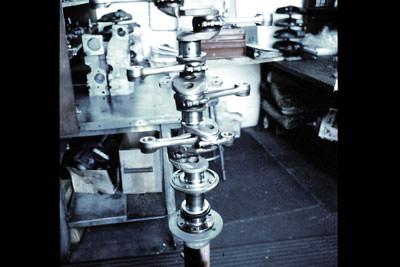
The bolts are carefully tightened to a specific tightness torque with a special calibrated torque wrench and double-checked by a second technician. This two-step verification system will be used throughout the entire buildup process for any critical mounting hardware—smart!
Next, the engine case, with the pre-lubed camshaft, camshaft bearings, valve lifters and main bearings, is mated to the crankshaft and secured by properly-torqued case bolts.
It’s time to install and properly index the magneto, cam timing gears and oil pump, and mount the accessory case cover at the back of the engine. The oil pickup is installed and the oil sump case is bolted on.
Next, the cylinder and pistons are installed, and all cylinder base bolts are torqued to the correct values. The pushrod tubes, pushrods and rocker arms that actuate the valves are installed. Then, it’s on to installing the intake manifolds, magnetos and fuel system, including the engine-driven fuel pump (if required).

As these components are installed, the technician is constantly rotating the engine on the stand, checking for any excessive resistance, proper running clearances and timing of critical components such as valves and magnetos. Lots of stuff, huh?
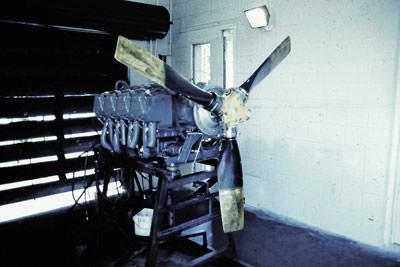
With all this completed and double-checked, the engine is painted. Now the engine is ready to run, either in a test cell or installed in the aircraft.
The paperwork
A reputable overhauler will supply their customer with the following documents and services with the newly-overhauled engine:
1. A teardown report stating the condition of all components when the engine was disassembled.
2. A thorough logbook entry specifying the limits to which the engine was overhauled (such as service limits, new limits, etc.), including a description of all work performed, a complete list of all new parts installed, and supporting certification paperwork for each new part.
3. Yellow tags verifying the identity and airworthiness of all reconditioned components installed in the engine.
4. Statements related to test flight or test run.
5. Any supporting warranties for components not repaired or rebuilt by the overhauler, such as starters, alternators or fuel system components.
6. A clear warranty policy stating what is covered, when the warranty begins and expires, and a payment policy should the warranty need to be enforced.
ADs and Service Bulletins
If defects are discovered over the years a particular model of engine is in service, ADs and Service Bulletins are issued. Some require immediate attention and others must be completed at overhaul. It is important to ensure that all ADs and Service Bulletins are complied with during the overhaul process.
I think we’ve gone over enough for now. With general overhaul procedures covered, next time I’ll explain the three choices for where this work can be done: a local A&P, an overhaul specialist and the engine manufacturer’s factory. Until then, fly safe!
Industrial designer and aviation enthusiast Dennis Wolter is well-known for giving countless seminars and contributing his expertise about all phases of aircraft renovation in various publications. Wolter founded Air Mod in 1973 in order to offer private aircraft owners the same professional, high-quality work then only offered to corporate jet operators. Send questions or comments to editor@www.piperflyer.com.

