


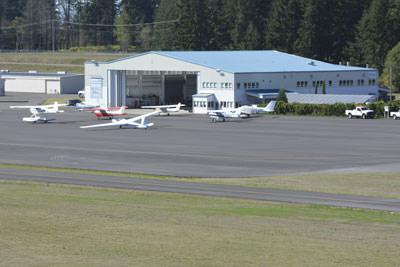
Avian Flight Center has a great reputation in the Pacific Northwest and beyond.
General Aviation is an ocean of alphabet soup: MEA, ILS, IFR, GPS, VOR, and so on. Three of the least discussed—but most important—letters are FBO, or fixed base operator. An FBO can sell fuel and parts, provide instruction, rent and maintain aircraft, charter flights, rent hangars, rebuild engines… and make or break your love of aviation.
Like so many things in General Aviation, FBOs are under pressure. A 2006 survey recorded 3,346 businesses met the minimum FBO criteria. By 2009 the number had dropped to 3,138. That trend continues.
Those facts weighed on me two years ago when my wife and I bought a second home across the Puget Sound from Seattle. Our plane was based at our residence in Dallas with its large GA culture.
After 25 years of flying I knew which local FBOs were decent, but the Pacific Northwest’s FBO landscape was as clear to me as the area’s gray winter weather. Fortunately, I got lucky.
Avian Flight Center
Bremerton National Airport (KPWT) is a quick flight or ferry ride from Seattle (and a winding 50-mile drive, thanks to the Puget Sound). During World War II, the U.S. Navy used Bremerton’s 6,000-foot runway, with military use continuing through the Cold War. The field doesn’t have a tower, but is blessed with one of the best FBOs I’ve ever used: Avian Flight Center.
The company’s aircraft repair facility, Avian Aeronautics, was founded in February 1986 when Pat Heseltine was 29. “When I was 14, my dad started taking flying lessons. He always had a passion for flying,” said Heseltine, who grew up in nearby Tacoma. “We built model airplanes and our own kites. During winter it got dark early, so we’d drive to the local airport where they had an oil stove in the office.
“There were always old pilots down there telling stories,” he continued, “like their DMEs going backward from headwinds. They lived and breathed flying.”
Soon enough, so did Pat. He started lessons at age 15 and would fly any single engine plane that was available. By 17, Heseltine had logged more than 115 hours.
“I was a hands-on guy who really liked metal and wood shop. My high school counselor said I probably couldn’t have a career in aviation since I hadn’t taken any advanced math classes. He didn’t know I’d already been to the technical school and had a plan mapped out.
“I finished high school in two years, and finished math classes in three or four weeks by taking one test after another.”
Getting his start
After getting his A&P certifications in 1976 while refining his sheet metal skills, Heseltine joined Tacoma Aviation. He rebuilt three Piper Comanches and a ground-looped Cessna 170 while maintaining many more planes.
One of his most significant projects was rebuilding a seaplane he bought and flew to Washington after it was dredged from a South Louisiana swamp.
“The engine was well preserved, but the headliner was full of mud, the instruments were half-full of water and the controls and cowl flaps were frozen. When two friends and I went down to pick it up, I thought about turning around and going home,” he recalled.
“We didn’t know what was going to happen, particularly since only one of us had any floatplane experience, which was three hours in a J-3 Cub five years earlier.
“By the time we got the plane cleaned up and ready, a front was rolling through with a 20- to 25-knot crosswind. We figured ‘No big deal. It’s just a crosswind takeoff,’” Heseltine continued. “About that time, one of the charter pilots walked in the office after landing on the canal and said, ‘My God, I’d hate to do that again.’
“We looked at each other and thought, ‘Well, we’re just taking off, not landing.’” They gave it a go.
The takeoff went perfectly, and Heseltine and his two friends were on their way toward Houston when they realized the aerial charts were back in the airport office.
After a brief debate they landed safely, retrieved the maps and soon made it most of the way back to Washington: all the lakes and rivers in the northern half of South Dakota were frozen. When the ice broke up weeks later, Heseltine and a friend returned to South Dakota, flew back to Washington and spent a year restoring the aircraft. They got eight years of service before selling it.
Other stories include Heseltine’s lone season of crop dusting, where he logged 300 hours in six weeks; successfully flew his plane through a wire; navigated by reading street signs from 300 feet AGL; spotted herring from an L-19 Bird Dogin Alaska; built a successful seaplane maintenance business; and more.
Learning as you go
By age 27, Heseltine decided to put down roots by acquiring an engine shop at Bremerton Airport. The owner had passed away and left behind an uninsulated 6,000 square foot World War II-era Quonset hut filled with old machinery illuminated by four street lights.
To top things off, Heseltine’s experience with engines consisted of removing them from planes, and occasionally pulling cylinders so they could be repaired. “We didn’t have any engine expertise. We had bought the lease to the building and everything inside it,” he said with a laugh. “We had to figure things out as we went.
“Fortunately, we were fast learners.”
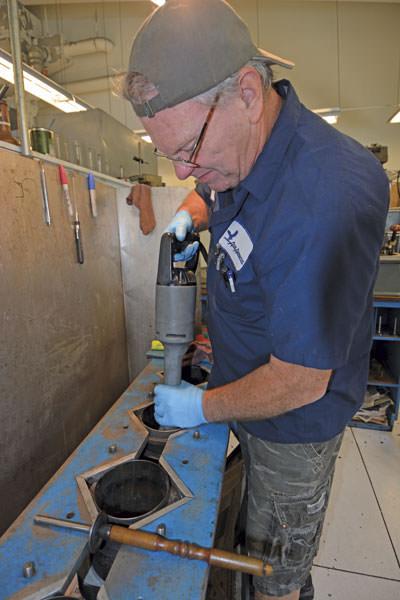
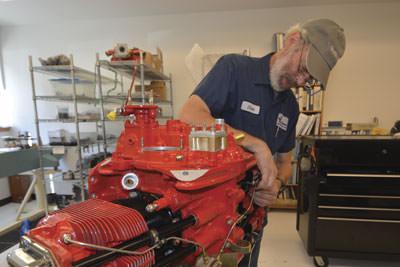
A lot of sheet metal work was lined up before they moved in, and Heseltine hired Dave Pearson, who was a new A&P. Pearson grew to lead the company’s very successful engine rebuild facility.
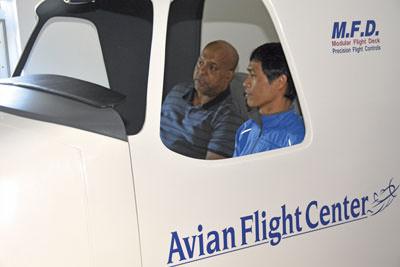
By 2000, Avian Aeronautics was doing so well, the Port of Bremerton agreed to build a large hangar and training complex to house the growing company, Avian Flight Center, Inc.
“There was a period when the Pacific Northwest was losing an FBO each month. We tightened our belts, increased our productivity—and got out the word on our services,” he explained.
“If someone in the Puget Sound brings their plane to us for service, at no extra cost we’ll fly them back to their home airport and pick them up when the work’s done. That’s really great for pilots who need their engines rebuilt. We can remove the engine, rebuild it, then install everything,” he added.
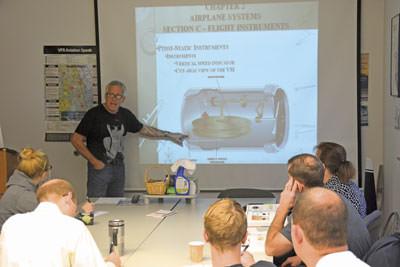
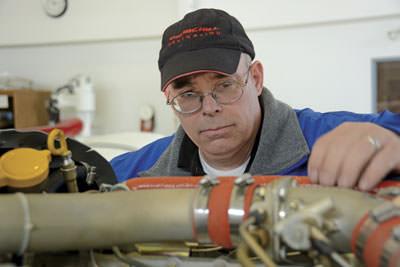
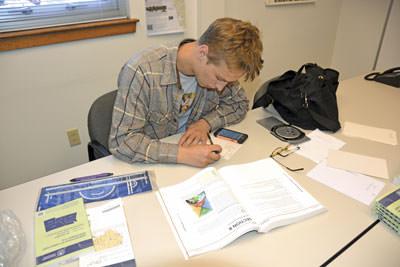
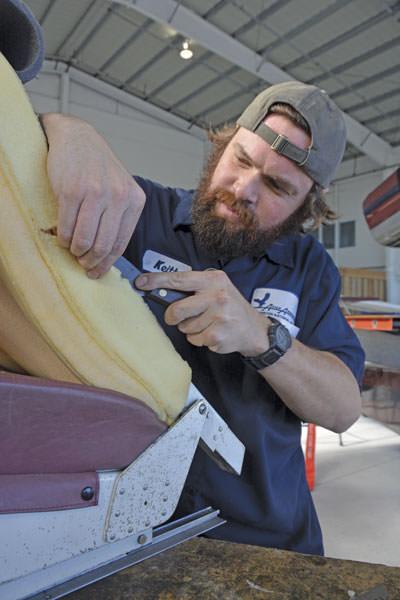
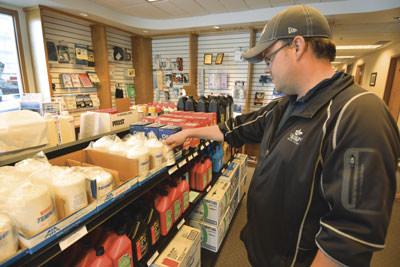
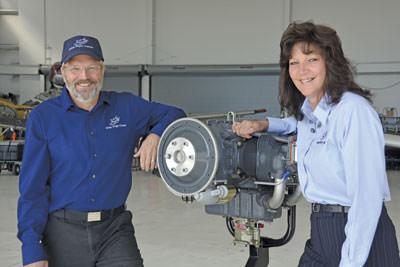
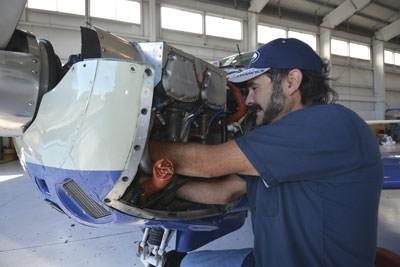
The company’s 22 employees—including Heseltine’s lovely wife, Gin, who he met at the airport café—provide aircraft maintenance, engine rebuilding, pilot training, parts sales and pilot supplies.
Great habits, happy customers
The biggest thing I noticed was how polite everyone at Avian is—not to mention, enthusiastic about flying. Plus, the shop was as tidy and neat as any I’d ever seen. As someone who works in medical technology, my experience has been good habits start on the ground floor and drive everything else.
That was echoed by a number of pilots I spoke with. Ken Kiesel is a retired electrical engineer whose Lycoming 360 was overhauled by Avian in January 2012 after a prop strike. Twenty-seven months later metal was found in the oil filter, shortly after the warranty expired.
Avian picked up the engine at a nearby airport, tore it down and saw the crankshaft bearings had begun delaminating. “Avian took responsibility to fix the engine, even though it didn’t have to,” said Kiesel. “That was really honorable of them.”
Fifty-six year old entrepreneur and Turbo Saratoga owner Jim Tracy was inspired to get his license in 2006 so he could take his dad flying. “I viewed the Avian people through my business lens, which is based on a value proposition: ‘Can these people take care of me now, later, and a lot later?’ The answer has always been ‘Yes!’” said Tracy.
“They trained me, maintain my plane and do it all very well. My plane is priceless because it lets me get a lot done and still be home each night with my family,” he added.
Donna Bosch enjoyed going to the airport diner for lunch with her husband. For years, they’d watch airplanes land and take off. She told her husband, “That must be the biggest thrill.” He signed her up for a discovery flight. At age 67, Bosch went up and decided “I can do this!”
One year later, she had her private certificate and has since logged 300 hours. At 71 years old, she flies an hour or so each week. “Avian is absolutely the best. The ground schools were superb. The instructors were interesting and really helpful. Everyone is just wonderful. It’s kind of like a second home for me.”
Retired Navy musician Robert Watson echoed that sentiment. “My son and I went through ground school together, then he got his private license in 2012 when he was 17. He’s now Air Force ROTC and hopes to get a flying spot in the service. I got my ticket in November 2013, and Avian absolutely did a good job.
“I used different instructors, which provided different perspectives. Each one had something unique to offer,” Watson said.
Important now, and in the future
For pilots to be a true community, we need excellent instructors, good repair facilities, trustworthy vendors, expert mechanics, affordable rentals and strong community advocates. Avian Flight Center reminds me how important all of these things are—not just in the present, but for the future of flying.
Kevin Knight is an IFR rated pilot who learned to fly in a Tomahawk. Send questions or comments to editor@www.piperflyer.com.
RESOURCES >>>>>
Avian Flight Center, Inc.

