


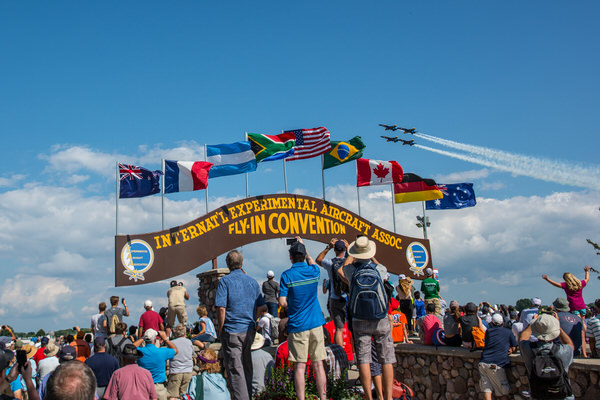
If you’re planning a trip from Southern California to EAA AirVenture Oshkosh, this recounting of a 2024 trip can provide some guidance.
From California to Oshkosh
We took off from Fallbrook Community Airpark (L18) in Southern California just before noon on July 16, with plans to stop for the night in Grand Junction, Colorado, to visit friends who used to live in Fallbrook.
We took a route primarily direct to the VFR corridor to cross the Grand Canyon Special Flight Rules Area, bending the course to miss the Twentynine Palms USMC Base Restricted Areas, and the restricted areas to the north around Fort Irwin.
The day began CAVU (clear and visibility unlimited), with various cells of small- to medium-sized thunderstorms to the north side of the Grand Canyon and then for miles north, just west of the Lake Powell area. We encountered a continuous line of thunderstorms from just north of the Grand Canyon crossing, continuing in our direction probably two-thirds of the way to Grand Junction, Colorado.
If the line of thunderstorms had moved east, we would have likely landed at Page, Arizona (KPGA), or flown around the line to the east. Luckily for us, the line of storms stayed west of us on a direct parallel line to our course line, but the skies in front of us stayed open with scattered clouds above us at 9,500 feet msl.
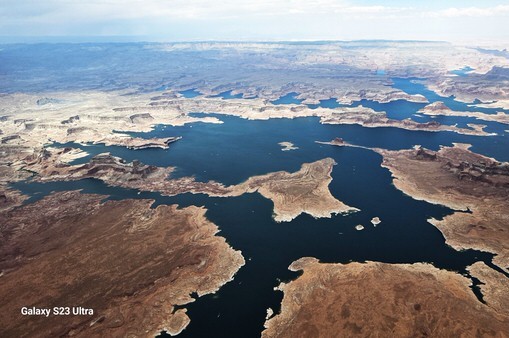
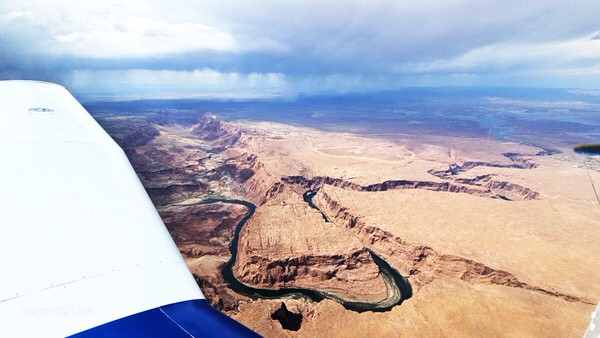
There was a fairly large thunderstorm immediately to the southeast of Grand Junction over the Colorado National Monument, and the Grand Junction tower notified us of the thunderstorm, but we could clearly see it and just curved around it to the final approach course of 040 degrees to Runway 4. The AWOS reported winds of 10 knots gusting to up to 35 knots, at 050 degrees, but we encountered almost no wind effects in our approach and smooth landing. Grand Junction Regional Airport (KGCT) was itself CAVU.
We landed in the early evening at Grand Junction, where we were picked up by friends Mark and Karen, who until very recently lived in Fallbrook, California. We knew them from church and the church choir. She is an architect and former Air Force Captain, who now works for the VA, and Mark is a retired psychologist.
The airport opened in 1930 as Grand Junction Municipal Airport. In 1942, it was renamed Walker Field for Walter Walker, a former publisher of The Daily Sentinel newspaper who helped obtain funds and business support for the airport. The airport and the airport authority were renamed on May 15, 2007.
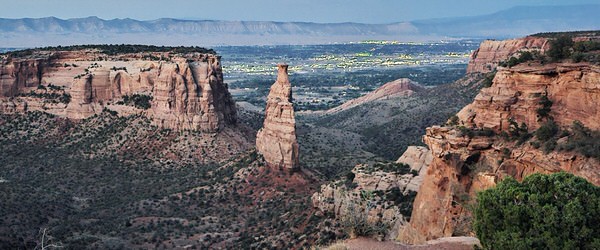
We had dinner at Mark and Karen’s house, and then Mark drove us through the Colorado National Monument loop road. Even though it was late in the evening, there was more than enough light to see all the rock formations, spires/columns, canyons, and mountains. My Galaxy 23 cellphone camera is very sensitive to low light and takes great dusky evening photos.
The next morning, as we flew across the Rockies and into the Great Plains, on the way from Grand Junction to Central Wisconsin Airport (KCWA), in Mosinee, we stopped at Cherokee County Regional Airport (KCKP) for low-priced fuel. We again were the only plane on the ramp, but they had a nice pilot’s lounge, restroom, and an attendant.
It was a nice airport with mowed lawns. It seems like the attendant drives the mowing machine, cleans the bathrooms, and attends the desk. I don’t know if she does windows.
We borrowed their courtesy car and got some lunch. I can’t say much about their restaurants. This is one time we should have driven through a fast-food restaurant. We like to try unique restaurants and hole-in-the-wall joints, but this town just didn’t have anything unique that we would recommend.
After lunch, we flew to Central Wisconsin Airport (KCWA) and Central Wisconsin Aviation attendants met us on the ramp. We arranged, as usual, to put our plane in their hangar, as I don’t trust the frequent thunderstorms, hail, and tornadoes. After the plane was secured we were off to Waupaca for the Piper Flyer Gathering at Waupaca and then to spend a few days at AirVenture.
Returning home
After a fun-filled adventure in Waupaca and at AirVenture, it was time to head home. (You can read about AirVenture in the October issue of Piper Flyer magazine.)
Upon departure from Central Wisconsin Airport (KCWA), we turned south to head for San Angelo, Texas, Sharon’s brother’s hometown. Her brother was coming out of the hospital and we wanted to visit with him. It was a good flight, with scattered clouds at various altitudes and a bit of haze from the humidity.
Along the way, I chose to stop at El Reno Regional Airport (KRQO) in Canadian County, Oklahoma, as they had sub-five-dollar 100LL. The airport opened in 1943 as a United States Army Air Forces World War II primary (Stage One) pilot training airfield by the Army Air Forces Training Command Gulf Coast Training Center (later Central Flying Training Command). It was known as El Reno Field or Mustang Field.
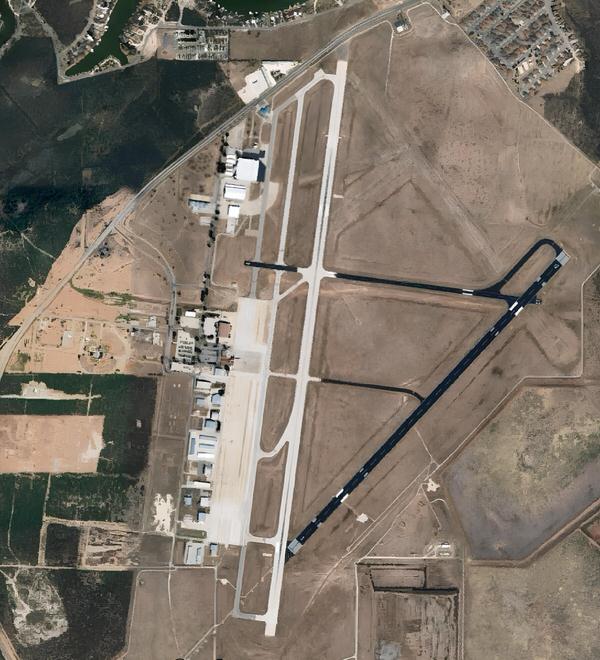
We continued with a less-than-two-hour flight to San Angelo, where we tied down at Skyline Aviation. Several years before, I bought my Piper PA-32-301T Turbo Saratoga in San Angelo, where the corporation that owned it kept it in a hangar at Skyline.
San Angelo Regional Airport –Mathis Field (KSJT) was constructed just before World War II and started life as Carr Field, then successively Concho Army Air Field (there is a historic Fort Concho historical site in San Angelo), San Angelo Army Airfield, and finally, after World War II, Mathis Field.
My brother-in-law (Sharon’s other brother) served as an instructor at Mathis Field in the USAF before they closed down the school and Air Force facilities. He never left the area, retiring recently after over 20 years in the USAF and USAF Reserves.
Skyline Aviation usually has courtesy cars, so we checked out a small SUV for the night. Very convenient! Also, San Angelo has a lot of new hotels at reasonable prices (as compared to southern California!). We liked the Residence Inn by Marriott, which was near all the new shopping and restaurants.
In the morning, we paid for our fuel and took off for home, overflying El Paso, Texas (KELP), stopping in Gila Bend Municipal Airport’s (E63) 110+ degree heat for decently priced 100LL before our final segment to Fallbrook Community Airpark (L18) in northern San Diego County, California.

A note on EAA Chapters
In the story that appeared in the magazine, I mentioned that this year’s AirVenture marked the 70th anniversary of the founding of the initial EAA Chapters.
I was in EAA Chapter 1 for years, but now I am in Chapter 1279 out of French Valley Airport in Temecula, California. Ray Stits worked with Paul Poberezny (they were great friends) to start the first chapter at Flabob Airport in what was then the California city of Rubidoux and now is part of the new city of Jurupa Valley.
I started my flying lessons at Flabob, as we had bought our first house in the neighborhood, and the airport was 12 houses down at the end of our street. I took lessons from Flavio Madariaga’s flight school, which cost something like $12 per hour wet for the plane and $7 per hour for the instructor. Flavio owned the Flabob airport (the name was a combination of his and his partner’s names).
One time, when the instructor didn’t make it for my session, Flavio took me up in one of the Cessna 150s and said, “I am going to show you how to really fly.” He was a crazy pilot (but extremely proficient) and could be seen at times riding his white stallion around the airport and neighborhood.
Piper Flyer Association member Doug Allen is an ASEL, AMEL, and ASES instrument-rated pilot, with over 1,900 hours of PIC time. He is a scientist/engineer. His longest, most complex project was serving as a member of the Space Station Freedom (SSF)/International Space Station (ISS) senior design and management team for McDonnell Douglas and Boeing, on the GNC design, development, test, evaluation, manufacture, and delivery team. As part of this effort on a follow-on program, he was program manager for Boeing for the development of scientific equipment for the ISS for the National Space Development Agency of Japan (NASDA – later renamed JAXA). Send questions or comments to editor@www.piperflyer.com.

