Stephen,
That’s good news. I wouldn’t stop with only checking two cylinders. I would check all four.
Glad we got to the bottom of that.
Happy Flying,
Steve
IO-360 stutter in cruise flight



-
ParticipantParticipant
STEVE ELLS” wrote:
Does your engine stumble when you start it up on a cold morning. Does it take a minute or two before it “smooths out?” If so, that’s an indication of sticking valves. [attachment=1031]SB388CWobbleTest.pdf[/attachment]
The water idea doesn’t make sense–wouldn’t water in the fuel affect all cylinders? The answer is yes.
I would pull the #4 valve cover and check to make sure that there’s no damage in the rocker arms, and push rod.
It sounds like one of the valves (probably the exhaust) is sticking. I have attached Lycoming Service bulletin 388C–it contains a procedure to check valve to guide clearances.
The Lycoming tool is very expensive.
I bought a tool from Aircraft Spruce (www.aircraftspruce.com) that does the job. https://www.aircraftspruce.com/catalog/topages/valvewobble.php.
I’ve attached the service bulletin.
Let me know what you findWe’ll you hit the nail on the head. Mechanic went to taxi the airplane for an oil change and sure enough the #2 wasn’t firing at idle. He checked the valves and found the exhaust completely stuck-rock solid. He then checked #4 and same thing. Both have been reamed and replaced.
Attachments:
SB388CWobbleTest.pdfParticipantCheck your prime pump. The item is a cylindrical device on the firewall. This device is known to be leaky near end of life and is known for creating a stutter in the fuel flow that creates a symptom much like what you have described.
ParticipantDoes your engine stumble when you start it up on a cold morning. Does it take a minute or two before it “smooths out?” If so, that’s an indication of sticking valves.
The water idea doesn’t make sense–wouldn’t water in the fuel affect all cylinders? The answer is yes.
I would pull the #4 valve cover and check to make sure that there’s no damage in the rocker arms, and push rod.
It sounds like one of the valves (probably the exhaust) is sticking. I have attached Lycoming Service bulletin 388C–it contains a procedure to check valve to guide clearances.
The Lycoming tool is very expensive.
I bought a tool from Aircraft Spruce (www.aircraftspruce.com) that does the job. https://www.aircraftspruce.com/catalog/topages/valvewobble.php.
I’ve attached the service bulletin.
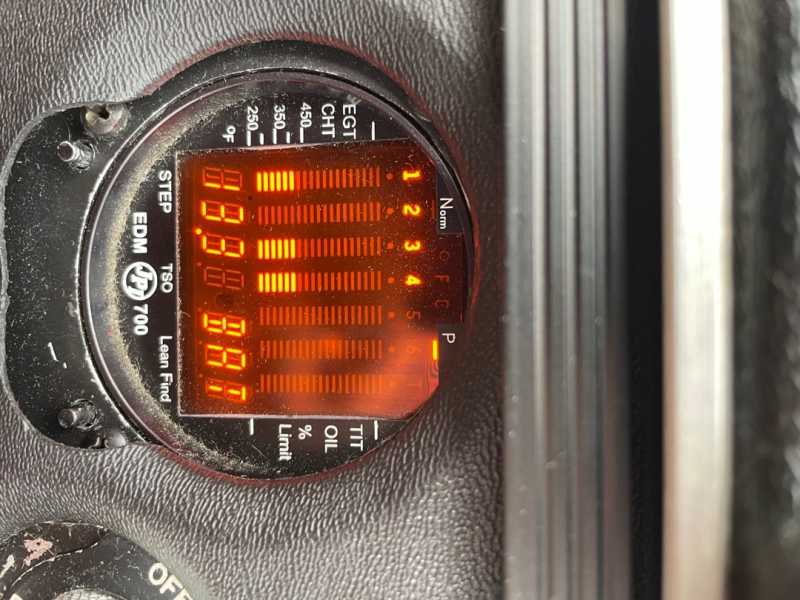
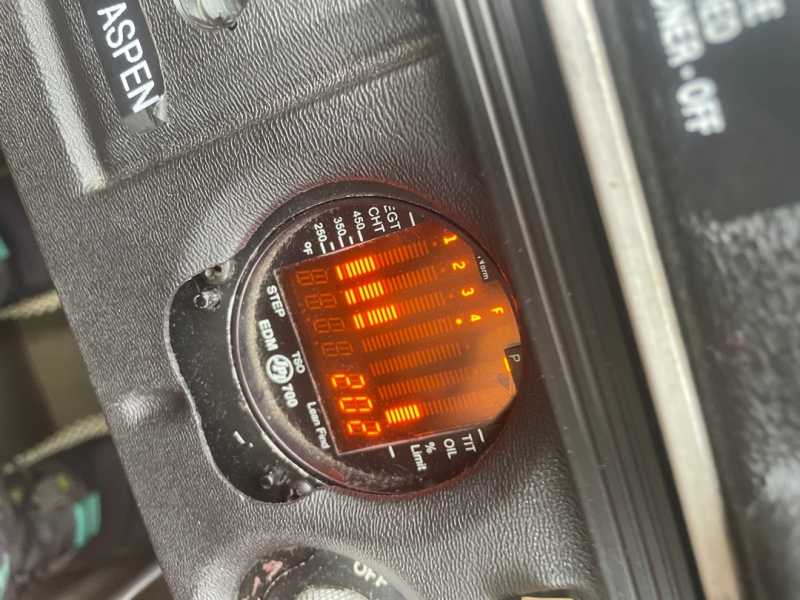
Let me know what you findAttachments:ParticipantFor those who are curious the issue still persists after having 4 mechanics look over the engine’s ignition and fuel system. Both magneto’s have been replaced. The last time the misfiring occurred in cruise was at 11,000′ and it lasted for about 3 to 4 minuets (very unnerving in IMC over terrain in New Mexico!). When this was going on I snapped a picture of the JPI engine monitor and it showed cyl #4 completely dead/cold. The engine then fixed itself while I was diverting- it came back and ran smoothly before landing. Mechanics I spoke with checked all sparks were firing and they re-gapped the spark plugs. On start up about 8 flight hours later the misfiring was back, only when idling, this time showing cyl #2 dead/cold.
Everyone at this point thinks that water is getting into the fuel system. The right hand take cap gasket is very thin and its possible water gets in on the ground or in flight. Most of these occurrences have been on the right tank, except the one at idle on start up. I always sump my fuel- only three places on this arrow, and have never noticed water. We are going to replace both tank cap gaskets and go from there.
Is there anywhere else in the fuel system water can enter? If it isn’t water the other possibility is the diaphragm in the fuel distributor is going bad?
Attachments:ParticipantThe first and easiest thing I would check is for water in your fuel. Just a tiny bit will cause what your reported.
Rock the wings up and down (manually) then sump at least a quart of fuel out of each tank.
There are two areas I would explore.
1. Check the electrical resistance of each of the spark plugs. Put one probe of your ohmmeter or multimeter (set for ohms scale) to touch the button in the spark plug lead end, and the other probe on the center conductor at the spark end. Replace and spark plug that has an internal resistance that’s greater than 5000 ohms (5K ohms). If all the plugs have less internal resistance than 5000 ohms, do number 2.
2. Do a flow test to check even flow through each fuel injector nozzle. I have six little baby food bottles that I use. Remove each injector, and loosen the clamps on the injector fuel lines. Screw the line nut back on to the injector, then put the out end of the injector in a little bottle of some sort. Turn on the boost pump for 5 or 10 seconds. Each bottle should have the same amount of fuel. If there’s one that doesn’t flow as much, clean it and re install everything.Do you know if you have had your magnetos internally inspected with in the last 500 hours?
Is it only when your at high power 25” and 2500 rpm that this stumble occurs?
Let me know what you discover.
SteveParticipantHey guys,
On a trip in my Arrow 180R from FL to CA. Had to divert in Louisiana due to some stutter/stumble in cruise flight. Power was at 25″ and 2,500RPM, boost pump off. ~1350EGT 350CHT. Sumped the fuel prior to departure found no water. This has happened prior, but not as obvious, on a completely different fuel fill. Mechanic looked at all the spark plugs, mag timing and then 8 min into another flight it happened again- its almost like the engine wants to stall/quit for just a second then goes back to running fine. This time I noticed a fuel flow drop from 12gal/hr to 10gal/hr. No boost was running, full rich on the mixture. Mechanic just took a look at the fuel screens and injectors and found no issues. Next he will check the engine driven pump pressure. Im far from home unfortunately! Any ideas where to look next?
Thank you.


Viewing 7 posts - 1 through 7 (of 7 total)
- You must be logged in to reply to this topic.