Close Menu
Piper Flyer AssociationPiper Flyer Association
  • Home
  • Members
    • Member Dashboard
    • Parts Locating
    • Edit Profile
    • Member Benefits
    • Renew
  • Forums
  • Piper Models
    • Piper Singles
      • Piper Cubs
      • Piper PA-11, PA-12, PA-14
      • Piper Short Wing
      • Piper PA-18 Super Cub
      • Piper PA-24 Comanche
      • Piper Pawnees
      • Piper PA-28 Cherokee
      • PA-32 Series
      • Piper PA-38 Tomahawk
      • Piper M Series
    • Twin Engine
      • Piper PA-23 Apache/Aztec
      • Piper PA-30 Twin Comanche
      • Piper PA-31 Series
      • Piper PA-34 Seneca
      • Piper PA-42 Cheyenne
      • Piper PA-44 Seminole
  • Magazine
    • ONLINE MAGAZINES
      • 2026 ONLINE MAGAZINES
      • 2025 ONLINE MAGAZINES
      • 2024 ONLINE MAGAZINES
      • 2023 ONLINE MAGAZINES
      • 2022 ONLINE MAGAZINES
      • 2021 ONLINE MAGAZINES
      • 2020 ONLINE MAGAZINES
      • Prior Years
    • Article Archive
      • Maintenance & Technical
      • Other Popular Articles
    • Featured Articles
  • Knowledge Base
    • Aviation News
    • Aviation Alerts
    • Videos
    • Annual Checklist
    • Piper Flyer Sponsors
    • Keep Your Piper Ownership Affordable
  • Login
  • Join
Free Newsletter
What's Hot

Missions of Honor’s Yellow Ribbon Honor Flight honors veterans as part of EAA AirVenture Oshkosh 2026 activities

Garmin brings revolutionary SmartCharts to Garmin Pilot Web

Southwest Airlines bringing ‘Independence One’ to EAA AirVenture Oshkosh 2026

Facebook X (Twitter) Instagram
Join PFA Renew
Piper Flyer Association
Free Newsletter Login
  • Home
  • Members
    • Member Dashboard
    • Parts Locating
    • Edit Profile
    • Member Benefits
    • Renew
  • Forums
  • Piper Models
    • Piper Singles
      • Piper Cubs
      • Piper PA-11, PA-12, PA-14
      • Piper Short Wing
      • Piper PA-18 Super Cub
      • Piper PA-24 Comanche
      • Piper Pawnees
      • Piper PA-28 Cherokee
      • PA-32 Series
      • Piper PA-38 Tomahawk
      • Piper M Series
    • Twin Engine
      • Piper PA-23 Apache/Aztec
      • Piper PA-30 Twin Comanche
      • Piper PA-31 Series
      • Piper PA-34 Seneca
      • Piper PA-42 Cheyenne
      • Piper PA-44 Seminole
  • Magazine
    • ONLINE MAGAZINES
      • 2026 ONLINE MAGAZINES
      • 2025 ONLINE MAGAZINES
      • 2024 ONLINE MAGAZINES
      • 2023 ONLINE MAGAZINES
      • 2022 ONLINE MAGAZINES
      • 2021 ONLINE MAGAZINES
      • 2020 ONLINE MAGAZINES
      • Prior Years
    • Article Archive
      • Maintenance & Technical
      • Other Popular Articles
    • Featured Articles
  • Knowledge Base
    • Aviation News
    • Aviation Alerts
    • Videos
    • Annual Checklist
    • Piper Flyer Sponsors
    • Keep Your Piper Ownership Affordable
  • Login
  • Join
Piper Flyer AssociationPiper Flyer Association
Renew
Home » Topics » Main Forum » PIPER MODELS » PA-28 » Archer II Aileron Technical Drawing

Archer II Aileron Technical Drawing

  • Index
  • Recent Topics
  • Search
  • Index
  • Recent Topics
  • Search
Login

Posted In: PA-28

  • Participant
    STEVE on April 19, 2026 at 3:05 pm #26434

    Hi Brendan,

    Friday I called Airframe Components (Williams) and spoke with Nathan. He said there is a built in twist in a PA28-181 aileron.

    They can check yours to see if it’s the problem; they also have ready to go ailerons they can ship ASAP.

    I called 260 544-0013.

    Please let me know what you decide.

    Steve

    Participant
    Brendan O’Rourke on April 11, 2026 at 4:49 pm #26301

    I actually made all the rigging tools myself. I’m a mechanical engineer and have spent my career designing components on SolidWorks 3D CAD system. I drew the tools up and then made them a work where I have access to CNC and laser cutting machines. Yes we used the tools and a cable tension meter.

    The aileron was reskinned by an A&P, seems unlikely that a jig was used. That said, visually, and from the few measurements I to take, the aileron looks normal. I did try contacting Airframe components several weeks ago through the website with no response; I’ll try giving them a call.

    I could see an improperly installed u-joint causing some chain yoke tensioning issues between the yokes, but not sure how that would affect being able to set the ailerons to trail properly. I’ve also studied the mechanics of the yoke and chain system because the pilot u-joint on my plane needs replacing after 45 years. No logbook entries stating previous yoke replace that I can see. Nothing looks unusual.

    Participant
    STEVE on April 11, 2026 at 3:34 pm #26300

    Hi Brendan,
    Sorry for the delay in getting back to you.

    I asked for answers from a large group of A & Ps online. The answers pretty much relate to the actions you’ve already taken with a question on whether your mechanic built the flap and aileron rigging tools detailed in the service manual when rigging those controls.

    There was another noteworthy post when I mentioned that you thought an improperly repaired aileron may be the problem; this posted asked it the aileron was repaired using the Piper jig. I did not know that there were jigs for Piper ailerons. There are a couple of rebuild facilities that specialize in airframe work. Airframe Components in Kendallville, Indiana is highly regarded for airframe work. This company has posted a number of videos on YouTube explaining common light airplane issues.

    Another strange cause was relayed on by one of the A & Ps:
    “I had a PA28-235 with a similar issue but it was evident on the ground. When the jokes were both matching with a long straight edge across the top of the yokes the ailerons were both out of being faired with the flaps.
    Ended up be a nearby shop had replaced the u-joint at the control column and completely missed drilled the u-joint. This messed up how the chain sprockets aligned we could never rigging the problem out.
    Had re-do the work the previous shop goobered up and then re-rig everything; it was a huge mess.”

    Let me know if this post helps.

    Steve
     

    Participant
    Brendan O’Rourke on April 7, 2026 at 4:01 pm #25773

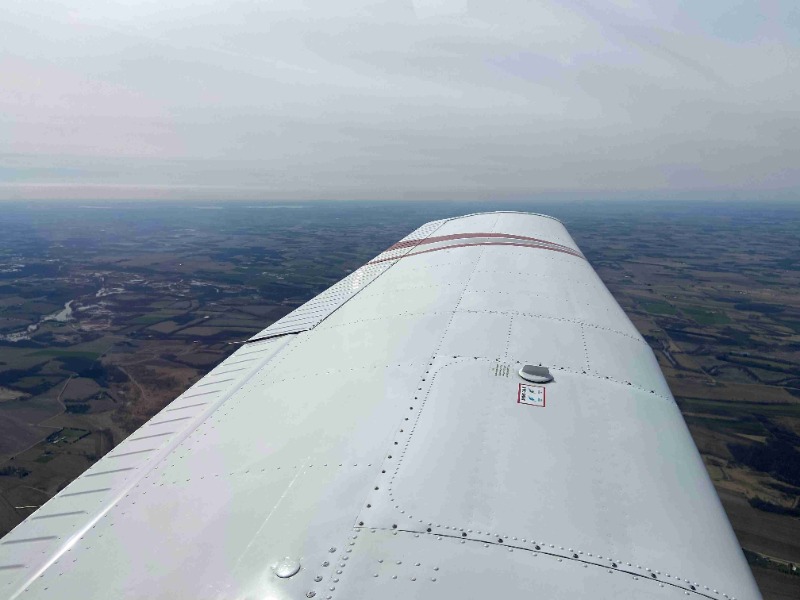
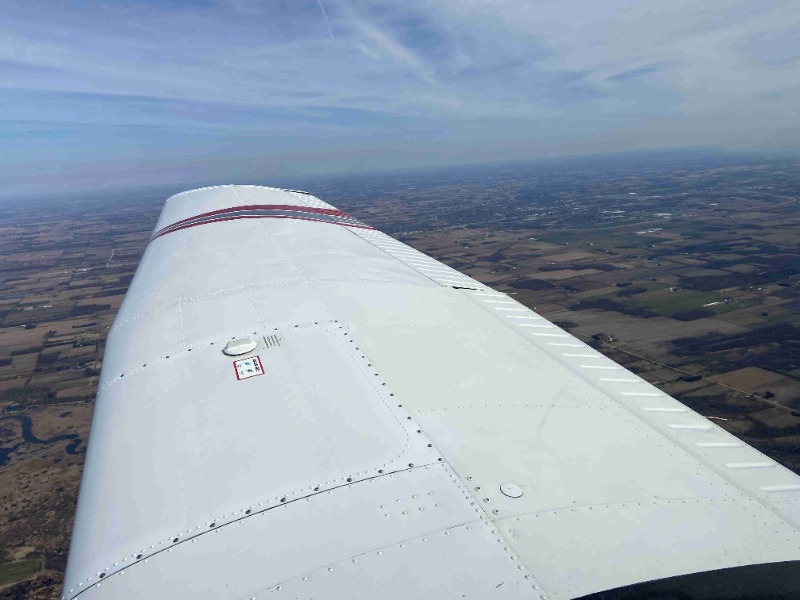
    I’ve attached flying pictures and video starting at level flight and then progressing into the left roll. At the start, the ball is reasonably centered and wings are reasonably level, but it does require continuous right yoke pressure to keep it there. LH aileron is slightly raised up and RH aileron is slightly lowered down as shown in pictures; no matter what adjustments I’ve made thus far, this how the ailerons want to trail in flight. The video shows the left roll when letting the yoke free/turning the autopilot off. From previous post, the nose of fairing is turned slightly right from pilots POV with centering springs attached and rudder bungees disconnected, i.e. isolating the nose gear up on jacks. Yes I used the rudder trim to straighten the nose gear and then adjusted the rudder cables turn buckles to center rudder when the plane was jacked and leveled. Unknown whether rudder and nose gear stay aligned in flight because they’re not visible from the cockpit; working on mounting an external troubleshooting camera. I’ve had lots of hypotheses that I’ve tested, starting of course with rigging everything back to manual specs, thus far neither that or adjustments have had a significant impact on lessening the roll.

    Attachments:
    • Level_LeftAileron.jpg
    • Level_panel.jpg
    • Level_RightAileron.jpg
    Participant
    STEVE on April 2, 2026 at 9:07 am #25771

    Hi Brendan,
    So the question boils down to: what is driving the yoke to an off center position when flying?
    You mentioned that the NG fairing is a few degrees to the right of center–are you referring to the aft end of the fairing or the nose of the fairing?

    You didn’t mention taking an action to address that off center observation. The rudder pedals should be married, and the rudder should be faired, and the nose gear should be straight–

    Is the ball in your turn coordinator centered when the ailerons offset in flight???

    Have you tried using the rudder trim to center the ball if it isn’t centered in flight?

    If the answers to those questions are yes and yes, then I suggest that you adjust as necessary until the NG fairing is streamlined with rudder trim control adjusted for neutral per the manual and with the rudder in neutral.

    Something is moving the yoke in cruise–lets work on fixing that. If you have any ideas beyond my suggestions above, I’d love to hear them.

    Please let me know what you find.

    Steve
     

    Participant
    Brendan O’Rourke on April 1, 2026 at 6:29 am #25770

    We did remove the springs when going through the rigging procedure, because we were also thinking the springs might be different. I measured them in their free state and they were nearly identical. The springs are a bugger to remove/install because of their stoutness; using the tow bar to turn the nose gear to the stops helps by shortening the distance the each spring needs to be stretched for install. We did switch the springs to opposite sides, which made no change to left roll. It appears there is also no adjustment in the nose gear steering horn or the wheel fork alignment to the strut from what I can determine in the service & parts manuals; is that correct? Thx for continuing to offer suggestions.

    Participant
    STEVE on March 31, 2026 at 9:20 am #25769

    Hi Brendan;
    Next suggestion:
    Remove the two steering centering springs and swap them–to determine if the springs are the problem. If, after swapping you have a right turning problem, the obvious conclusion is the springs are not matched in “power” or length.

    Steve

    Participant
    Brendan O’Rourke on March 30, 2026 at 4:47 pm #25768

    I’ve been down the ‘lowering flap for heavy wing’ road before a few times; the result has been negligible difference if any. What I see out the window when I let the yoke free is the LH aileron comes up and the RH aileron goes down and the plane rolls left; of course the yoke turns left as expected. Unchecked, the airplane would be in a steep turn in less than 5 seconds, so you can imagine this is a little annoying especially when trying to fly a heading in IMC conditions. If I hold the right pressure on the yoke to make the ailerons trail reasonably neutral the plane will fly level and I can center the ball with the rudder trim. Something is causing an aerodynamic imbalance which manifests with the aileron movement. This past weekend I spent half a day checking the nose wheel and rudder alignment. The nose wheel/fairing is turned a few degrees right of center. My Archer has the nose gear centering springs that Piper started adding ~later 70’s and is the subject SB 1167 from 2006. These are really heavy extension springs that connect each side of the nose gear steering arm to the firewall. There is no adjustment on the centering springs so it’s a compromise of steering bungee adjustment, cable tension, and rudder trim to make the nose wheel and rudder centered when plane is jacked and leveled. It appears that my plane came from the factory with the centering springs, because there is no record of kit 767-519 being installed. The springs visually appear to be correct but can’t find any specifications to confirm. The spring P/N is 67168-00 which may have been superseded by P/N 487-483. Unfortunately, neither the rudder or nose gear can be observed in flight from the cockpit; I may need to resort to mounting some external cameras to see what’s happening in flight.

    Participant
    STEVE on March 27, 2026 at 9:25 am #25764

    Hi Brendan;
    Again, sorry for the delay in responding.
    It sounds like you’ve done a lot of good troubleshooting.
    There aren’t too many tweaks to combat your left wing low tendency. The easiest is to slightly droop the left flap. Add a bit of length to the left flap actuating push rod.
    This procedure is detailed in the PA28-181 Service manual Chapter 27-50-00 Page Locator 2 D 7 para (5) d:
    “To remedy a wing heavy condition during flight, adjust flap
    down from neutral on heavy wing, by lengthening control rod.
    Check each rod inspection hole to make sure there are suff icient
    threads remaining and that a wire cannot be inserted through
    these holes. Maintain a minimum of 0.375 inch thread
    e n g a g ement on rod ends without check holes. Do not raise the
    flap of the other wing above neutral”

    EZ Does it, Make slight adjustments to lengthen the flap actuating rod until she flies straight and level.

    Please let me know how this tweak works out.

    Steve

    Participant
    Brendan O’Rourke on March 24, 2026 at 5:09 pm #25761

    Steve,

    My inquiry is related to my aircraft having a left roll tendency (right yoke pressure is continually required). It’s had this issue since I purchased the aircraft 6 years ago now. My A&P and I have worked on this issue many times without resolving the problem; we made improvements but apparently have not found the root cause. We’ve followed the Piper Service Manual rigging procedures to get the surfaces aligned and cable tensions within spec. So, I’ve been looking for possible airframe and/or control surfaces that have been repaired or are out of spec since the plane left the factory 46 years ago. Per my calibrated eyeball, the aircraft looks straight, nothing visually jumps out. I’ve spent some measuring various points on the wings and control surfaces using a laser transit in attempt to find anything that measures suspect, so far, the measurements are amazingly symmetrical; with little to no design information, I’m assuming symmetry is good. The parts and service manuals are very good procedurally, but they don’t provide much if any explanation of what the results of an adjustment will be or what to troubleshoot if adjustments don’t solve the problem. Unfortunately, some technical information is tribal and/or unobtainable from Piper. Since my original post, I’m systematically going through the rigging procedures again. The rudder system on PA-28-181 incorporates a series of springs; rudder pedal to nose gear bungees, nose gear to firewall centering springs, and inflight adjustable rudder trim. All of the springs influence each other during control inputs, the bungees and obviously the rudder trim are adjustable, but the nose gear centering springs are not adjustable, so I’m looking carefully at the nose gear wheel/fairing to ensure they really are in alignment with the aircraft center when rudder pedals and rudder are centered too. Thoughts?

Viewing 10 posts - 1 through 10 (of 12 total)
1 2 →
  • You must be logged in to reply to this topic.
Log In

Piper Flyer Association is the trusted resource for Piper aircraft owners and pilots, providing expert maintenance guidance, ownership support, and safety information for Piper airplanes.

About Us

  • Mission Statement
  • Our Values
  • Who We Are
  • Contact Us
  • Mission Statement
  • Our Values
  • Who We Are
  • Contact Us

Site Info

  • Advertise
  • Privacy Policy
  • Terms of Service
  • Cancel/Refund
  • Advertise
  • Privacy Policy
  • Terms of Service
  • Cancel/Refund

Membership

  • Join
  • Events
  • Benefits
  • Join
  • Events
  • Benefits

Get In Touch

1042 N Mountain Ave Ste B #337 Upland, CA 91786
Email:
 kent@aviationgroupltd.com
Contact: 626-844-0125

Free Newsletter
Facebook X (Twitter) Instagram

All rights reserved. PIPER FLYER ASSOCIATION. © 2004-2026 All Rights Reserved

Type above and press Enter to search. Press Esc to cancel.

In order to provide you with the best online experience this website uses cookies.

By using our website, you agree to our use of cookies. Learn more

Functional Always active
The technical storage or access is strictly necessary for the legitimate purpose of enabling the use of a specific service explicitly requested by the subscriber or user, or for the sole purpose of carrying out the transmission of a communication over an electronic communications network.
Preferences
The technical storage or access is necessary for the legitimate purpose of storing preferences that are not requested by the subscriber or user.
Statistics
The technical storage or access that is used exclusively for statistical purposes. The technical storage or access that is used exclusively for anonymous statistical purposes. Without a subpoena, voluntary compliance on the part of your Internet Service Provider, or additional records from a third party, information stored or retrieved for this purpose alone cannot usually be used to identify you.
Marketing
The technical storage or access is required to create user profiles to send advertising, or to track the user on a website or across several websites for similar marketing purposes.
  • Manage options
  • Manage services
  • Manage {vendor_count} vendors
  • Read more about these purposes
View preferences
  • {title}
  • {title}
  • {title}

Sign In or Register

Welcome Back!

Login below or Register Now.

Lost password?

Register Now!

Already registered? Login.

A password will be e-mailed to you.