Close Menu
Piper Flyer AssociationPiper Flyer Association
  • Home
  • Members
    • Member Dashboard
    • Parts Locating
    • Edit Profile
    • Member Benefits
    • Renew
  • Forums
  • Piper Models
    • Piper Singles
      • Piper Cubs
      • Piper PA-11, PA-12, PA-14
      • Piper Short Wing
      • Piper PA-18 Super Cub
      • Piper PA-24 Comanche
      • Piper Pawnees
      • Piper PA-28 Cherokee
      • PA-32 Series
      • Piper PA-38 Tomahawk
      • Piper M Series
    • Twin Engine
      • Piper PA-23 Apache/Aztec
      • Piper PA-30 Twin Comanche
      • Piper PA-31 Series
      • Piper PA-34 Seneca
      • Piper PA-42 Cheyenne
      • Piper PA-44 Seminole
  • Magazine
    • ONLINE MAGAZINES
      • 2026 ONLINE MAGAZINES
      • 2025 ONLINE MAGAZINES
      • 2024 ONLINE MAGAZINES
      • 2023 ONLINE MAGAZINES
      • 2022 ONLINE MAGAZINES
      • 2021 ONLINE MAGAZINES
      • 2020 ONLINE MAGAZINES
      • Prior Years
    • Article Archive
      • Maintenance & Technical
      • Other Popular Articles
    • Featured Articles
  • Knowledge Base
    • Aviation News
    • Aviation Alerts
    • Videos
    • Annual Checklist
    • Piper Flyer Sponsors
    • Keep Your Piper Ownership Affordable
  • Login
  • Join
Free Newsletter
What's Hot

Garmin adds Daily Weather and other features to Garmin Pilot app

SkyHound is the only self-contained portable ADS-B traffic and weather unit in existence.

Building Redundancy in the General Aviation Cockpit

Facebook X (Twitter) Instagram
Join PFA Renew
Piper Flyer Association
Free Newsletter Login
  • Home
  • Members
    • Member Dashboard
    • Parts Locating
    • Edit Profile
    • Member Benefits
    • Renew
  • Forums
  • Piper Models
    • Piper Singles
      • Piper Cubs
      • Piper PA-11, PA-12, PA-14
      • Piper Short Wing
      • Piper PA-18 Super Cub
      • Piper PA-24 Comanche
      • Piper Pawnees
      • Piper PA-28 Cherokee
      • PA-32 Series
      • Piper PA-38 Tomahawk
      • Piper M Series
    • Twin Engine
      • Piper PA-23 Apache/Aztec
      • Piper PA-30 Twin Comanche
      • Piper PA-31 Series
      • Piper PA-34 Seneca
      • Piper PA-42 Cheyenne
      • Piper PA-44 Seminole
  • Magazine
    • ONLINE MAGAZINES
      • 2026 ONLINE MAGAZINES
      • 2025 ONLINE MAGAZINES
      • 2024 ONLINE MAGAZINES
      • 2023 ONLINE MAGAZINES
      • 2022 ONLINE MAGAZINES
      • 2021 ONLINE MAGAZINES
      • 2020 ONLINE MAGAZINES
      • Prior Years
    • Article Archive
      • Maintenance & Technical
      • Other Popular Articles
    • Featured Articles
  • Knowledge Base
    • Aviation News
    • Aviation Alerts
    • Videos
    • Annual Checklist
    • Piper Flyer Sponsors
    • Keep Your Piper Ownership Affordable
  • Login
  • Join
Piper Flyer AssociationPiper Flyer Association
Renew
Home » Topics » Main Forum » MAINTENANCE » Control Surface repair legality

Control Surface repair legality

  • Index
  • Recent Topics
  • Search
  • Index
  • Recent Topics
  • Search
Login

Posted In: MAINTENANCE

  • Keymaster
    Jen D on October 21, 2020 at 8:26 am #20265

    Thanks for the update!
    Jen

    Participant
    Eric S on October 21, 2020 at 7:34 am #20264

    [color=black]Hi All,

    So as an update I gave my IA the reference from the manual as well as the log book entry from 1977 showing the repair, and he accepted that reasoning, Yay 🙂 So the control surfaces do not have to be re-skinned. Well saves me some major $$ at the annual, really appreciate the help.[/color]

    Participant
    Eric S on October 8, 2020 at 12:47 pm #20237

    [color=black]Thanks for that, takes a big load off my mind and it seems it was just a picky new IA that did not know the history. It’s currently in annual and I will share this information with my IA as well and see what they say.

    I appreciate the thoroughness of the reply and I’ll keep you guys posted on what happens.
    [/color]

    Participant
    STEVE on October 4, 2020 at 9:11 am #20227

    Hi Brian;
    This question has been a topic of discussion on many owners forums. The following is the consensus after discussion with legality experts.
    To my knowledge, there’s nothing in the type certificate data sheet (TCDS) that prohibits repairs as described.
    The Piper Service manual for your airplane-at the date the airplane was manufactured—did not prohibit this type of patch repair:
    “4-57. STRUCTURAL REPAIRS. Structural repair methods used may be made in accordance with the regulations set forth in Federal Aeronautics Manual 18 or FAA Advisory Circular 43.13-1A. To assist in making repairs, Figure 4-10 identifies the type and thickness of skin structure used. Never make a skin replacement or patch from a material thinner than the original skin. Original material and thickness is recommended and must result in a surface which is as strong as, or stronger than, the original skin. However, flexibility must be retained so that the surrounding areas will not receive extra stress. When making major structural repairs, other than using factory manufactured parts, it is recommended the manufacture.”

    It’s only the Piper Service manuals produced for airplanes manufactured later than yours that address repairs on tail flight surfaces: (from a PA28-236 service manual)
    “STRUCTURAL REPAIRS Structural repairs must be made in accordance with the regulations set forth in FAA Advisory Circular 43- 13-lA. To assist in making repairs or replacements, figure 51-1 identifies the type and thickness of various skin materials used. —WARNING— No access holes are permitted in any control surfaces. The use of patch plates or repairs of all movable tail surfaces is prohibited. The use of any filler material normally used for repair of minor dents and materials used for filling the inside of surfaces is also prohibited on all movable tail surfaces. Never make a skin replacement or patch plate from materials other than the type used on original skin. The repair must be as strong as the original skin and flexibility must be retained so the surrounding areas will not receive extra stress. “

    Note there is no prohibition against patch repairs on ailerons or flaps. This is the latest PA 28 service manual information and should be enough for your IA to sign off the patch repairs.
    If it’s suggested that these are major repairs, here are the definitions of major repairs: From FAR 43 Appendix A
    (1) Airframe major alterations. Alterations of the following parts and alterations of the following types, when not listed in the aircraft specifications issued by the FAA, are airframe major alterations:
    (i) Wings.
    (ii) Tail surfaces.
    (iii) Fuselage.
    (iv) Engine mounts.
    (v) Control system.
    (vi) Landing gear.
    (vii) Hull or floats.
    (viii) Elements of an airframe including spars, ribs, fittings, shock absorbers, bracing, cowling, fairings, and balance weights.
    (ix) Hydraulic and electrical actuating system of components.
    (x) Rotor blades.
    (xi) Changes to the empty weight or empty balance which result in an increase in the maximum certificated weight or center of gravity limits of the aircraft.
    (xii) Changes to the basic design of the fuel, oil, cooling, heating, cabin pressurization, electrical, hydraulic, de-icing, or exhaust systems.
    (xiii) Changes to the wing or to fixed or movable control surfaces which affect flutter and vibration characteristics.

    As long as the aileron is within the balance limits, the patch should not affect either the flutter or vibrations characteristics (see xiii). If there’s any doubt, check to see that the aileron with the patch is within the balance limits as specified in the service manual.
    According to table IV-II “Balancing Specifications” the static balance of an aileron on your PA 28-235 is +2 inch pounds fwd and -20 inch pounds aft.
    I hope this answers your question.
    Steve

    Keymaster
    Jen D on October 2, 2020 at 1:57 pm #20219

    Good question! Interested to see the answer.

    Participant
    Eric S on October 1, 2020 at 3:07 pm #20217

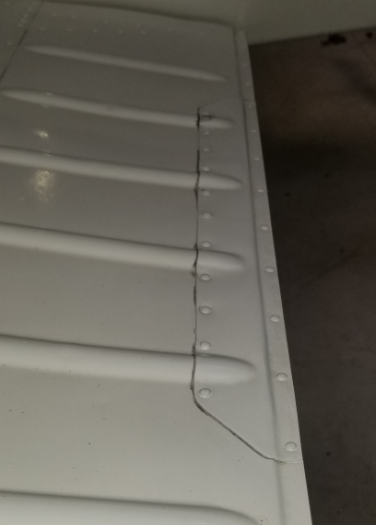
    Ok, so I have a 1964 Cherokee 235 (PA28B) which, according to the log has had a skin doubler installed in the RH aileron in 1976 and LH flap in 1977 and is noted in the logs stating that it was all done according to FAR 43.13.1 (No 337 was filed).
    Now I had the plane inspected recently and the IA said that repair is illegal, and the surfaces need to be reskinned, according to the current Piper Service manual, which is correct?

    What I’m struggling to understand is how this repair has passed 43 annuals without issue and has suddenly become an airworthiness issue. Also clearly the repair has held up over time and I have had no issues with the plane in the time I have owned it. So my question is this, if the repair has been this way and log entries are present could one get a field approval via 337 for the repairs, based on 43 years of performance data? Or am I just sol now and have to bite the bullet and get it done?

    Any help would be appreciated.

    Pics of the repair are attached.

    Attachments:
    • RHAlieron.jpg
    • LHFlap.png
Viewing 6 posts - 1 through 6 (of 6 total)
  • You must be logged in to reply to this topic.
Log In

Piper Flyer Association is the trusted resource for Piper aircraft owners and pilots, providing expert maintenance guidance, ownership support, and safety information for Piper airplanes.

About Us

  • Mission Statement
  • Our Values
  • Who We Are
  • Contact Us
  • Mission Statement
  • Our Values
  • Who We Are
  • Contact Us

Site Info

  • Advertise
  • Privacy Policy
  • Terms of Service
  • Cancel/Refund
  • Advertise
  • Privacy Policy
  • Terms of Service
  • Cancel/Refund

Membership

  • Join
  • Events
  • Benefits
  • Join
  • Events
  • Benefits

Get In Touch

1042 N Mountain Ave Ste B #337 Upland, CA 91786
Email:
 kent@aviationgroupltd.com
Contact: 626-844-0125

Free Newsletter
Facebook X (Twitter) Instagram

All rights reserved. PIPER FLYER ASSOCIATION. © 2004-2026 All Rights Reserved

Type above and press Enter to search. Press Esc to cancel.

In order to provide you with the best online experience this website uses cookies.

By using our website, you agree to our use of cookies. Learn more

Functional Always active
The technical storage or access is strictly necessary for the legitimate purpose of enabling the use of a specific service explicitly requested by the subscriber or user, or for the sole purpose of carrying out the transmission of a communication over an electronic communications network.
Preferences
The technical storage or access is necessary for the legitimate purpose of storing preferences that are not requested by the subscriber or user.
Statistics
The technical storage or access that is used exclusively for statistical purposes. The technical storage or access that is used exclusively for anonymous statistical purposes. Without a subpoena, voluntary compliance on the part of your Internet Service Provider, or additional records from a third party, information stored or retrieved for this purpose alone cannot usually be used to identify you.
Marketing
The technical storage or access is required to create user profiles to send advertising, or to track the user on a website or across several websites for similar marketing purposes.
  • Manage options
  • Manage services
  • Manage {vendor_count} vendors
  • Read more about these purposes
View preferences
  • {title}
  • {title}
  • {title}

Sign In or Register

Welcome Back!

Login below or Register Now.

Lost password?

Register Now!

Already registered? Login.

A password will be e-mailed to you.