Close Menu
Piper Flyer AssociationPiper Flyer Association
  • Home
  • Members
    • Member Dashboard
    • Parts Locating
    • Edit Profile
    • Member Benefits
    • Renew
  • Forums
  • Piper Models
    • Piper Singles
      • Piper Cubs
      • Piper PA-11, PA-12, PA-14
      • Piper Short Wing
      • Piper PA-18 Super Cub
      • Piper PA-24 Comanche
      • Piper Pawnees
      • Piper PA-28 Cherokee
      • PA-32 Series
      • Piper PA-38 Tomahawk
      • Piper M Series
    • Twin Engine
      • Piper PA-23 Apache/Aztec
      • Piper PA-30 Twin Comanche
      • Piper PA-31 Series
      • Piper PA-34 Seneca
      • Piper PA-42 Cheyenne
      • Piper PA-44 Seminole
  • Magazine
    • ONLINE MAGAZINES
      • 2026 ONLINE MAGAZINES
      • 2025 ONLINE MAGAZINES
      • 2024 ONLINE MAGAZINES
      • 2023 ONLINE MAGAZINES
      • 2022 ONLINE MAGAZINES
      • 2021 ONLINE MAGAZINES
      • 2020 ONLINE MAGAZINES
      • Prior Years
    • Article Archive
      • Maintenance & Technical
      • Other Popular Articles
    • Featured Articles
  • Knowledge Base
    • Aviation News
    • Aviation Alerts
    • Videos
    • Annual Checklist
    • Piper Flyer Sponsors
    • Keep Your Piper Ownership Affordable
  • Login
  • Join
Free Newsletter
What's Hot

McFarlane Alaska Expands Backcountry Portfolio with Acquisition of T3 Tailwheel Product Line

BERINGER AERO Receives FAA PMA Approval for Greenville, South Carolina Facility

From Steam to Screen: Upgrading Your Piper’s Attitude Indicator

Facebook X (Twitter) Instagram
Join PFA Renew
Piper Flyer Association
Free Newsletter Login
  • Home
  • Members
    • Member Dashboard
    • Parts Locating
    • Edit Profile
    • Member Benefits
    • Renew
  • Forums
  • Piper Models
    • Piper Singles
      • Piper Cubs
      • Piper PA-11, PA-12, PA-14
      • Piper Short Wing
      • Piper PA-18 Super Cub
      • Piper PA-24 Comanche
      • Piper Pawnees
      • Piper PA-28 Cherokee
      • PA-32 Series
      • Piper PA-38 Tomahawk
      • Piper M Series
    • Twin Engine
      • Piper PA-23 Apache/Aztec
      • Piper PA-30 Twin Comanche
      • Piper PA-31 Series
      • Piper PA-34 Seneca
      • Piper PA-42 Cheyenne
      • Piper PA-44 Seminole
  • Magazine
    • ONLINE MAGAZINES
      • 2026 ONLINE MAGAZINES
      • 2025 ONLINE MAGAZINES
      • 2024 ONLINE MAGAZINES
      • 2023 ONLINE MAGAZINES
      • 2022 ONLINE MAGAZINES
      • 2021 ONLINE MAGAZINES
      • 2020 ONLINE MAGAZINES
      • Prior Years
    • Article Archive
      • Maintenance & Technical
      • Other Popular Articles
    • Featured Articles
  • Knowledge Base
    • Aviation News
    • Aviation Alerts
    • Videos
    • Annual Checklist
    • Piper Flyer Sponsors
    • Keep Your Piper Ownership Affordable
  • Login
  • Join
Piper Flyer AssociationPiper Flyer Association
Renew
Home » Topics » Main Forum » PIPER MODELS » PA-28 » Low oil temp ?

Low oil temp ?

  • Index
  • Recent Topics
  • Search
  • Index
  • Recent Topics
  • Search
Login

Posted In: PA-28

  • Participant
    DAVID MCKENNA on February 18, 2016 at 7:31 am #18084

    Scott & John,
    Very interesting discussion, as I too have wondered why the TSIO360KB engines in my Seneca III always run such cool CHTs and oil temps in the 150-160F range. I recently read an engine article where the author espoused that if you maintain at least 180F oil temp and use your aircraft regularly, your engine will always make TBO, with emphasis on the 180 temp, which as you noted is needed to boil the moisture off the oil. My winterization kit is the same as yours, covering one third of the oil cooler top surface. I am going to cover another third with metallic tape.

    As printed in the December Piper Flyer which featured my airplane, I always cruise at ~65%, 31″/2400 rpm, and lean to 1590F TIT which typically yields ~12GPH/side (no Gamis, and if I try to lean more aggressively the TITs get over 1600F!) CHTs during most of the year in E. Canada are in the high 200s. Winter Florida trips, and summer in Canada yields CHTs in the low 300s, with hot day climbs maybe reaching 350!

    Enjoyed your posts.
    David
    C-FJMM

    Participant
    John Moeckel on February 16, 2016 at 2:42 pm #18083

    Hi Scott,

    Thanks for responding. You are correct,, no cowl flaps on my Arrow. Apparent cost cutting at Piper. I think that would help a lot to manage the cyl temps.

    The recommendation from Continental when running ROP, is that you run the engine at 75 to 100 degrees rich on the hottest cylinder, which is #3 on this engine. At 65% power, I run at 32 inches and 2300 RPM. At lower altitudes I generally get the temps that I listed. At higher altitudes like 12,000 to 15,000 feet the cylinder head temps are 10 to 25 degrees higher.along with a little higher oil temp. Here in Florida I seldom fly over 8,000 feet, however out west, I’m in the range 12,000 to 15,000 most of the time. So the only thing that has worked on getting the oil temp higher was to block off that additional 1/3 of the oil cooler air inlet., for a total of 2/3’s. Nothing has worked on getting higher cyl temps, except for a static run up with the air intakes behind the prop blocked.

    When you say you get the cyl temps up when leaning to 11.5 gph, what degrees of ROP are you?

    When I run LOP (GAMI Injectors), the cyl temps are another 10 to 20 degrees cooler.

    Continental is telling me that cyl head temps between 270 and 300 i cruise are not a longevity or operational concern.

    Again, Thanks so much for your input.

    Best,

    John

    Guest
    Anonymous on February 10, 2016 at 3:21 pm #18070

    Hi John,
    In my Seneca 2 I have two Continental TSIO-360-EB’s (one is an LTSIO-360-EB). I have 1/3 of each of my oil coolers blocked with the winterization plate and one seems to be enough although it would stay a bit warmer with two and I have thought about it. I think the difference between my Seneca and your Arrow is that I have cowl flaps and I don’t think you do. If I open the cowl flaps in the winter you can watch the oil temps drop immediately. Obviously I don’t open them in the winter. Also, regarding CHT’s: at 31″ of power (and 2400 RPM) I’m leaned to 11.5 gallons per hour and my CHT’s stay right up there. What are you leaned to?

    Good luck,

    Scott Sherer
    N344TB

    Keymaster
    Kent Dellenbusch on February 10, 2016 at 8:50 am #18065

    Am I the only one?
    I own a 1989 Piper P28R-201T (Turbo Arrow). It has a TSIO 360-FB Continental engine. The problem I have is low oil temp in cruise along with low cylinder head temps again in cruise.
    I’m looking for other Arrow owners that have had the same problems and what they were able to do to fix it.
    Some History:
    The previous engine developed rust on the cam and lobs because the oil temp was not hot enough to boil out the water. The plane was flown on a regular basis and the engine only went to 925 hours. I used the Continental recommended oil which is Phillips XC 20W 50. This oil has no anti-rust protection.
    I then purchased a new Reman Continental engine and had it installed last June. Have the same issues with it and have been working with Continental Motors for a solution.
    Put the cold weather plate on the oil cooler on the new engine. It blocks 1/3 of the oil cooler vents. Even in warm weather the oil temp was 135 to 150 degrees in cruise. The normal range is 170 to 180.

    Took the plane to Fairhope Al. Continental’s engine shop December 8, 2015. They worked on it for 3 days ½ days.
    They:
    1. Replaced the oil cooler and veratherm. Results: No Change.
    2. Blocked off the lower Cowl vents with metal tape. Results: No Change.
    3. Reset fuel pump. Results: No Change.
    4. Took off the Merlyn Black Magic turbo and put the stock “pipe and bolt” turbo back on.
    Results: No Change.
    5. Blocked up the air intakes behind the prop and did a static ground test. Results: Oil temp and Cylinder temps came up to normal.
    6. Last fix was that they installed metal take on the oil cooler vents to block another 1/3, now a total of 2/3 of the oil cooler vents are blocked. Results: Oil temp are now in the normal range in cruise however the cylinder head temps are still low.
    With 2/3 of the oil cooler vents closed the oil temps run about 170 to 180 in cruise. In a normal climb from sea level to 18,000 feet they do get up to 200 to 205,, 33”, 2450 rpm, 75% power, 105 Kias. Ground temp was 70 and 24 at 18,000 feet.
    Attached are pictures of the plane. The two upper cowl vents with red decals measure:
    The lower cowl vents measure:
    The opening behind the lower cowl and fuselage measures about 2 ½” by 22”.
    Stock engine and airframe. Stock upper engine baffling.

    Recent flight test,, Sometimes Cylinder head temps are a little cooler,, At LOP even cooler, #5 and 6 can be 270.
    CYL#3 at 100 Degrees ROP (Peak 1520, 100 ROP-1420)
    1. 1385 306
    2. 1399 317
    3. 1416 327
    4. 1434 323
    5. 1451 313
    6. 1462 305
    KIAS 132, RPM 2270, MP 32, OAT 55, GPH 12.5, TIT 1490, Oil Temp 153

    Best,
    John Moeckel
    941-408-6966
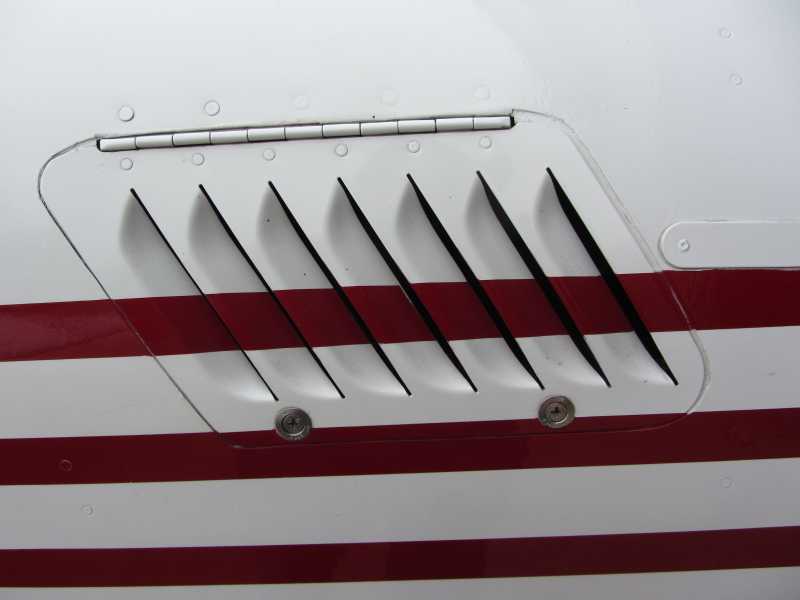
    lm1.JPG

    jm2.JPG

    jm3.JPG

Viewing 4 posts - 1 through 4 (of 4 total)
  • You must be logged in to reply to this topic.
Log In

Piper Flyer Association is the trusted resource for Piper aircraft owners and pilots, providing expert maintenance guidance, ownership support, and safety information for Piper airplanes.

About Us

  • Mission Statement
  • Our Values
  • Who We Are
  • Contact Us
  • Mission Statement
  • Our Values
  • Who We Are
  • Contact Us

Site Info

  • Advertise
  • Privacy Policy
  • Terms of Service
  • Cancel/Refund
  • Advertise
  • Privacy Policy
  • Terms of Service
  • Cancel/Refund

Membership

  • Join
  • Events
  • Benefits
  • Join
  • Events
  • Benefits

Get In Touch

1042 N Mountain Ave Ste B #337 Upland, CA 91786
Email:
 kent@aviationgroupltd.com
Contact: 626-844-0125

Free Newsletter
Facebook X (Twitter) Instagram

All rights reserved. PIPER FLYER ASSOCIATION. © 2004-2026 All Rights Reserved

Type above and press Enter to search. Press Esc to cancel.

In order to provide you with the best online experience this website uses cookies.

By using our website, you agree to our use of cookies. Learn more

Functional Always active
The technical storage or access is strictly necessary for the legitimate purpose of enabling the use of a specific service explicitly requested by the subscriber or user, or for the sole purpose of carrying out the transmission of a communication over an electronic communications network.
Preferences
The technical storage or access is necessary for the legitimate purpose of storing preferences that are not requested by the subscriber or user.
Statistics
The technical storage or access that is used exclusively for statistical purposes. The technical storage or access that is used exclusively for anonymous statistical purposes. Without a subpoena, voluntary compliance on the part of your Internet Service Provider, or additional records from a third party, information stored or retrieved for this purpose alone cannot usually be used to identify you.
Marketing
The technical storage or access is required to create user profiles to send advertising, or to track the user on a website or across several websites for similar marketing purposes.
  • Manage options
  • Manage services
  • Manage {vendor_count} vendors
  • Read more about these purposes
View preferences
  • {title}
  • {title}
  • {title}

Sign In or Register

Welcome Back!

Login below or Register Now.

Lost password?

Register Now!

Already registered? Login.

A password will be e-mailed to you.