


IMPORTANT: This article describes work that may need to be performed/supervised by a certificated aviation maintenance technician. Know your FAR/AIM and check with your mechanic before starting any work.
By Steve Ells
Q: I am doing a lot of work on my 1968 Piper PA-28-180 Cherokee 180, and I hope you can answer a question I have about jacking up my airplane.
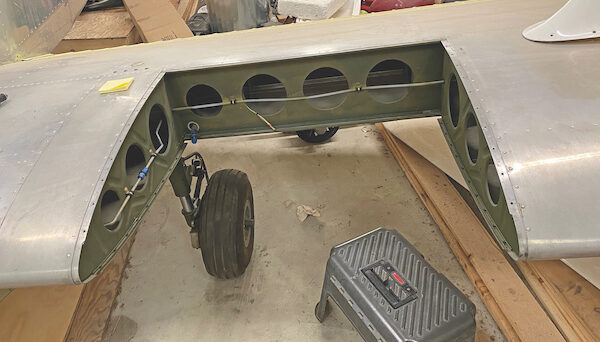
I have removed both of the fuel tanks and sent them to SEAL Aviation in Florida to be resealed. I want to inspect the landing gear legs since Piper has issued Service Bulletin No. 1375B that talks about worn and loose landing gear bolts and the potential for wear in the main wing spar.
I want to go ahead with the inspection, but I’m wondering if I can jack up my airplane to do that inspection if the main fuel tanks are removed?
It seems to me that the tanks are a structural part of the wing. Do you think I should jack up my Cherokee when the tanks are out?
Jerry
A: Personally, I wouldn’t do it, but let me reach out to Piper’s tech department to see what they say.
Steve
Follow-up A: The Piper tech department replied to my question. The reply surprised me when it said, “Yes, you should be able to jack up the aircraft at the required jack points called out in the AMM jacking procedure.”
In spite of that reply, I strongly suggest you do not jack up your Cherokee without the fuel tanks in place and thoroughly screwed down. One reason I believe this is critical is because the screws (AN525-8) called out in the parts book to hold the tanks in place are structural screws. The AN525 structural screw has a tensile strength of 125,000 psi (minimum). They are identified by an X on the head.
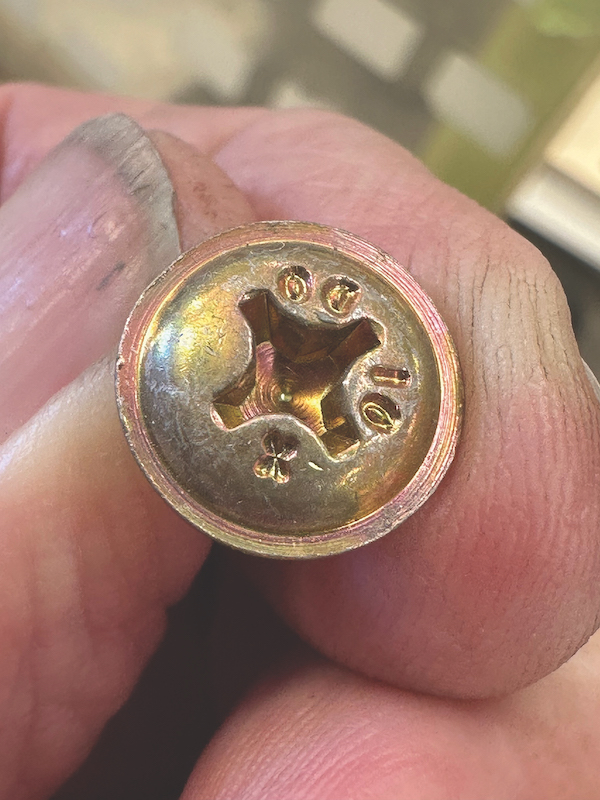
An AN526 screw looks very much the same, but does not have the X and is not as strong; therefore, it is nonstructural (55,000 psi in the low carbon steel version, 80,000 psi in the stainless steel version). Make sure you’re using the right screws to reinstall the tanks.
Happy flying,
Steve
Q: I really like my 1966 Piper PA-28-235. We have about 1,300 pounds useful load, and even with full fuel (84 gallons), we have around 800 pounds payload. The Lycoming engine has been almost trouble-free.
All in all, this load-hauling Piper single has been everything I was looking for. But the interior, especially the glareshield, is so worn and discolored that I’m embarrassed.
I saw a glareshield on another Piper single at my local airport that seemed new. I’m extremely busy right now and flying often, so this isn’t a good time to turn my airplane over to an interior shop for a new interior, but I’m hoping you can direct me to a source for a quick and easy option to replace the glareshield.
Gary
A: You’re in luck. A company called Ashby Glareshields makes and sells fiberglass glareshields that fit well, wear well, are easy to install, and are relatively inexpensive.
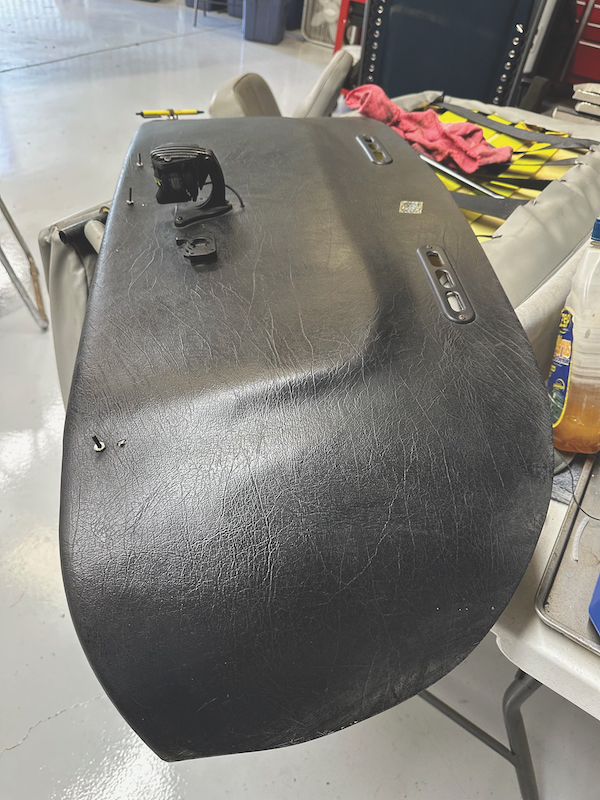
Years ago, I bought one of the Ashby glareshields. I had to trim it a little to get the perfect fit, but it’s been installed since 2006 and still looks good.
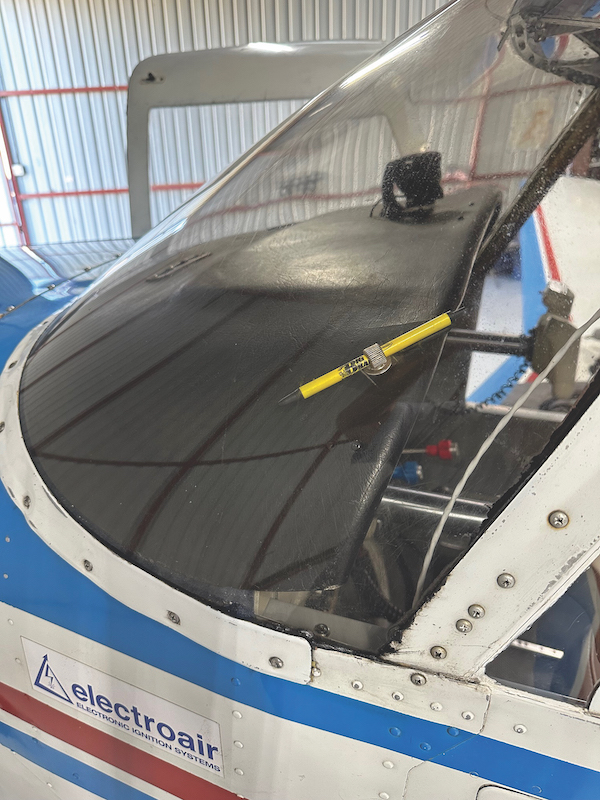
The Ashby website has one for your Cherokee 235. Cost is advertised at $535, or $663 with optional 12- or 24-volt lighting. Detailed trim and fit instructions are available. Aircraft Spruce & Specialty sells and distributes the Ashby glareshields.
The Ashby glareshields are approved for installation through the STC process.
Other sources include Piper Flyer Association supporters Knots 2U and Aircraft Spruce.
Happy flying,
Steve
Q: I fly a 1960 Piper PA-22-160 Tri-Pacer. Most people make jokes about it, calling it a “flying milk stool” and other names, but I don’t think they know anything about it.
I believe it performs pretty well. In fact, my performance numbers are equal to the Cessna 172s with the 150 hp Lycoming engines. When comparing numbers like the dirty stall speed (VS0), takeoff distance over a 50-foot obstacle, and landing over a 50-foot obstacle, the differences are so slight, it’s laughable.
Just about the only metric where the mid-1970s era Cessna 172 outshines my Tri-Pacer is fuel capacity. The normal fuel capacity of a Tri-Pacer is 36 gallons; the 172 has a standard capacity of 43 gallons. Long-range fuel tank options increase the levels to 44 gallons for the PA-22 and 54 gallons for the 172.
The other laughing point for me is the wide discrepancy between my Tri-Pacer and the advertised prices of the Cessna 172 these days. I could buy two Tri-Pacers for the asking price of one Lycoming-powered Cessna 172!
The point of all this bragging is that I want to start flying my Tri-Pacer into some unimproved landing strips. It has 6.00-6 tires on the mains and nose, and my thinking is I can go anywhere a 172 can go. I’m a little antsy because I never see Tri-Pacers—but I see 172s—in photos of fly-ins at remote airstrips. Do you think my Tri-Pacer is up to taking on some of the nicer remote strips?
Joe
A: I believe your Tri-Pacer is a fine airplane for beginning to fulfill your backcountry flying dreams. I suggest that one of the most helpful guides to introduce you to that kind of flying, and to help you locate off-the-beaten-path landing strips near where you live, is an outfit called the Recreational Aviation Foundation, headquartered in Bozeman, Montana.
The first step to identifying what the RAF does is to sign up on the website. Once you verify your email, you will be directed to a map of airstrips on the website, covering hundreds of recreational- use airstrips you can land at, all across the U.S.
The RAF is well-organized and strives to provide and maintain recreational landing sites. This includes finding, resurrecting, maintaining, and telling flyers about neglected and obscure airstrips.
“Preserving private-use airfields is a primary mission for us,” said John Nadeau, RAF’s Recreational Use Statute Liaison. “It will be RAF folks who show up at an airfield with rakes, shovels, and pulaskis when word goes out that an airfield owner needs help.”
The RAF has a code of conduct that includes these common- sense pointers:
- Use an aircraft that is capable and maintained for the mission.
- Be competent in the use of appropriate technologies for navigation, communication, and emergency rescue.
- Carry redundant transceivers and navigational equipment.
- Equip with proper water, food, clothing, shelter, first aid, and tools. Prepare for an extended time on the ground if necessary.
- Secure your aircraft.
There is a wealth of knowledge on its website that’s available to any pilot who wants to get involved in backcountry aviation at a hands-on level. In my opinion, joining and supporting the RAF with sweat equity or through monetary donations will likely be exactly the kind of airplane fun you’ve been looking for. I am also a fan of a book titled, “Mountain Flying Bible” by Sparky Imeson. Sparky flew west in 2009, but his book on mountain and backcountry flying is still available from Amazon and other sellers.
Happy flying,
Steve
Editor’s note: Although a Tri-Pacer is not a typical backcountry aircraft, numerous users on the ShortWingPiper.org and BackcountryPilot.org forums report that it is suitable for limited backcountry use. Several posts mention the Tri-Pacer’s robust main gear and that the 6.00-6 nose tire on the Tri-Pacer is larger than the 5.00-5 nose tire used on comparable 172s.
Steve Ells is contributing editor and tech rep for Piper Flyer Association. He has been an A&P/IA for 45-plus years. He is a commercial pilot with instrument and multiengine ratings and loves utility and bush-style airplanes and operations. He’s a former associate editor for AOPA Pilot. He owns Ells Aviation and lives in Templeton, California. Send questions and comments to editor@piperflyer.com.
Resources
PFA SUPPORTERS
OTHER

