


Hi Eric,
It’s good of you to provide an update on your Apache adventure.
Glad you got your airplane into a better “house.”
I hope your medical woes are resolved soon.
Best,
Steve
Buying an Apache


-
ParticipantParticipant
I have a similar project. Both engines currently removed for over haul.
I need to pull my control cables. New throttle cables on hand and, and clean and lube mixture and prop cables. I’d love to talk with you and get any lessons leard on the cable replacement.
 Participant
Update for Apache 89P
We got the Apache “home” but weren’t happy with the airport/hangar situation. Fortunately I was able to find a much better situation at an airport a little further from the house. We now have the Apache in a “corporate” hangar that lets us work much more easily.
Unexpected surprises:
1. Mixture cable… well kinda unexpected. We knew it had issues but finally realized it had to be replaced. Major job! But not as bad as feared! New cable works great.
2. Fuel leak. Carb bowl was leaking. Turned out it was a fitting that was cracked. Fuel leak fixed.
3. Engine set up. We knew the engines needed “tweaking” as the control levers were all over the place. This took a bit but is all good now.
4. I lost my medical in April just after getting the Apache to the new airport. Right now we anticipate getting it back in July.Expected stuff:
1. Door latch. This was a known issue and we are rebuilding the door latch. We got improved parts from Diamond Aire in Montana and so far this is already working much better but this is only about half done.
2. Manifold Pressure Gauge… well kinda expected. There was about a 3/4 inch difference in manifold when engines were shut down or at full power. We thought this would fix itself on engine set up but it didn’t. So it looks like a new gauge or repair will be needed.More to come:
We will still need to replace the windshield with one that came with the plane. The new heater will be installed this fall. Originally I planned on a complete redo of the instrument panel this fall but with me losing my medical and the corona virus this may get pushed back a bit.Lessons learned:
1. Make sure you have a great mechanic like I do when buying a “vintage” plane (especially with two engines!).
2. Golf carts are great tools for working with planes!
3. Make sure you have a great BBQ restaurant near your airport for those important lunch breaks!So far the Apache has been everything I hoped for and it’s been lots of fun for me. I had good council to expect lots of work and expenses and so far it has been well within what I figured. At this point I just want to get my medical back and get the Apache flying again!
Pictures:
Apache in it’s new hangar
Side view
Towing with the golf cart
Working on the mixture cable


 Participant
Hi Eric, Super nice looking Apache you have. Many have been pretty beaten up. I’m glad your trip went well. With all your hours in Beech twins, flying the Apache should be a piece of cake.Keep us posted about your heater install as well as the hydraulic pump and panel changes.
Clear Skies,
Gomer
N206RGParticipantGot the Bruce’s Custom Covers ordered. The plane is under a shade hangar but it deserves better.
Thanks to Piper Flyer for the discount code of Cold19 to get 10% off!
ParticipantParticipantI was asked to go over my purchase decisions on my Apache.
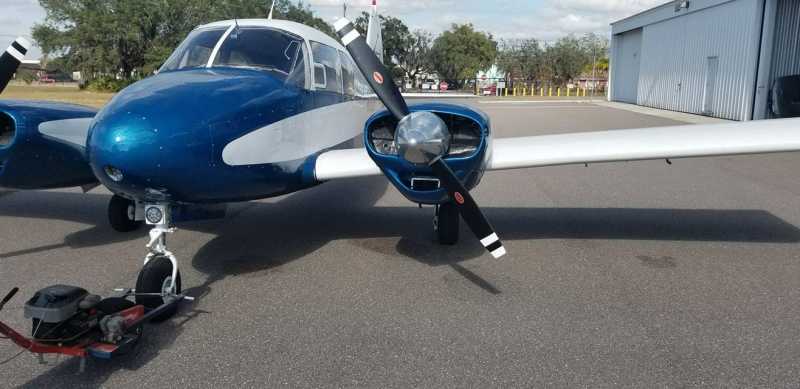
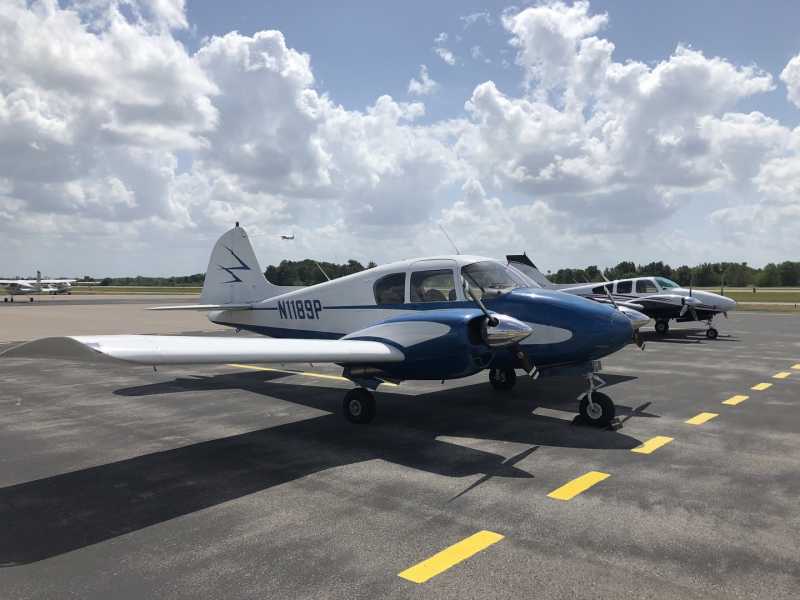
Let me start by saying I have been building a homebuilt experimental aircraft called the Bearhawk with a buddy of mine. He is much more the builder than me! This plane is ALMOST done but at some point I realized that the Bearhawk would be a fun plane for my buddy and I to fly into little airports around but wifey probably wouln’t want to ride in it so much. As well, the Bearhawk isn’t going to be an IFR machine. Last year I flew the family to Texas from North Carolina and found out that being able to fly IFR can make a huge difference in whether you can make the trip. So IFR capability (even just a little) became pretty important. Also, I found out my family and friends really wanted to ride in a twin, not a single!
So the mental process began. I flew Barons in my past professional career and still consider them great planes. So I started looking at Baron ads. However, Barons cost more upfront and will cost more in operating costs. So as much as I love Barons I finally scratched it off the list. However, by now the Piper Twin Comanche had caught my eye. Sleek, fast and cheaper to operate, it seemed to be a great option. I was checking over ads for the Twin Comanche when I saw an ad for a nice looking Piper Apache. I suddenly realize that I had not really considered the Apache, mainly because everyone disses on how slow they are.
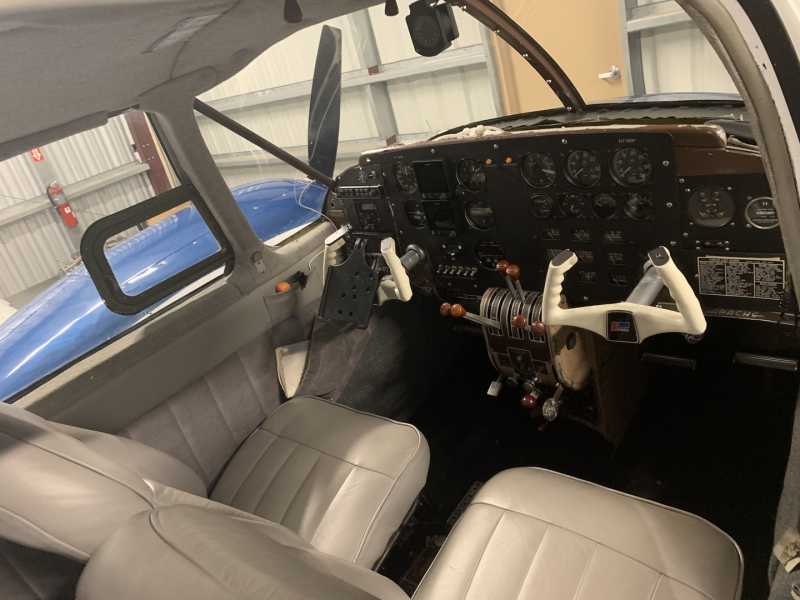
I began going through my mental list of what is wrong with this plane. It had recent paint (and I like the paint scheme!), new gray leather interior. OK so far so good! Low time engines with 110 and 600 hrs SMOH. Low time props with Hartzell Top Props with only 220 SNEW. What? But it got better! Brand new STec 50 Autopilot, Garmin 430 Nav/Com, and dual Garmin G5 displays! Wow! Now I realized the heavy lifting on getting this plane IFR capable was already done.
Other good points:
-New Plane Power alternators, the vacuum pumps are taken off as the G5 displays don’t need vacuum
-New SkyTech starters
-New LED lighting for exterior landing, taxi and NAV lights
-Geronimo wing tips, dorsal fin and flap gap seals.This plane had lots going for it. I began to try to imagine me and my wife flying in it. I knew it could fly into short grass strips with it’s big, fat wing and slightly oversize tires. It had a vintage look that appealed to me but was also modernized in some important ways. Finally, for a vintage airplane it has very reliable and modern engines. The Lycoming O-320 is one of General Aviation’s best engines and has a 2000 hour TBO. That really helps keep cost down. They are carbureted and that keeps cost down too.
After showing my wife the pics and discussing it she wanted me to go for it. So we did!
Downsides:
-No heater included. The heater had an AD. The seller was a VFR Florida pilot so he had no use for it. In North Carolina we certainly do!
-Hail Damage. No way around it. It isn’t pretty but it flys anyway.
-Instrument panel needs a good upgrade, Even with all the good avionics the plane still needs a redo on the instrument panel.Even with the downsides the plane is a great deal due to the low time engines and props as well as a brand new altitude hold autopilot and dual glass displays.
Along with the plane came some “extras”.
– Spare engine with 1300 SMOH
-New “speed slope” windshield
-Electric golf cart with included tow bar
-Various other Apache spare parts.The Apache isn’t fast. In fact I’m sure I’ll try to speed it up sometime! But it is comfortable, stable, sturdy and has a great retro vintage look. We plan on flying fairly short trips to small airports so this should be a fun plane for us to enjoy.
I feel like I bought a nice IFR twin for the price of a Cessna 172 but also got more speed and IFR capability. Not bad in my opinion. And it isn’t a plane you see everywhere anymore. I have already gotten some very nice comments on it. Because I was able to get such a good price on the whole deal I was able to buy it cheaper than any other twin and that let me get into a plane sooner. I have enjoyed flying the Apache and look forward to more!
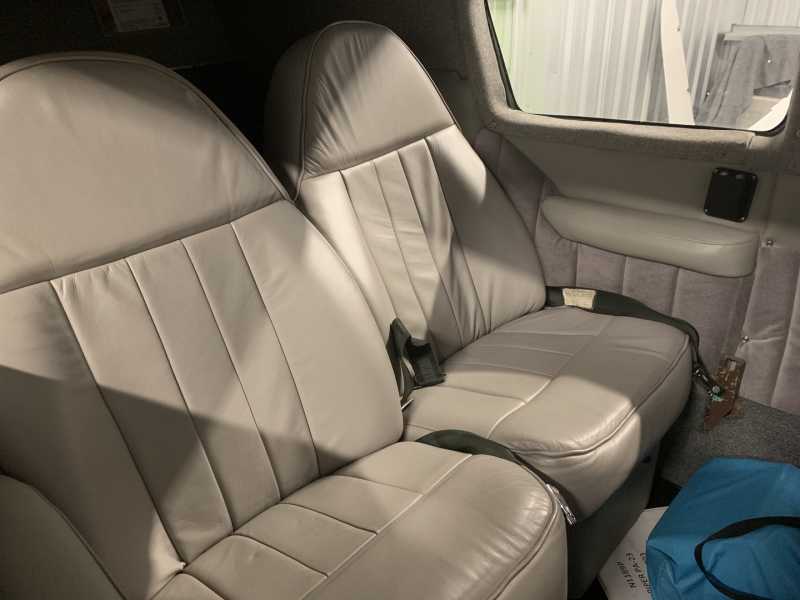 Participant
The Apache has (finally) been purchased and flown home. The seller lived in the Pensacola, FL area and I live in the Charlotte, NC area so we had over 400 miles to get it home. We had to wait for VFR weather for two reasons. First, the plane currently does not have IFR certification although that is planned very soon. Second. we only wanted VFR weather for a trip in a brand new (to us) plane.
We finally got the plane ready. There were two squawks on the plane, an almost dead battery and a bad mag check. Now those issues were fixed with a new battery installed by the seller and a new spark plug. My mechanic did last minute checks and decided that everything was (FINALLY!) a go!. I had spent lots of time sitting in the cockpit and studying the manual as well as watching a couple videos online to get familiar. It was now time to go fly! I had tried to get flight instruction but it never worked out. Please be aware I have over 22,000 hrs and over 2,500 hours in piston twins and I have instructed in twins as well.
I did a quick trip around the pattern and my mechanic checked everything out. It was good to we launched off to Charlotte. We had gorgeous clear fall weather and it was a great trip. We stopped in Macon, GA for a quick pit stop and fuel up. The “new” 1955 Apache is now in my hangar and ready for more.
Pics show:
my mechanic and I grinning while flying the Apache home
refueling in Macon, GA
sitting in the new shade hangar that is now home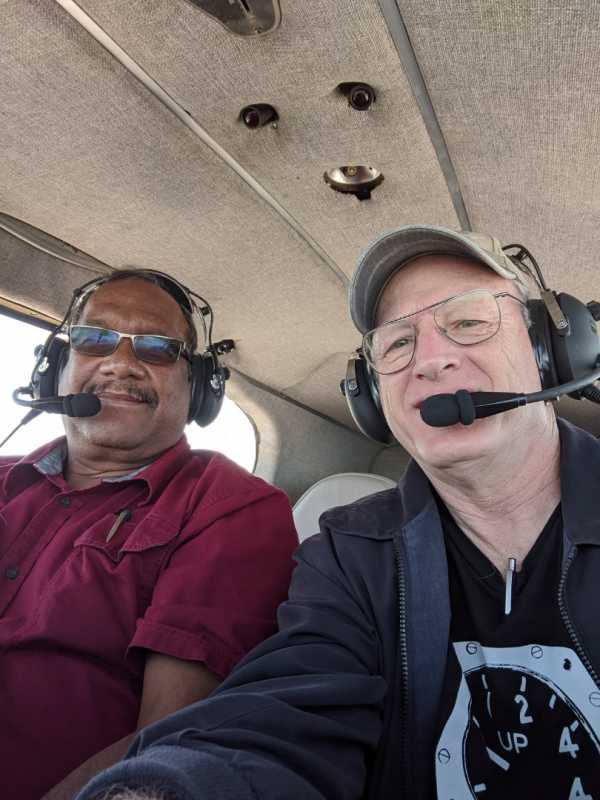

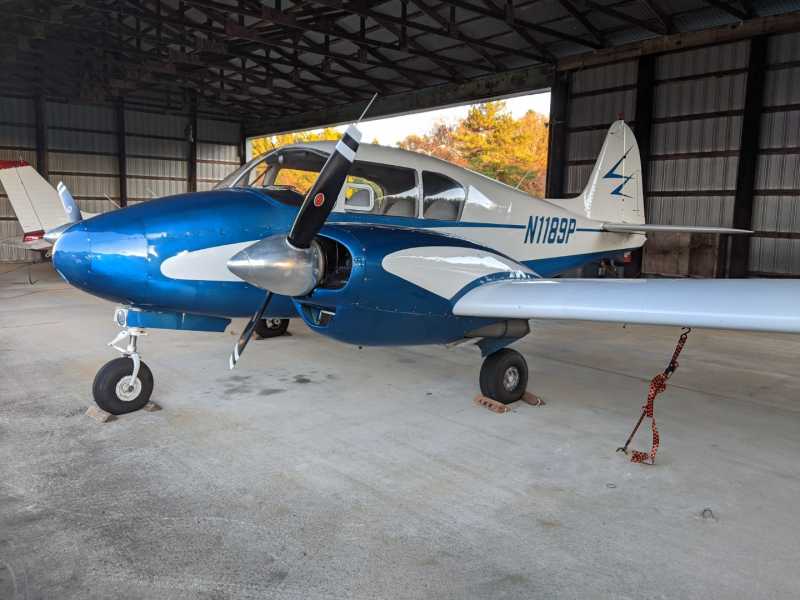 Participant
Purchase is finally completed. Now I need to get scheduled for training in the plane and to fly it home. The only issue my mechanic has is with the right engine’s mixture control cable. It is stiff and balky to use. He feels that it will need to be connected in a way to flex the cable end less. Otherwise we are happy with the plane. Well… except I need an IFR certification for it and a heater. The IFR certification is easy. The heater will be interesting. I have located a heater for $4700 that has a brand new combustion chamber and glow plugs. So it meets the AD but will still require the 2 year inspection.
ParticipantSteve,
I can do more later. Right now I’m just getting the purchase done. It has been in slow motion. But almost there. Currently waiting on seller to finish annual. Then I will pick up plane. I’ve contacted an instructor to check me out although insurance did not require any particular training.


- You must be logged in to reply to this topic.
