Close Menu
Piper Flyer AssociationPiper Flyer Association
  • Home
  • Members
    • Member Dashboard
    • Parts Locating
    • Edit Profile
    • Member Benefits
    • Renew
  • Forums
  • Piper Models
    • Piper Singles
      • Piper Cubs
      • Piper PA-11, PA-12, PA-14
      • Piper Short Wing
      • Piper PA-18 Super Cub
      • Piper PA-24 Comanche
      • Piper Pawnees
      • Piper PA-28 Cherokee
      • PA-32 Series
      • Piper PA-38 Tomahawk
      • Piper M Series
    • Twin Engine
      • Piper PA-23 Apache/Aztec
      • Piper PA-30 Twin Comanche
      • Piper PA-31 Series
      • Piper PA-34 Seneca
      • Piper PA-42 Cheyenne
      • Piper PA-44 Seminole
  • Magazine
    • ONLINE MAGAZINES
      • 2026 ONLINE MAGAZINES
      • 2025 ONLINE MAGAZINES
      • 2024 ONLINE MAGAZINES
      • 2023 ONLINE MAGAZINES
      • 2022 ONLINE MAGAZINES
      • 2021 ONLINE MAGAZINES
      • 2020 ONLINE MAGAZINES
      • Prior Years
    • Article Archive
      • Maintenance & Technical
      • Other Popular Articles
    • Featured Articles
  • Knowledge Base
    • Aviation News
    • Aviation Alerts
    • Videos
    • Annual Checklist
    • Piper Flyer Sponsors
    • Keep Your Piper Ownership Affordable
  • Login
  • Join
Free Newsletter
What's Hot

Missions of Honor’s Yellow Ribbon Honor Flight honors veterans as part of EAA AirVenture Oshkosh 2026 activities

Garmin brings revolutionary SmartCharts to Garmin Pilot Web

Southwest Airlines bringing ‘Independence One’ to EAA AirVenture Oshkosh 2026

Facebook X (Twitter) Instagram
Join PFA Renew
Piper Flyer Association
Free Newsletter Login
  • Home
  • Members
    • Member Dashboard
    • Parts Locating
    • Edit Profile
    • Member Benefits
    • Renew
  • Forums
  • Piper Models
    • Piper Singles
      • Piper Cubs
      • Piper PA-11, PA-12, PA-14
      • Piper Short Wing
      • Piper PA-18 Super Cub
      • Piper PA-24 Comanche
      • Piper Pawnees
      • Piper PA-28 Cherokee
      • PA-32 Series
      • Piper PA-38 Tomahawk
      • Piper M Series
    • Twin Engine
      • Piper PA-23 Apache/Aztec
      • Piper PA-30 Twin Comanche
      • Piper PA-31 Series
      • Piper PA-34 Seneca
      • Piper PA-42 Cheyenne
      • Piper PA-44 Seminole
  • Magazine
    • ONLINE MAGAZINES
      • 2026 ONLINE MAGAZINES
      • 2025 ONLINE MAGAZINES
      • 2024 ONLINE MAGAZINES
      • 2023 ONLINE MAGAZINES
      • 2022 ONLINE MAGAZINES
      • 2021 ONLINE MAGAZINES
      • 2020 ONLINE MAGAZINES
      • Prior Years
    • Article Archive
      • Maintenance & Technical
      • Other Popular Articles
    • Featured Articles
  • Knowledge Base
    • Aviation News
    • Aviation Alerts
    • Videos
    • Annual Checklist
    • Piper Flyer Sponsors
    • Keep Your Piper Ownership Affordable
  • Login
  • Join
Piper Flyer AssociationPiper Flyer Association
Renew
Home » Topics » Main Forum » PIPER MODELS » PA-28 » High oil temps

High oil temps

  • Index
  • Recent Topics
  • Search
  • Index
  • Recent Topics
  • Search
Login

Posted In: PA-28

  • Participant
    CHARLIE MUELLER on August 4, 2024 at 10:28 am #22672

    Steve-

    Not sure if you were wanting me to respond or Wesley who posted more recently on high oil temps. The short answer is my peak oil temp occurs at top of climb.

    I recently flew my Dakota from Naples, Florida to Aurora, Illinois in July. It was a hot day with surface temps in the 90s.

    My first leg the oil temp peaked at 236 and settled down to 208, but most of the flight was 215

    The second leg Montgomery Alabama to Owensboro KY (the hottest part of the day the oil peaked at 242 and settled to a low of 208 with most of the time in cruise at 218.

    The last. leg was Owensboro, KY to Aurora, Illinois and the oil peaked at 227 and dropped to 210 and it was 210 for most of the time in cruise.

    I have a half dozen other flights that I need to download engine data for but I think the temps were more like the last flight-peaks around 227.

    Participant
    STEVE on August 3, 2024 at 12:00 pm #22670

    Hi Charlie;
    As I read this, it seems to say that you were getting high oil temperatures when you’re running the engine on the ground.

    That prompts me to ask; “Are you also getting high oil temperatures in flight?”

    Pls let me know.

    Thanks 
    Steve

    Participant
    wesley ballou on July 29, 2024 at 9:33 pm #22668

    I have a 1967 Chrokee 235B.  It flew fine for the past year.  Now I am experiencing high oil temperatures. Oil and filter have been changed withing the last 2 hours.  Oil pressure is fine.  Within 15 – 20 minutes of start up the oil temp is very near the red line.  Engine runs were done on the ramp with outside temperatures of 80 degrees F.  We have checked the baffles, changed the oil temp gage, the oil temp sensor, and the oil cooler.  None of these remedies seems to have an effect on lowering the oil temp.  Has anyone had a similar experience or have any suggestions on how to remedy the situation?

    Participant
    CHARLIE MUELLER on September 22, 2022 at 9:22 am #21572

    Steve-

    I will try increasing the oil pressure as you suggest and also begin using lean to peak EGT after reviewing my pilot guide . The engine runs the same after the new cylinder. I’ll also review cowl exhaust fairing and report back in October.

    Thanks again-

    Charlie

    Participant
    STEVE on September 18, 2022 at 12:53 pm #21566

    Hi Charlie;
    The adjustment to increase the cruise oil pressure is above and behind the upper surface on the copilots side of the engine. The old kind (like I have) does not have an adjustment screw and washer on the outside of the large nut/cover.
    If yours has the screw/jam nut on the outside of the large nut/cover, then all that’s required it to loosen the jam nut and turn the screw in. I would start with a half turn, then test.
    If your large nut/cover does not have a jam nut and screw projecting out of the top, the procedure to increase the OP is to remove the assembly, which consists of the large nut/cap, a spring and a steel ball. All it takes to increase the pressure is to put a simple aircraft quality washer between the outer end of the spring and the large nut/cap.

    The JPI 830 Pilots Handbook (https://www.jpinstruments.com/wp-content/uploads/2012/07/PG-EDM-730_830_851_740-Rev-F-TB2.pdf) has information on how to use the “lean find” feature in your monitor. I believe there is a horsepower read out on the 830. Any time you’re below 75 % power you can lean to peak. The Lean Find feature should identify the first one to peak. Check out that Pilots Handbook for the details.

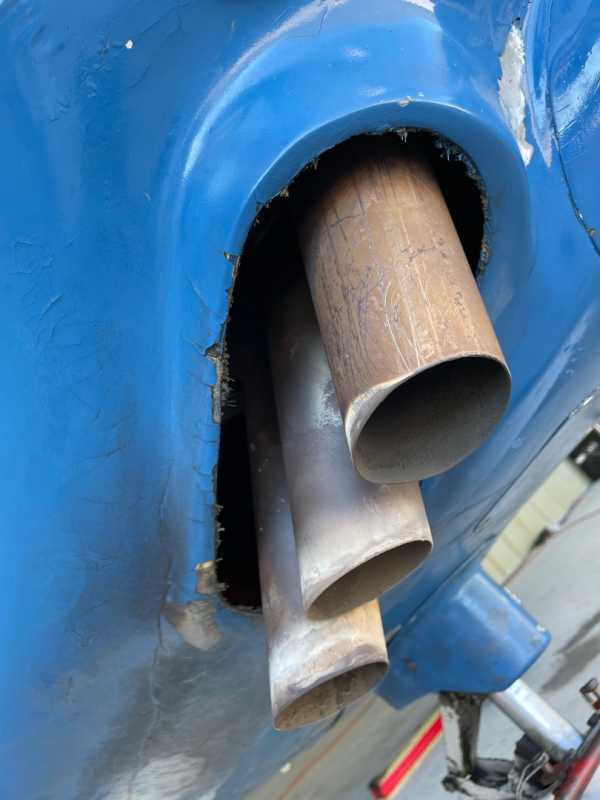
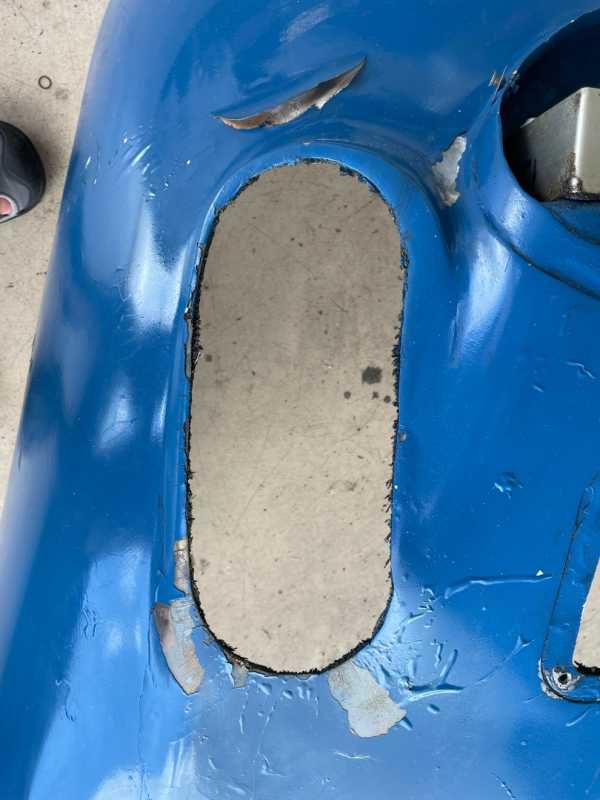
    As far as modifying the lower cowl, you shouldn’t closed down the exit holes for the exhaust stacks because the engine does move compared to the cowling during operation. The pipes need room to move in the opening.

    If you were good with fiberglass, you could make a fairing that would redirect the air that might come in the holes for the exhaust. But even if you made one, you’d have to legally install it.
    I’ve seen those type of exhaust pipe fairings for Cessna Cardinals and Cessna 182s, but can’t recall seeing one for a Piper. You can take a look here: https://aircraftspeedmods.ca/products/exhaust-fairing-stc-sta-2/. Maybe the company can give you some guidance on its fairings.

    I don’t think you’re in too much trouble with your CHTs. That said, please inspect to see that the inner cylinder baffles (the metal parts that fill the gaps between cylinder barrels and heads) are installed correctly.

    Does the engine feel any different than it did before you installed the new cylinder??

    Let me know if you find anything else.

    Steve
    Let me

    Participant
    CHARLIE MUELLER on September 16, 2022 at 9:57 am #21563

    Steve here are a few more pieces of information

    I never fly above 70% power except on takeoff. I sometimes fly 55-60 but usually 65% and occasionally 70% so I’m not sure what Savvy report you refer to but I’ll take a closer look.

    How do I increase OP in cruise- is there a setting on the oil pump?

    Yes my CG flights are in Florida and it seems that the high OATS are a big contributing factor to the high temps that I’m experiencing also occasional CHTS 400-420 and once in awhile 433 in initial climb but they always cool down in cruise.

    My leaning has been all over the map as I’ve read more, talked with Lycoming service reps-I’ve gotten myself all mixed up. Lean to 12 gph, lean to 160 ROP, Lean to engine roughness then enrich to smooth power.

    I do have an EDM 830 and it has both ROP and LOP Modes.

    I would be comfortable leaning to peak EGT as long as I can easily determine the 1st cylinder to peak.

    See attached oil analysis

    One other suggestion that’s been given to me and that is to modify the lower cowl to reduce the size of the opening around the exhaust riser to prevent ram air from coming into the lower compartment and diminishing the negative pressure in the lower cowl engine compartment.

    Thank you for all of your suggestions and input.

    Charlie

    Attachments:
    • N8382Z-220616.pdf
    • 7FDEF12B-C256-4634-9392-AE1AC630FC6E.jpeg
    • B02D632B-BB13-440F-B5ED-14426DE00FAF.jpeg
    Participant
    STEVE on September 12, 2022 at 11:10 am #21547

    Hi Charlie;
    Thanks for all the data you’ve sent; very helpful.
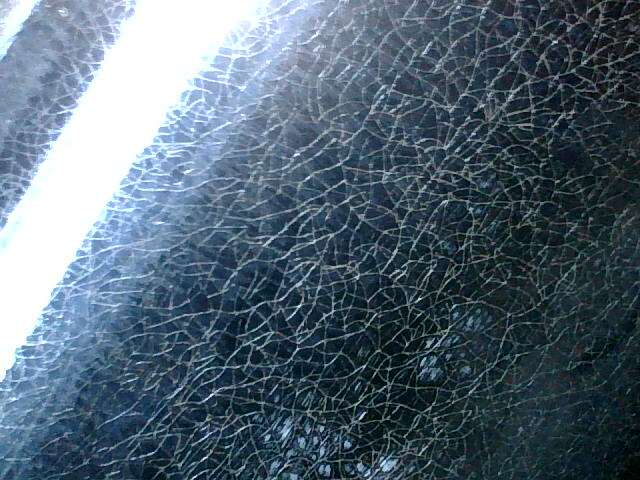
    One of your cylinders has a chrome lining. That’s shown by all the “worm tracks” in the photo. I can’t really tell what the other cylinder photo signifies.
    As you may know the compression rings in a chrome cylinder wall don’t always seal the combustion gas pressures as well as the rings in a steel cylinder wall. I’m suggesting that another factor for the high oil temps is the increased amount of hot combustion gasses leaking past the rings in the glazed cylinder and the chrome cylinder.
    And if I’m reading the Savvy report correctly, it appears as though you’re power settings in cruise are above the high side of normal. I’m gratified to see that your oil temps hover right around 200 when you fly at 65% power settings.
    Your idle OP is very good. You could try increasing your cruise OP; that would push more oil through your cooler. My OP reads 77 psi in cruise.
    Your oil consumption numbers are good, esp considering the chrome cyl and the glazed cyl. I have 4 chrome cyl on the Lyc 180 in my Comanche and I get about 4.5 hours per quart.
    If I understand you correctly, you fly US CG Aux flights at 1000′. I’m guessing these flights are in Florida; am I correct? When you say the temps are trending higher, could that rise coincide with the increase in OATs as summer comes on??
    Are you also flying the US CG flights at 65% power and leaned to best power.
    FWIW, Best power leaning, which is around 80 deg R of peak is a pretty hot spot in the leaning curve. You should be able to lessen the CHTs by leaning more. Lycoming publications allow leaning to peak EGT below 75 % power.
    Is there an engine monitor in your airplane? Does it have a “lean find” feature? Would you be comfortable leaning your engine to peak EGT. If you are going to try this, the key is to lean to peak on the first cylinder to achieve peak EGT; not the hottest cylinder.
    Have you sent in oil samples for oil analyses? If so, did the reports reveal any anomalies?
    Thanks for the information. Please get back to me with your replies.
    I’ve attached a chart showing how leaning affects EGT, CHT, HP and Internal Combustion Pressures, As you can see every value goes down when you lean to peak vs. 80 deg rich of peak.
    Best,
    Steve enginemgmtchart.jpg enginemgmtchart.jpg

    Attachments:
    • enginemgmtchart.jpg
    Participant
    CHARLIE MUELLER on September 12, 2022 at 9:22 am #21544

    Steve-

    My cruise oil temps have always been elevated but seem to be slowly trending higher (see attached trend report)but they could be in part to my increasing USCG Aux flying 1,000′ . It does appear that OAT makes a difference. I am based in Florida in the fall through June and Michigan over the summer. I just flew a trip to upper MI, and was able to get my cruise oil temp 198-204 due to 65% power, 100 degrees ROP and lower OAT.

    Oil pressure at idle appears to be 55psi +/-

    Cylinders #1 and 3 are glazed as determined by borescope(see photos).

    I run 8-10 quarts and try to keep it at 9. I burn a quart every 7-8 hours.
    The engine does not stutter at all upon start up. It does occasionally stumble when I have reduced power in the pattern and then need to come back in with. power but after a very brief hesitation it responds.

    I have attached reports of my engine data as well as photos of the #1 and #3 cylinders.

    Charlie

    Attachments:
    • ReportCardN8382Z32022.pdf
    • TrendAnalysisReportN8382Z22022.pdf
    • N8382Z1glazedwall.jpg
    • N8382Z3glazedwall.jpg
    Participant
    STEVE on September 7, 2022 at 9:56 am #21527

    Hi Charlie;
    So I can get a better idea of the circumstances of your high OT, I’m going to ask some questions:
    Are these high oil temperatures a new thing?
    Are the oil temps “normal” during months when the OAT is lower?
    When you say a cylinder wall is glazed; how do you know this? Have you visually checked out the appearance of the cylinder walls with a borescope?
    What is your oil consumption?? Hours/quart?
    Has the oil consumption increased recently?
    What is your idling oil pressure?
    What is your cruise oil pressure?
    What oil level are you running your engine?
    I feel like you leaning method is as good as you’re going to be able to do with a carbureted engine. The distribution of the fuel air mixture is too varied between cylinders to safely run LOP.
    One thing some pilots believe is that it’s cheaper to buy gas than cylinders; therefore they choose to run their engines very rich. This has a tendency to bring down temperatures, but it’s not the ideal way to run your engine.
    It sounds as though you have already done the easy stuff.
    The questions, especially the idling oil pressure question is to determine if there’s excess wear in the bottom end of your engine.
    Are there any other symptoms you can tell me about. Does the engine stutter a little bit in the morning before all cylinders are running smoothly?
    Please get back to me with answers.
    Thanks
    Steve

    Participant
    CHARLIE MUELLER on September 6, 2022 at 7:09 pm #21525

    Steve-

    I own a Piper Dakota with a O-540-J3A5D engine. The serial # is L-21175-40A.

    It was installed in June of 1993. It has 1, 980 hrs and a mix of chrome and nickel cylinders.

    Compressions good, oil consumption is good but oil temps are 215 +|- with as high as 233 in the initial climb. I just had a new oil cooler installed as the previous one was cracked.

    I do have a cylinder that is glazed presumably from improper break in from the previous owner/not sure if that is a cause of heat.

    I’m hoping you can help me with any of the following questions.

    1.) How can I get the oil temps down into the normal range?
    I’ve done all of the tests putting a light in the lower compartment and looking for gaps, etc. I’ve made some minor tweaks to the baffling.

    2.) Can I run this engine LOP? 2.a)Can I simply lean until roughness and then enrich to where it runs smooth? That seems a lot simpler than using my engine monitors. I talked with Lycoming about leaning and they said not to use LOP IN carbuerated engines.
    Some of my flying is for the Coast Guard Auxiliary -Naples to Tampa 3 hr patrols at 1,000’. Its hot and I typically fly at 65%power and lean to 12 gallons per hr. Do you have any suggestions for engine operations in this profile?

    Thank you-

    Charlie

Viewing 10 posts - 11 through 20 (of 20 total)
← 1 2
  • You must be logged in to reply to this topic.
Log In

Piper Flyer Association is the trusted resource for Piper aircraft owners and pilots, providing expert maintenance guidance, ownership support, and safety information for Piper airplanes.

About Us

  • Mission Statement
  • Our Values
  • Who We Are
  • Contact Us
  • Mission Statement
  • Our Values
  • Who We Are
  • Contact Us

Site Info

  • Advertise
  • Privacy Policy
  • Terms of Service
  • Cancel/Refund
  • Advertise
  • Privacy Policy
  • Terms of Service
  • Cancel/Refund

Membership

  • Join
  • Events
  • Benefits
  • Join
  • Events
  • Benefits

Get In Touch

1042 N Mountain Ave Ste B #337 Upland, CA 91786
Email:
 kent@aviationgroupltd.com
Contact: 626-844-0125

Free Newsletter
Facebook X (Twitter) Instagram

All rights reserved. PIPER FLYER ASSOCIATION. © 2004-2026 All Rights Reserved

Type above and press Enter to search. Press Esc to cancel.

In order to provide you with the best online experience this website uses cookies.

By using our website, you agree to our use of cookies. Learn more

Functional Always active
The technical storage or access is strictly necessary for the legitimate purpose of enabling the use of a specific service explicitly requested by the subscriber or user, or for the sole purpose of carrying out the transmission of a communication over an electronic communications network.
Preferences
The technical storage or access is necessary for the legitimate purpose of storing preferences that are not requested by the subscriber or user.
Statistics
The technical storage or access that is used exclusively for statistical purposes. The technical storage or access that is used exclusively for anonymous statistical purposes. Without a subpoena, voluntary compliance on the part of your Internet Service Provider, or additional records from a third party, information stored or retrieved for this purpose alone cannot usually be used to identify you.
Marketing
The technical storage or access is required to create user profiles to send advertising, or to track the user on a website or across several websites for similar marketing purposes.
  • Manage options
  • Manage services
  • Manage {vendor_count} vendors
  • Read more about these purposes
View preferences
  • {title}
  • {title}
  • {title}

Sign In or Register

Welcome Back!

Login below or Register Now.

Lost password?

Register Now!

Already registered? Login.

A password will be e-mailed to you.